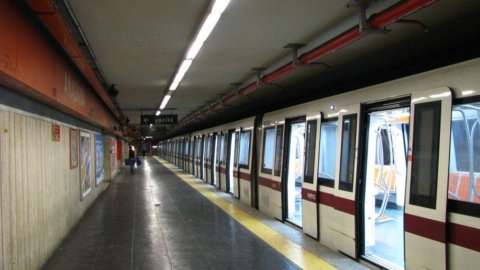
Races cancelledcontinuous strikes, almost always on Fridays; unusable vehicles; high rate of sick leave. L'Attack it is at the top of the difficulties that the Romans struggle with every day. To the commuters it gets even worse. And the Antitrust has decided to see clearly. As? It initiated ex officio “an investigative procedure in the matter of unfair business practices against ATAC SpA, in relation to the state of the management of local public transport services in the metropolitan area of Rome, in particular along the railway lines Rome-Ostia, Rome-Viterbo, Rome-Giardinetti”. And to clarify the seriousness of the intentions, with the communication that started the procedure, the officials of the Authority and the special unit of the Guardia di Finanza carried out an initial inspection of the company's headquarters in Rome. At the same time, the report was sent to the Lazio Region which entrusted the lines under accusation with management.
The Antitrust, in its press release, does not mince words and puts under observation "the systematic and persistent suppression of scheduled journeys on the Rome–Lido di Ostia, Rome–Giardinetti-Pantano and Rome–Civita Castellana–Viterbo railway lines, especially in the last two years. This suppression would have occurred to a large extent not for exogenous and occasional causes, but for reasons attributable to the management and organization of the service by ATAC".
In particular, the failure to carry out the scheduled trips based on the Service Contract with the Lazio Region, as resulting from the Timetable disseminated at the stations and through the website www.atac.roma.it, it could have deceived consumers as to the effective availability of the service, altering their choices on means of transport to be used and burdening them with the inconvenience deriving from the cancellation of the rides.
Furthermore, ATAC would not have informed consumers in advance and in a timely manner regarding the impossibility of carrying out part of the scheduled trips, despite being aware of the systematic reasons that could have caused the cancellation of the same. "Deceptive and omissive" conduct that could violate articles 21 and 22 of the Consumer Code.
Finally, with the reduction in the number and frequency of rides compared to what is established by the Service Contract – for reasons not attributable to force majeure – the company allegedly failed to comply with the standards of professional diligence required of a public service concessionaire in the management of essential public transport lines for city mobility.
The Antitrust does not skimp on criticism even of the Lazio region and in his reporting he highlights how “thelocal authority has never exercised its powers of intervention and sanctions, although provided for by the Service Contract, nor has it proceeded to carry out a tender to identify an efficient manager". Not only that, but precisely in July, the Region rejected a project finance proposal, presented in June 2014 by a newly established association of companies for the concession assignment of the design, construction and management of the railway transport infrastructure along the Rome- Host. With this decision, concludes the Antitrust, the Region in fact "has determined the failure to exploit a competitive opportunity aimed precisely at intervening in an ameliorative way on the most important (and most deficient state) of the three lines along which the services are offered object of the Authority's proceeding".