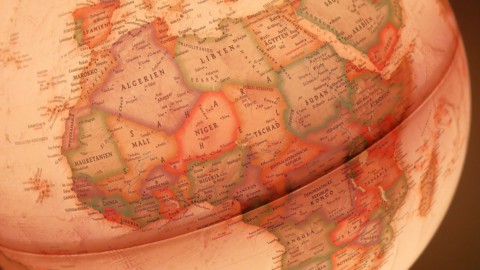
In Africa, between 2009 and 2019, the broadband connection contributed to the growth of the GDP for approx 1.120 billion dollars. He writes it in a report on Tim Study Center, specifying that four countries obtained the greatest benefits: South Africa (462 billion), Egypt (283) Nigeria (204) and Algeria (158). At a certain distance follows another group of economies formed by Morocco (88 billion), Libya (88,5) Tunisia (48,8) Angola (41) and Kenya (27,6).
The report cites the case of South Africa as an example, where, between 1995 and 2017, “every 10% increase in international bandwidth consumption led to a 0,15% increase in per capita GDP”.
In the light of these data, according to Tim, future investments for expanding bandwidth and international connectivity could lead to a increase in African GDP per capita even greater: estimates speak of a growth of between 0,42 and 0,58% in the first 2-3 years following the construction of the new infrastructures.
On the labor side, the report continues, in the areas connected with the broadband fiber there is a increase in employment between 2,2 and 8,2%. “This effect – reads the report – is greater for people who live very close to the grid (within 200 metres) or in urban areas, according to studies carried out in recent years at an international level”.
In any case, Africa is characterized by digitization levels that are far from homogeneous: in eight countries (Morocco, Algeria, Mauritius, Cape Verde, Botswana, Gambia, South Africa, Egypt and Tunisia) the percentage of connected users is higher than the world average; at the same time, however, the overall percentage of households with Internet access is equal to 14,3%, while individuals who surf the web are 28,6% and the penetration of fixed broadband subscriptions is just 0,5, 32,1%. As far as mobile broadband is concerned, the percentage of subscribed individuals stands at 75%, less than half the world average, which is XNUMX%.