The Autostrada dei Laghi turns one hundred: it was September 21, 1924 when, in the presence of King Vittorio Emanuele III, it was inaugurated the first section between Milan and Varese. It is often attributed the title of the first highway in the world, but in reality it is the world's first toll highway. It was a revolutionary engineering work conceived by the Italian engineer Piero Puricelli, which laid the foundation for the global highway system.
With the Autostrada dei Laghi, Italy not only anticipated the future of mobility, but also established itself as a pioneer in an era in which the automobile was becoming a symbol of progress and modernity.
The first highway in the world? Not really.
Let's say it right away, the Autostrada dei Laghi immense It is the first highway in the world. Yet, it is often celebrated as such, especially by Italian sources. The reality is a bit different: before it, other roads paved and dedicated to vehicular traffic had already made their debut.
For example, the Long Island Motor Parkway in New York dates back to 1908 (designed in 1906), and the AVUS near Berlin was opened to traffic in 1921. There is also the Bronx River Parkway, also in the United States, designed in 1906 and active since 1922. In short, the primacy is a bit… in question!
That said, if we want to be indulgent with national pride, we can recognize that the Autostrada dei Laghi was the first conceived from the very beginning to connect two destinations as quickly as possible, anticipating the modern concept of the highway. The idea came from the mind of engineer Piero Puricelli, already famous for the construction of the Monza racetrack in 1922, who imagined a future in which the automobile would dominate transportation.
Piero Puricelli's visionary idea
In the 1920s, Italy was still dominated by narrow streets shared by carts, bicycles and pedestrians. existing infrastructure was not sufficient to support the growing diffusion of the automobile. In 1923, 84.685 motor vehicles were circulating on Italian roads, including 57.000 cars, 25.000 trucks and 2.685 buses. It is in this context that Piero Puricelli, a Lombard entrepreneur and engineer, conceived therevolutionary idea of a road reserved exclusively for motor vehicles.
He founded the in 1921 Motorway Public Limited Company to build the Autostrada dei Laghi, receiving in 1923 from the Ministry of Public Works the concession to build and manage the work. The project aimed to connect Milan to the tourist areas of Lake Como and Lake Maggiore, as well as to the nearby cities of Como and Varese, creating a fast-flowing artery intended to promote economic and social development. With the support of the Italian authorities, Puricelli's vision quickly materialized. The first section Milan-Varese was opened in 1924, while the Lainate-Como section was opened in 1925.
An impressive engineering feat
The construction of the Milan-Varese, 49 kilometers long, represented an unprecedented technological and logistical challenge. The route was designed with wide curves and straight lines to promote speed and safety, and the pavement, made of high-strength concrete, was designed to last over time and support the increase in car traffic. Over 4.000 workers were involved in the works, which required the use of cutting-edge machinery, such as concrete mixers imported from the United States.
The highway initially had a single lane for each direction of travel and a width varying between 11 and 14 metresThe works for the Milan-Varese cost 90 million lire, with a daily transit of a thousand cars expected.
The innovation of toll
One of the innovations introduced with the work was the toll, a system that allowed the maintenance and management of the highway to be financed. The tariffs were diversified by vehicle type and power, with discounts for return journeys. Initially, the toll was not was paid at the toll booths, as happens today, but in service areas, mandatory for motorists. Milan's main toll booth, located at the end of Viale Certosa, became the symbol of a new era for road transport.
September 21, 1924: A “Royal” Celebration
The inauguration on September 21, 1924 It was a historic event, in the presence of King Vittorio Emanuele III. The inaugural ribbon was cut by a Lancia Trikappa of the Savoy family, with the king and engineer Puricelli on board, followed by a procession of invited motorists.
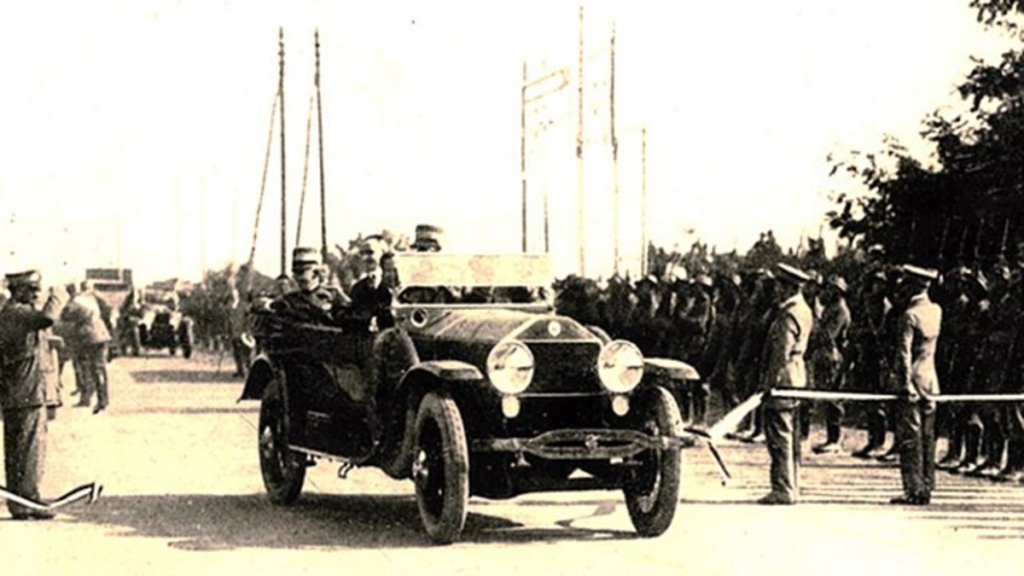
Un motorcade paraded along the new route, highlighting the effectiveness and innovation of the work. The highway, designed for an Italy projected towards the future, attracted the attention of technicians and engineers from all over the world, who came to study this model of infrastructure destined to become an international reference.
The Evolution of the Autostrada dei Laghi: From Two to Five Lanes
In the decades following its inauguration, theThe Lakes Highway was expanded and improved to adapt to the growing traffic needs. On 28 June 1925, the 9 km long Lainate-Como section (today A24) was inaugurated, followed by the 8 km long Gallarate-Sesto Calende section (today A26/A11), also in 1925. Despite these innovations, the motorway was built without specific regulations, since the first official regulation of motorways dates back to 1933.
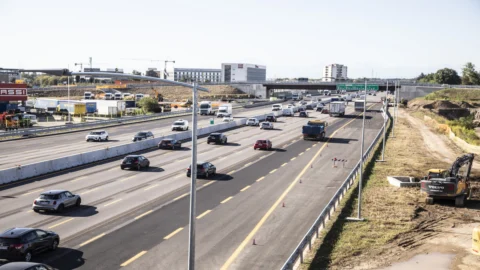
In 1965 was a second carriageway added, bringing the infrastructure to its modern configuration. In 1968 the Como-Monte Olimpino section was opened and in 1971 the Como-Chiasso section was completed, with the new Brogeda customs house. Today theA8, which connects Milan to Varese, is thethe only Italian motorway with five lanes in each direction.
Tributes for the Autostrada's centenary
On the occasion of the centenary of the inauguration of the Autostrada dei Laghi, will hold several commemorative eventsThe Automobile Clubs of Milan and Varese, together with Autostrade per l'Italia, will organize parades of vintage cars along the original route, and commemorative totems will be installed in the Villoresi Ovest and Brughiera Est service areas, created by the artist Lorenzo Martinoli.
On Sunday 22 September 2024, instead, the Automotoclub Storico Italiano and its Federated Clubs of Lombardy will celebrate the event with a with vintage cars and motorcycles built up to 1945 between Milan and Varese. A tribute to one of the symbols of Italian progress and innovation.