Analyzing the connection between war and artistic heritage means not only looking to the past, but also questioning the future of art in a world rife with increasingly complex tensions and wars.
Throughout history, works of art have often been treated as trophies of war. Even in ancient Rome, statues and artifacts were brought to Rome from conquered territories to celebrate the Empire's supremacy. In the modern era, Napoleon's plundering and, later, the Nazi raids during World War II demonstrated how the appropriation of cultural heritage served not only to consolidate political power but also to symbolically legitimize the victors' superiority.
In contemporary conflicts the phenomenon is even more dramatic
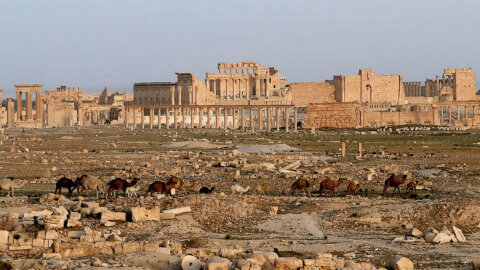
The Buddhas of Bamiyan and the ruins of Palmyra, all the way to Hamas in Palestine (where, according to a UNESCO monitoring project, 110 sites have been damaged since October 7, 2023: 13 religious sites, 77 buildings of historical and artistic interest, 3 repositories of movable cultural heritage, 9 monuments, 1 museum, and 7 archaeological sites) are emblematic examples, where art becomes an ideological target and a tool for erasing collective memory. Alongside this destruction, theaters of war fuel an international illicit market: artifacts stolen from troubled territories end up in private collections or circulate through clandestine channels, often with the complicity of intermediaries and buyers in Western countries.
Future prospects and challenges
The international community has implemented several instruments to protect cultural heritage threatened by conflict, but their effectiveness remains limited. The 1954 Hague Convention and its subsequent protocols represent the first comprehensive legal framework aimed at protecting works of art during wartime, while initiatives such as UNESCO's "cultural blue helmets" seek to provide concrete interventions on the ground. However, the practical implementation of these norms remains weak, due to political conflicts of interest, limited resources, and difficulties in monitoring sites in war zones.
Who protects artistic heritage in times of war: organizations, governments and NGOs
The protection of artistic heritage in war contexts involves various institutions at the international, national, and local levels. Among international organizations, UNESCO coordinates protection initiatives, promotes conventions such as the 1954 and 1970 Hague Conventions against illicit trafficking, and manages monitoring and training programs; the ICRC intervenes on the legal and operational level, ensuring compliance with humanitarian laws which include the protection of cultural heritage; while the Council of Europe and the UN support multilateral agreements and specific protocols.
At the national level, many states have internal laws to prevent the destruction and illicit trafficking of works of art, and customs authorities collaborate with Interpol to recover stolen goods. In addition, there are specialized forces such as UNESCO's "blue helmets for culture", teams of experts sent to conflict areas to protect sites and collections, and military units dedicated to safeguarding heritage, often operating in collaboration with local authorities. Finally, even the Non-governmental organizations play a key role: NGOs such as Blue Shield International e associations of archaeologists and art historians They develop protection protocols, training programs, monitoring systems, and reporting activities against illicit trafficking, helping to strengthen the global network for the protection of cultural heritage. In Italy, the protection of cultural heritage is largely entrusted to Carabinieri for the Protection of Cultural Heritage (TPC), a special department of the Carabinieri established in 1969.
Today digital technologies can offer new opportunities for protection and conservation
Worth noting is the importance of online cataloging and international databases that allow for the tracking of works and the reporting of thefts (e.g., the Art Loss Register). 3D scanning and blockchain-based tracking systems allow for the monitoring of artworks' condition, recording their provenance, and creating virtual archives capable of compensating, at least in part, for material losses. These tools, while innovative, do not replace physical protection nor can they reconstruct what is destroyed or stolen, but they complement security policies and preventative strategies in the field.
Art and Conflict: The Challenge of Political and Ethical Protection
Looking to the future, it is clear that safeguarding art requires a dual transformation, political and ethical. Politically, we must strengthen international cooperation with binding instruments, including effective sanctions against those who destroy or illegally trade in works of art, and more effective protection agreements between states and multilateral organizations. Ethically, we must foster a global collective consciousness that recognizes cultural heritage as a universal asset, above national, economic, or military interests. Only through this combination of concrete commitments and cultural awareness will it be possible to reduce the risk of destruction and plunder, transforming art from a target of war to a symbol of memory, identity, and social cohesion.