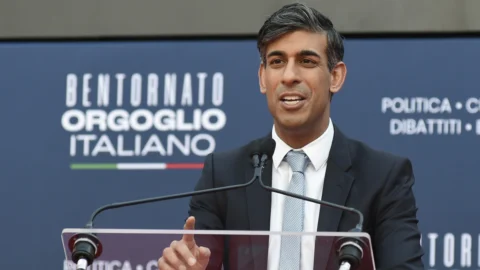
The Prime Minister's government is faltering Rishi sunak after Election Day in England which brought a series of significant defeats for the Tories, who lost a considerable number of seats in the regional councils, falling below 500, while Labor gained over 170, exceeding one thousand. The Tories' defeat was clear, with the loss of almost 450 local council seats and control of 12 local councils, across England and even the loss of Blackpool South by-election, in a by-election necessary after the resignation of a conservative MP implicated in a scandal.
For Labor, led by the moderate Keir Starmer, was a good result which however does not represent a definitive blow to the power of the Conservatives, but which fuels hopes of returning to the command of Downing Street, a position that has been missing since 2010 when Gordon Brown was in power. For the Tories, on the contrary, this was the worst electoral performance of the last forty years.
These elections were special because they introduced a new significant: for the first time, voters were asked to show an identity document to the polling station to vote. It seems trivial for us Italians but this represents an important change in the country, considering that There are no identity cards in the UK and previously voters were registered in advance by the Municipality and could simply announce your name at the polling station.
Labor is advancing but the Tories are not sinking
The predictions on the eve proved accurate: the Conservatives lost seats in the regional councils, while Labor gained over 170 seats, exceeding the thousand mark. Important victories also took place in Tory strongholds such as Hampshire and Dorset. Surprisingly, the Tories lose control of one of the two metropolitan areas at stake, out of 11 in total, with the defeat of the mayor of the West Midlands, Andy Street, in favor of Labour's Richard Parker. A surprising result, reversed in the final count, which represents a huge disappointment for the conservatives.
Labor demonstrated its strength by winning in areas such as Blackpool, a traditionally left-wing constituency. Here the Tories suffered a defeat also due to the success of the third party, the Reform UK, risking losing support among right-wing voters. The third party, heir to the Brexit Party and with radical right-wing positions, obtained 16,9% of the votes, a result similar to that of the prime minister's party. The Blackpool vote is the fifth by-election in the last 18 months that Labor has won by more than 20 percentage points. Keir Starmer defined the result “a political earthquake” and called for early elections.
In this election the Tories recorded the their worst results of the last five years. The only positive note for the Conservatives was the re-election of Ben Houchen as mayor of Tees Valley for the third consecutive term. The victory, however, seems to have been more linked to Houchen's personal popularity than to support for the party, especially considering that during the election campaign he kept his distance from Rishi Sunak, preferring the support of Boris Johnson. A positive signal instead came from the municipality of Harlow, in Essex, located a short distance from the capital where the centre-right government won despite an important electoral campaign carried out by the Labor leader himself.
Khan confirmed as mayor of London
Labor has achieved significant successes in local elections, with elected Labor mayors in the city like Liverpool, Manchester e Y. In the latter city, Labour's success, with the election of David Skaith, represents a serious blow for Sunak, considering that his constituency is precisely in Yorkshire.
In London, Sadiq Khan was reconfirmed mayor for the third term, despite winning by a smaller margin than expected, beating Conservative candidate Susan Hall with 43% of the vote to her 33%.
Labor leader Starmer celebrates together with Khan the "historic third term" of the outgoing mayor in London and reiterates the national challenge to the Tories, stating that "they must not remain in power even a minute longer".
Sunak wobbles but remains confident
Sunak has expressed disappointment for the results, but remains confident for the general election, despite warning signs from the projection that Labor is 9% ahead of the Conservatives. There foreign policy, particularly the position on Israel, played a key role, with Labor losing support in Muslim areas, although it made up for it with victories elsewhere.
Despite the defeat, the prime minister emerges as a more solid leader than expected, mainly thanks to his resilience and ability to avoid a total debacle, thanks largely to results in Tees Valley and the “Red Wall”, a series of constituencies in the UK that had traditionally voted for the Labor Party, but which in 2019 surprisingly opted for the Conservative Party in the general election. And part of the credit must be given to the support received from his "great enemy" Boris Johnson. Sunak's confirmation could indeed be attributed in part to the support of Johnson, who has proven to have particular appeal in those areas. This raises questions about the future relationship between Sunak and Johnson, considering the differences in both stylistic and political approaches.
Possible early elections
Labour's success in the recent local elections has prompted the party to ask for early elections which will arrive in any case within a few months. The United Kingdom must in fact vote for the renewal of Parliament no later than January 28th with the Chambers which must be dissolved, according to law, by December.
Sunak may be worried about the results of this election but can take comfort from some developments. Starmer has moderated Labour's position on Corbyn's radical socialism, but Harlow's recent defeat, despite a strong campaign, seems to suggest a lack of charisma in the opposition leader. Furthermore, the vote forecasts they still seem to lean towards the conservatives. At the moment estimates suggest that, if replicated on a national scale, Labor would have 34% of the vote, nine points above the Conservatives, not enough to govern without having an overall majority in Westminster. Despite everything, therefore, Sunak can be said to be optimistic ahead of the next general elections.
Last update 2,00am