For years they have been the great opponent ofEuropean automotive industry. Today i Chinese builders They could also become one of the keys to reviving factories in the Old Continent. A paradox that is only apparent: the same groups that have accelerated competitive pressure on European manufacturers can now contribute to fill factories remained too empty.
Between weak demand, rising costs and still largely unused production capacity, theEuropean automotive is changing its strategy. The new watchword is collaboration: no longer just a challenge with Chinese brands, but also potential alliances industrialists to bring cars back onto the production lines.
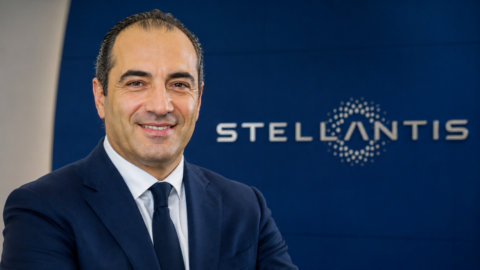
At the heart of this transformation is Stellantis, which looks to the future of the plant Cassino and to the relaunch of Maserati. According to Financial Times, the group led by Antonio Filosa is evaluating a strengthening of partnerships with Chinese operators already linked to the group, such as Leap motor e D, to increase volumes and give new perspectives to Italian plants.
Cassino, the testing ground for Stellantis' new strategy
Cassino It has become one of the most representative cases of the European automotive industry's difficulties. The plant, for decades one of the group's production jewels, is now far from its potential: in the first half of 2026, just 6.700 vehicles rolled off the lines, compared to a theoretical capacity of around 300 cars per year.
A gap that weighs on the entire region. The approximately 2.200 workers at the site are called back to the factory for only a few days a month, while the rest of the time is covered by social safety nets. factory crisis It also involves a vast network of suppliers and related companies, which depend on the production levels of the Lazio factory.
The challenge for Stellantis is to find a solution industrialist capable of relaunching Cassino without losing its Italian manufacturing base. Emanuele Cappellano, responsible for the group's European activities, ruled out the closure of the Italian plants and indicated the end of the year as the deadline for identifying a solution for the Lazio site.
The game also concerns MaseratiThe Italian luxury brand, called upon for a new industrial relaunch, represents one of Stellantis's most important assets and a symbol of Italian manufacturing capacity.
Is Stellantis looking to China to relaunch Cassino and Maserati?
The potential opening to Chinese groups marks a shift in the automotive industry. For decades, technology has flowed from Europe to China through joint ventures. Now the trend is reversing: Chinese companies are bringing rapidly developed expertise in electric vehicles, batteries, software, and digital platforms to Europe.
The most obvious case is that of Leap motor, a Chinese company specializing in electric vehicles with which Stellantis has established a strategic partnership. In 2023, the group invested approximately €1,5 billion in the company, establishing Leapmotor International, a 51% subsidiary of Stellantis, to market its models on international markets. This collaboration demonstrates how the new automotive competition is no longer just between competing brands: former rivals can now become partners to accelerate technology and regain competitiveness.
The D represents a natural partner, thanks to an industrial relationship with Stellantis, which originated through the historic collaboration with PSA in China. This relationship could evolve from joint production in the Chinese market to new industrial projects in Europe.
According to Cappellano, these partnerships not only represent a way to catch up with new Asian competitors, but also an opportunity To increase volumes and strengthen its European industrial presence. The manager confirmed that Stellantis is working on a solution for Cassino after discussions with two potential partners.
Cars: Why is Europe seeking deals with Chinese groups?
The Stellantis case is not isolated. The entire European sector is struggling with production below capacity: according to analyses cited by the Financial Times, the continent's plants are operating at an average utilization of less than 60%, while approximately 2,5 million vehicles of production capacity remain idle.
The consequence is a race to find new industrial formulas. Ford has reached an agreement with Geely in Spain, Nissan collaborates with Chery in the UK and Volkswagen evaluate partnerships with Chinese groups in the electricity sector.
For Chinese companies, manufacturing in Europe means being closer to customers, reducing the impact of tariffs, and strengthening their market presence. For European groups, it means access to rapidly developed technologies and expertise.
The Italian challenge: attracting investment without losing technology
The real game will not only be to bring new cars to the factories, but to understand which ones industrial value will remain in Europe.
A partnership with Chinese groups will be strategic for Italy only if it brings investment, production, skilled workers, and growth to the supply chain. The risk is that European plants will simply become assembly plants for technologies developed elsewhere.
The future of the automotive industry will therefore be played out on batteries, software, platforms, and innovation. Cassino could become one of the first examples of this new phase: the place where the challenge between Europe and China stops being just a trade war and becomes a game of industrial alliances.