Il The Highway Code could change again. Two years after 2024 reform, the Ministry of Infrastructure and Transport has developed a new package of interventions It is intended to change various aspects of traffic, from driving licenses to fines, to the rules for highways, motorcycles, and e-bikes. On the table are: 15 proposals, now submitted to the consultation of over one hundred operators and associations in the sector. The MIT's goal is to build a system that continues to focus on safety while also making penalties more proportionate to the severity of the violations and streamlining certain bureaucratic procedures.
Among the most significant changes are the possibility of obtaining a category B driving license at age 17, new methods for calculating speeding fines, faster notification of fines, the possibility of overtaking on the right under certain conditions, and new rules for motorcyclists and e-bikes.
Driving license at 17 and accompanied driving from 16
One of the most significant changes concerns young drivers. The project is based on the new European guidelines that Italy will have to implement by the end of 2027 and evaluates the possibility of obtaining a category B driving license at 17 years of ageDriving training could start even earlier. Those who have an A1 or B1 license, used respectively for motorcycles and microcars, could start driving a car already at the age of 16, provided that they are accompanied by an experienced adult in the so-called "accompanied driving" field.
The package also addresses the shortage of professional drivers in freight transport. Among the options is opening up the right for 17-year-olds to drive certain heavy vehicles without trailers, under certain conditions and subject to the required professional qualifications.
Speeding fines, higher penalties for those who speed more
The Ministry of Transport also aims to overcome some of the automatic mechanisms of the current sanctioning system. One of the principles underlying the review is to distinguish more clearly between those who slightly exceed the limit and those who engage in much more dangerous behaviors. The hypothesis is that to link the amount of the fine more closely to the kilometres per hour exceededOn the highway, a fine of 10 euros is assessed for each kilometer per hour over the limit, while on slower roads the penalty could drop to 5 euros. According to the examples in the proposals, traveling at 140 kilometers per hour where the limit is 130 kilometers per hour would result in a fine of approximately 100 euros, while traveling at 170 kilometers per hour would increase the fine to 400 euros. On a road with a 50-kilometer-per-hour limit, however, someone detected at 61 kilometers per hour would pay 55 euros, and those who exceed 90 kilometers per hour could be fined 200 euros.
The review would also concern other aspects. It is being evaluated Stop automatic inflation adjustments of fines, while for the prohibition of parking of two-wheelers the fines could be halved.
The government also aims to shorten the time for notification of reports detected by cameras and speed cameras. The deadline could be reduced from the current 90 to 30 days, along with simpler procedures for obtaining cancellation through self-defense in the presence of minor formal errors.
Highways, motorcycles, and overtaking on the right: what could change
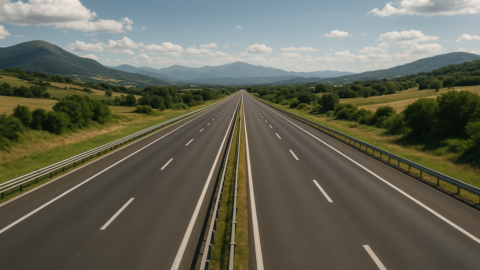
Another sensitive issue concerns highways. Some behaviors already common in practice could be regulated and, under certain conditions, become permitted.
For motorcyclists, the following is evaluated: ability to use the emergency lane when traffic is at a standstill or slowed down significantly, naturally maintaining absolute priority for ambulances and other emergency vehicles.
For cars, it could be recognized instead formally the circulation in parallel lanes on the highways with at least three lanes. This would allow, when traffic is moving in parallel lanes and the right lane is faster, a vehicle to be overtaken on the right without the maneuver being automatically considered an illegal overtaking maneuver.
Also the urban mobility It's part of the review project. For some e-bikes, particularly those used for home deliveries, mandatory helmets and identification tags are being considered, with the aim of making it easier to identify the vehicle in the event of violations.
Insurance, foreign fines, and permits for the disabled
The new package also addresses the Checks. For vehicles without insurance A system based on cross-referencing the DMV databases with electronic devices on the roads is being evaluated. This could create a sort of "digital driving ban," with subsequent seizure of the vehicle at the first inspection by law enforcement.
In terms of foreign license platesThe Ministry of Transport aims to make the recovery of unpaid fines more effective. Authorities could have up to five years to collect the amounts, and if the vehicle returns to Italy and is seized, payment could be requested directly from the driver present at the time.
The document also proposes new rules on the destination of proceeds of fines70% of the proceeds could be attributed to the road owner, with the obligation to use the resources for maintenance, signage, and safety, while the remaining 30% would go to the administration that discovered the violation.
Finally, the role of the national platform of the European Unified Disabled Permit, Cude. The goal is to allow pass holders to use restricted traffic zones (ZTLs) and reserved parking spaces throughout Italy without having to provide their license plate numbers to individual municipalities in advance. To encourage administrations to join the system, the plan is also to prevent those not participating in the platform from using the cameras to issue certain fines related to accessing restricted traffic zones.