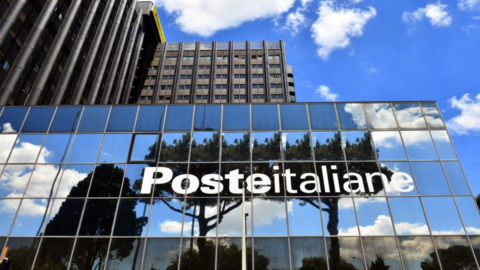
Poste Italiane It ranked at first place in the Finance category of the “Identity Corporate Index” (ICI) 2026 made by ET.Group, the index that evaluates the level of integration of the criteria Esg (environmental, social and governance) in corporate strategies and processes. The group has also positioned itself among the top three companies in the general ranking, behind Hera e Prysmian.
The survey results were presented at the ESG Business Conference. Over 100 companies, both listed and private, participated in the 2026 edition of the index, including more than half of the companies in the FTSE MIB.
What does the Identity Corporate Index measure?
The Esg Identity Corporate Index analyzes the degree of integration of the Esg factors of governance corporate governance, sustainability-related remuneration policies, board composition, stakeholder management, supply chain due diligence, and non-financial reporting.
The index covers 55% of FTSE MIB companies and also includes a growing share of unlisted companies, now accounting for 31% of the overall sample. Among listed companies, 30% belong to the FTSE MIB, 39% to the FTSE Italia Mid Cap, and 26% to the FTSE Italia Small Cap.
The 2026 edition he also paid particular attention to the communication sustainability, evaluating companies' ability to develop a coherent and transparent narrative with respect to their declared ESG objectives.
Comments
“I would like to express my most sincere thanks for the excellent result achieved in our latest ESG assessment – declared the general director of Poste Italiane, Joseph Lasco For Poste Italiane, being confirmed, once again, as a virtuous company represents an important competitive advantage and a clear signal of reliability for all our stakeholders. This achievement is the fruit of the commitment and invaluable work of our entire team, demonstrating our genuine concern for the environment, the well-being of people, and the creation of sustainable value for future generations.
Christian Fabbri, Executive Chairman of the Hera Group, emphasized the "consistency and solidity" of the ESG process, highlighting the value of continuity on the podium and the ability to generate "shared value" through structured governance. For Prysmian, Cristina Bifulco He emphasized the role of strategy as part of corporate culture, highlighting ESG governance as a lever for transforming sustainability into a “competitive advantage.” Fabio Massoli (Cdp) highlighted a "pragmatic and concrete" approach to ESG integration in strategic choices, oriented towards the transition and long-term impacts.
For Bnl Bnp Paribas, Luca ranieri He emphasized the growing centrality of ESG in stakeholder assessments and the importance of a “resilient and inclusive” economy. Yuri Santagostino (Cap Group) highlighted the role of ESG governance in making "commitments credible and results measurable". Erg, with Emanuela Delucchi, reaffirmed the solidity of the group's path and its recognition as a "top performer" in global sustainability. Federico de' Stefani (Sit) called for sustainability governance “integrated into business processes,” capable of combining transparency and value creation.