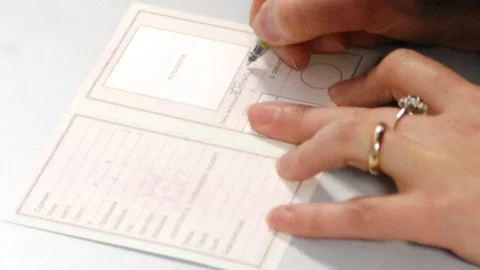
From 3 August 2026 la paper identity card can no longer be used to travel abroad, but remains valid in Italy until the natural expiry date indicated on the Valid identity documentThis change stems from EU Regulation 2025/1208, which introduces new security standards to standardize European citizens' documents and combat the risk of counterfeiting.
The new rules require the use of advanced technological systems, such as the optical readable zone (MRZ) and the microchip with biometric data, tools that are not present in the Italian paper version. For this reason, the old model loses its international validity. even if the deadline reported on the document it has not yet been reached.
To manage the transition to the Electronic Identity Card (Cie) and ensure continuity for citizens still in possession of the paper document, the Government The Ministry of the Interior introduced a transitional period through Legislative Decree no. 108/2026 and Circular no. 58/2026, confirming the use of the document throughout the country for activities requiring personal identification.
Identity document: what can you do with the paper form?
Despite the ban on travel abroad, the paper identity card that has not yet expired continues to be recognized on Italian territory until the natural expiry date indicated on the documentIt can therefore be used for personal identification, in relations with public administrations, and to access the main public and private services that require identity verification.
Permitted uses also include healthcare services, social security services, insurance procedures, transactions at banks and post offices, pension collection, and all administrative activities that require proof of identity.
The legislation also affects existing relationships: public and private contracts signed by August 3, 2026 Using the paper card as an identification document will continue to be valid until their natural expiration. Therefore, it will not be necessary to update documents relating to bank accounts, insurance, household utilities, rental agreements, or other procedures already underway.
The measure concerns approximately five million citizens still in possession of the old model and aims to make the transition to the Electronic Identity Card (Cie).
Identity document for traveling abroad: what you need
While paper identity cards can still be used in Italy until their natural expiration date, the situation changes for travel outside the country. Starting August 3, 2026, the old model will no longer be recognized at borders, even if the expiration date on the document has not yet been reached. The new provision applies to: travel to European Union countries e of the Schengen area: to travel abroad it will therefore be necessary have a valid CIE for expatriation or a passport valid.
The change comes at a particularly sensitive time, that of summer departures, and has prompted many citizens to check the validity of their documents in advance. Anyone planning a trip outside Italy without a valid CIE or passport risks being unable to leave. The approaching new European deadline has led to an increase in requests for Electronic Identity Cards (EIDs) at municipal offices. To manage the increase in applications, several Municipality they predicted openings registry offices and dedicated booking systems. For those who find themselves in a situation of urgency documented, for example for an imminent departure for travel, health or work reasons, can be activated priority routes to obtain the release of the document, presenting the documentation that demonstrates the necessity of the request.
Replacing the paper identity card with the Electronic Identity Card is part of the European Union's modernization of identification systems. The Electronic Identity Card (CIE) guarantees higher levels of security thanks to its microchip and biometric data, which allow for more reliable checks and greater protection against fraud, forgery, and misuse.
Electronic ID: The CIE for those over 70 will not be renewed every ten years.
Among the new features related to the electronic identity document there is also one dedicated to over 70. From 30 July 2026, in fact, anyone who has already turned 70 at the time of the request will be able to obtain a Electronic Identity Card without the traditional renewal every ten years.
The new CIE will have an administrative validity conventionally set at 50 years and can be used as an identification document and, in countries where it is permitted, also for travel abroad. The goal is to reduce bureaucratic burdens for the elderly and ease the burden on registry offices.
Anyone who already has a valid Electronic Identity Card doesn't need to do anything: they can continue to use it until its expiration date. Only after that, if the holder is already 70 years old, can they receive the new version with extended validity.
However, a distinction remains for access to digital services. The security certificate present in the CIE microchip, required to use online services of the Public Administration like INPS and App IO, it will maintain a duration of ten yearsAfter this period, you will need to request a new issue to continue using the electronic document in digital format.