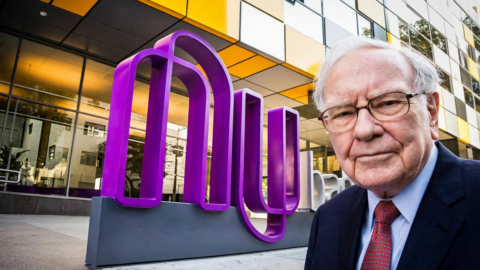
Brazilian fintech Nubank surpasses pFor the first time in its history, the threshold of one billion dollars of quarterly profitThe financial statements released by Nu Holdings, the New York Stock Exchange-listed company that controls Nubank, portray a digital bank that has entered a new phase of its growth: no longer just a rapidly expanding fintech, but a financial group capable of generating profits on an international scale.
Net income reached $1,06 billion in the second quarter of 2026, with a growth of 49% compared to the same period of the previous year and 17% compared to the first quarterThe result exceeded analysts' expectations of approximately $967 million. This is the first quarter in which Nubank surpasses the psychological threshold of $1 billion.
Revenues also hit a new record: $5,88 billion, up 39% year over year. Net interest margin rose to 22,9%, while risk-adjusted net margin reached 12,4%, up from 9,9% a year earlier. Return on equity (ROE) rose to 33%.
The digital bank has become a real bank
Behind the numbers is above all the expansion of credit. The overall portfolio reached $39,4 billion, 37% more than a year earlier. Of this, $26 billion is represented by credit cards, $10,3 billion by unsecured loans, and $3,1 billion by secured credit.
At the same time Deposits reached $45,3 billion, with annual growth of 18%. This is a key shift for the business model: Nubank is no longer just a platform that wins customers by offering low-cost digital banking services, but is building a balance sheet increasingly similar to that of a large traditional financial institution, with a growing deposit base to convert into profitable businesses.
The scale is equally impressive. Nubank added approximately 4 million customers in the quarter, reaching nearly 139 million between Brazil, Mexico, and Colombia. Brazil remains the main market, but Mexico is assuming a growing role in the international strategy.
Credit remains the point to monitor
The picture is not without risks, however. Profit growth has been accompanied by a very strong expansion of credit and therefore by need to keep the quality of jobs under control.
In the second quarter the cost of credit fell by 9% compared to the previous quarter, about 1,7 billion dollarsBut bad debts over 90 days rose to 6,9%, while delinquencies in the 15-90 day range stood at 4,8%. Reuters also emphasizes that part of the improvement in credit costs is due to normal seasonality and the effects of debt restructuring initiatives in Brazil.
It is therefore credit, even more than customer growth, that determines the next phase of Nubank's historyIf the institution manages to grow lending while keeping losses under control, the effect on profitability could be very significant.
And this is where Warren Buffett comes in.
The story becomes particularly interesting when we remember that Until a few years ago, Berkshire Hathaway was also among Nubank's investors., Warren Buffett's company.
The entry dates back to 2021, when Berkshire participated in a private round that brought Nubank's valuation to around $30 billionAt the time of its New York listing in December of the same year, Berkshire also purchased approximately $250 million in shares. The overall position is commonly reconstructed as approximately 107 million shares, purchased at an average price of approximately $9,82.
It was a significant gamble on a company that at the time represented above all a promise: to win over millions of Latin American customers through a fully digital model, with lower operating costs than traditional banks. The gamble, at least on the business level, paid off.
Buffett, however, sold
Between the third quarter of 2024 and the first quarter of 2025 Berkshire has gradually liquidated the entire positionApproximately 20,7 million shares were sold in the third quarter of 2024, another 46,3 million in the fourth quarter, and the final 40,2 million in the first three months of 2025. The average sales price was approximately $13,46, $13,22, and $11,83, respectively. The position was then closed with a estimated overall profit in the order of 250 million dollars.
The paradox is evident: Berkshire exited just as Nubank continued to rack up record profitsIn 2024, the company had already generated approximately $1,97 billion in annual net income, and in the first quarter of 2026, it had achieved $871 million in quarterly profit.
A Buffett mistake?
This is the easiest question, but also the one that requires the most attention. Berkshire's exit doesn't prove that Buffett considered Nubank a mediocre company or destined for failure. On the contrary, the sale was part of a in a broader reduction of Berkshire's exposure to the financial sector, while the group was accumulating cash and also reducing other banking holdings.
However, an interesting lesson remains. Berkshire identified Nubank when the market still considered it primarily a high-potential fintech. It invested at a relatively low price, watched the company go public, grow, and become profitable, and he finally monetized the position.