Luxury today no longer guarantees returns or financial stabilityThose who purchase it in the future will have to invest primarily in experience, quality, and personal prestige, not in a guaranteed financial return. And those who thought luxury could be an excellent investment asset will have to start thinking differently and accept it. The global market slowdown now appears unprecedented, with declining consumption due to geopolitical tensions, rising interest rates, persistent inflation, and more cautious consumers, especially among younger ones.
The luxury personal goods market continues to experience contractions
The drivers of the slowdown include lower demand from the US and China, consumers becoming more value-conscious, and difficulties with distribution channels and creativity in the sector. At the same time, M&A activity in the luxury sector has declined sharply, with a 2023% decline in deals in 51 and stagnant levels in 2024 and the first half of 2025. There is hope for a recovery, but things are still unsettled. Likewise, funds, such as real estate funds, are exiting luxury assets to address accrued financial and debt difficulties. Furthermore, we must not ignore the global trade tensions between the US and China, which continue to weigh on luxury goods sales. The new tariffs introduced, up to 245% in some cases, risk translating into higher prices for consumers, eroding demand, especially among aspirational buyers and for entry-level goods. Shares of luxury giants (such as LVMH, Prada, and Kering) have suffered significant declines on the Paris and Hong Kong stock exchanges in response to tariff concerns. This suggests that the fragile market recovery, combined with escalating tariffs, is putting pressure on global sales.
Another sign of change of change
A key sign of change in the luxury market: those with significant wealth are no longer giving in to the temptation of excessive or ostentatious purchases, signaling a redefinition of values and priorities. A clear sign of the luxury market's maturation. High net worth individuals, with more informed purchasing decisions, will influence the later generations and the industry itself. In short, one could argue that we urgently need to see the emergence of a true leadership that is far more culturally advanced than in the past.
Which luxury sectors are suffering the most?
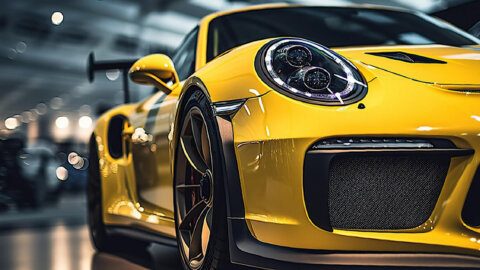
On the front line, fashion and accessories which are recording significant contractions: for example, the leather goods and footwear sector recorded an 8,1% decline in 2024, with forecasts of likely modest growth (around +2% and +1% respectively) only for the end of 2025. Watchmaking follows – after a speculative boom recorded in recent years – has suffered rather marked drops of 25% to 30% and in some countries such as China even reaching higher percentages. But there is no shortage of other sectors, such as extremely luxury cars, where the ostentation of a status that doesn't always correspond to actual financial availability is evident. This is referred to as the phenomenon of "aspirational luxury," or spending to appear wealthier than one actually is. And there are quite a few examples.
Weakening of the perception of the value of luxury
But it's not just geopolitical factors influencing the global economy, but also a different way of looking at the future. Because it's not just a question of tariffs, trade tensions, or economic cycles, but a more profound shift affecting the very perception of value among consumers, especially the younger generations.
Trends predict that aspirational consumers (i.e., the upper middle class who purchased luxury goods as a sign of status) are, in fact, the most vulnerable. Economic pressure is pushing them toward second-hand, rental, and "premium" brands as more accessible options. Indeed, today there is a greater preference for the used market—though we must be careful not to fake it to appear second-hand (a growing phenomenon)—or less expensive alternatives. And it's not just the younger generations who are riding this trend, but also people who no longer want to feel excluded from the real social context in which they live.
Interesting is the factor defined as "quiet luxury" meaning less logo and discretion
Luxury ceases to be merely a display of possessions and becomes a choice of identity: sustainability, ethics, and uniqueness matter more than the price itself. The weakening of the perception of the value of traditional luxury is actually the sign of a redefining luxury itself. The future won't necessarily be "without luxury," but a different kind of luxury: more selective, precisely, more silent, as the term itself suggests. A greater commitment to quality that communicates value through silence, quality, and cultural exclusivity. The new model will have to be discreet, choosing not to communicate through the ostentation of labels or logos. Meanwhile, the old concept of luxury, which served primarily to demonstrate belonging to a social class or status, is becoming increasingly obsolete and, for those who also believed it to be an investment, destined to become a risk factor if viewed solely as a commodity to be owned for its economic value.
True "investment" in luxury becomes experiential, cultural, and identity-based, rather than financial: choosing quality, discretion, and sustainability means investing in experience, personal prestige, and longevity, rather than in a certain monetary gain.