It was in the air, it's now officialBrussels change pace on the car and is revisiting one of the most sensitive dossiers of the Green Deal. The European Commission revises the 2035 goal: the goal is no longer the total elimination of emissions, but a 90% reduction in CO2, a turning point that loosens the de facto ban on internal combustion engines and gives the European automotive industry some room for manoeuvre.
Lo stop the sale of new petrol and diesel cars it is not formally archived, but redefined in its assumptionsThe result is a less rigid transition, the result of strong pressure from manufacturers and several governments, particularly Germany and Italy, and the need to respond to increasingly aggressive global competition, especially from China.
The new 2035 perimeter: the 10% "saved" by the ban
The key point remains thetailpipe emissions targetFrom 2035, for cars and vans, manufacturers will no longer have to guarantee 100% zero-emission production, but achieve an overall reduction of 90%. In practice, up to 10% of production may be returned outside the perimeter “zero emissions”, provided that residual emissions are offset.
The Commission has clarified that this quota will have to be balanced through green measures along the industrial supply chain, such as the use of low-emission steel produced in Europe or the use of biofuels in non-electric vehicles. An approach that maintains the climate control system, but recognizes the limits of the forced transition.
Which technologies remain on the market
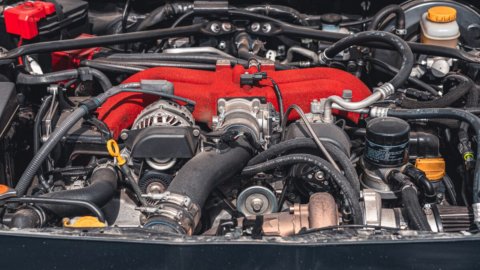
With the new regulatory architecture, More technologies will continue to play a role beyond 2035. In addition to the battery-powered electric cars and hydrogen vehicles, the Commission explicitly opens to plug-in hybrids, range extenders, mild hybrids and, in part, also to internal combustion engines, provided they are included in the compensation system.
It is the consecration of technological neutrality, long supported by Italy and Germany and summarized by the EPP with the formula: all technologies will remain on the market. A paradigm shift that acknowledges the difficulties European industry is having in sustaining a transition based exclusively on electric vehicles, while demand remains weak and Asian competitors are gaining ground.
Vans and commercial vehicles: lighter targets
The Commission intervenes also on light commercial vehicles, reducing the 2030 emissions reduction target from 50% to 40%. This decision acknowledges the segment's structural lag in the spread of electric vehicles and will have a direct impact on the groups most exposed to this market, starting with Stellantis.
In parallel, it comes greater temporal flexibility introduced for the period 2030-2032, with the possibility of meeting the targets on a multi-annual rather than annual basis, without changing the overall objectives.
Brussels then aims with strength on company fleets, considered the most effective lever for accelerating electric vehicle adoption. Fleets account for approximately 60% of European vehicle registrations and are a crucial hub for the used car market, which accounts for approximately 80% of EU citizens.
The new regulation introduces Binding targets for Member States on zero- and low-emission cars and vans, while leaving governments full discretion over the instruments, with the expected use of fiscal leverage. The goal is to stimulate demand without imposing a single model.
Mini electric cars and strengthened super credits
The package includes space for new incentives for the production of small electric cars, the most widespread category in Europe. Until 2035, these models will benefit from supercredits, with each vehicle counting as 1,3 cars towards European targets, allowing manufacturers to build up emissions margins.
The measure directly favors strong producers in the compact segment – from Stellantis to Renault to the mainstream brands of the Volkswagen group – and aims to make electric cars more accessible to consumers.
Batteries, supply chain and simplification
Alongside the 2035 review, the Commission confirms a €1,8 billion plan for the European battery supply chain and a regulatory simplification package for the automotive sector. The measures include reducing regulatory barriers for electric vans and streamlining procedures for Euro 7 standards, with estimated savings for the industry.
A is already planned comprehensive review of the new regulation in 2032, to assess the impact of the measures and decide on any further corrections.
The decision, anticipated in recent days, was welcomed as a victory for the European automotive industry, but it has already drawn political criticism. The Greens in the European Parliament are calling it a "hollowing out" of one of the most iconic laws in the fight against emissions. Commission President Ursula von der Leyen defended the choice, claiming that “Europe remains at the forefront of the clean transition” and underlining that the proposals are the result of an intense dialogue with the automotive sector, civil society and stakeholders.
Eventually Brussels has corrected course, aware that the risk of a collapse of the European automotive industry was becoming too high. This decision does not signal a renunciation of climate goals, but rather an adjustment in industrial policy: no more “Drink or nothing”, but rather “Drinks and more”, to prevent the ecological transition from turning into a competitive boomerang for Europe.