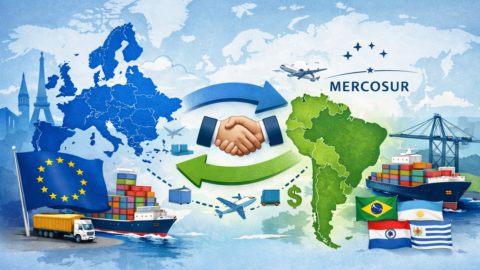
Gray smoke if not even white smoke for the longed-for trade agreement between the European Union and the Mercosur bloc, which includes Argentina, Brazil, Bolivia, Paraguay, and Uruguay and, until rights were suspended for violating the treaty, also included Venezuela, where "the United States is now in charge," according to Donald Trump. Prime Minister Giorgia Meloni, who had called her Brazilian counterpart Lula before Christmas to reassure him, obtained the approval of Italian farmers following the EU Commission's concession "to amend, as requested by Italy, the proposal for a new multiannual financial framework to make an additional €45 billion available for the Common Agricultural Policy as early as 2028," the Prime Minister's office acknowledged. It therefore seems that the signature, in Paraguay, could arrive as early as Monday 12 January, despite Emmanuel Macron's French vote against it, ultimately choosing to side with farmers in a bipartisan decision: "It's an agreement based on parameters from another era; the economic benefits would be minimal and do not justify exposing sensitive agricultural supply chains and our food sovereignty to risk."
READ MORE Meloni's press conference: What the Prime Minister said about Mercosur di V. Patanè
South Americans are divided on Venezuela but united in urging Brussels to sign
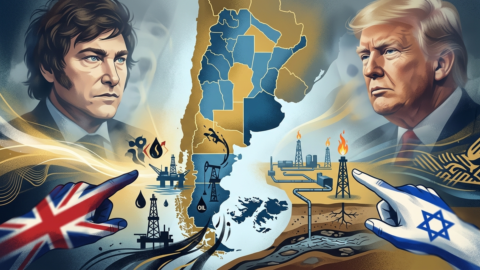
On the South American front, partners are divided over Venezuela—Brazil and Uruguay have harshly condemned the US blitz, while Argentina supports Washington—but they all agree on the need to strengthen trade agreements in times of tariffs and new balances, and indeed are in a hurry to close. The Maduro operation has in fact cleared the way for the return of the Monroe Doctrine And this could alienate China from a continent, South America, where it had recently become a strategic partner, especially with Lula's Brazil, from which it sources literally every commodity. Beijing now wants to diversify and become more independent in its agri-food sector: for this reason, starting January 1st, it imposed a 55% tariff on beef imports, which until yesterday it sourced almost exclusively from Brazil, the world's leading exporter.
Lula's Brazil is in the greatest hurry: here's why
In this scenario, it is above all Lula – outgoing president of Mercosur, now it is Paraguay's turn – who is pushing the accelerator: the Brazilian president, whose mandate expires this year (he will run for a fourth term in October), said that either it closes within two months or nothing happens, and in the meantime he is frantically looking around to sell his wares at convenient prices. South America is in fact the main supplier of food to the world and also in terms of commodities energy is no joke, being rich in oil and all those minerals that are now in fashion, from lithium on down. That's why trade negotiations are underway on all fronts, from Canada to Japan, from the United Kingdom to Indonesia, passing through India, the most populous country in the world.
Is the EU-Mercosur agreement really beneficial? And who benefits most? Here are the numbers.
But is this EU-Mercosur agreement, in its infancy for a quarter of a century, really worthwhile, and who benefits most? The agreement will involve economies worth a combined $22.000 trillion, creating the world's largest free trade area, home to over 700 million people. According to EU Commission estimates, businesses on our continent they would save 4 billion euros in duties, would export 39% more and create almost half a million jobs. Put this way, there would be no doubt, and it would also be an opportunity for Italy: Mercosur represents the seventh largest market for Italian exports outside the EU, and nearly 100.000 jobs in Italy depend on exports to that areaThe sectors most affected are transportation materials, industrial machinery, and chemical and pharmaceutical products, but the gradual elimination of tariffs would open up new markets, given that we currently export very little of our excellent agri-food products, such as wine, olive oil, and canned tomatoes.
Doubts about health standards: France votes against and blocks fruit imports from South America.
According to Bloomberg, however, the agreement would benefit Latin Americans above all, who would see their overall GDP increase by 0,7%, while we would only see it increase by 0,1%. And then there are all the issues relating to health and environmental regulations and quality standards, starting with the hundreds of foods—both Italian and European—with protected trademarks, which would be penalized by competition from lower-cost products. Precisely for this reason, French President Emmanuel Macron, who ultimately refused to sign the green light despite pressure from his friend Lula, is moving ahead on his own, accommodating the demands of the agricultural world: Paris has suspended imports of fruit from Latin America if grown with pesticides banned in Europe. According to what Prime Minister Sebastien Lecornu wrote in X recently, these are primarily "apples, grapes, citrus fruits, mangoes, and avocados."