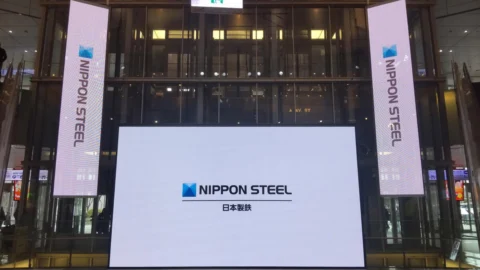
After weeks of speculation, the President of the United States, Joe Biden, has decided to block acquisition since about $15 billion US Steel by the Japanese giant Nippon Steel, Citing national security reasonsThe executive order issued requires the two companies to abandon the deal within 30 days, halting a deal that would have created the world's third-largest steel group, behind China's Baowu Steel Group and Luxembourg's ArcelorMittal.
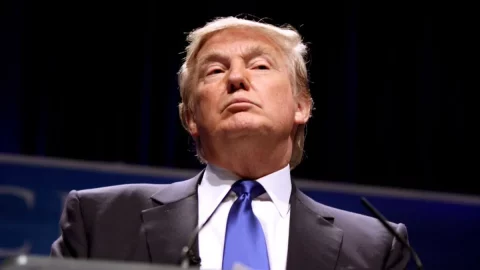
The decision aligns with the positions of the president-elect Donald Trump, who had already expressed his intention to oppose such acquisition once installed in the White House.
“A strong domestically owned and operated steel industry is a essential priority for national security and critical to resilient supply chains,” Biden said. “Steel fuels our infrastructure, auto industry, and defense industrial base. Without domestic production, our nation is less strong and less secure.”
No to the US-Nippon merger: here's why
Biden's decision comes after the Committee on Foreign Investment in the United States (Cfius), charged with assessing the risks to national security, failed to reach a consensus on the impact of the merger. The main concern was the risk of putting one of America's major steel producers under foreign control, with possible consequences on supply chains critical for strategic sectors such as transport and energy.
“For too long, American steel companies have faced unfair trade practices, with foreign steel dumped on global markets at artificially low prices,” Biden continued. “I have tripled tariffs on imports from China and supported the opening of more than 100 new steel and iron plants since taking office. Today, thedomestic steel industry is the strongest that it has been for years”.
Biden stressed that US Steel will remain “a proudly American company, American-owned, American-run, with American unionized workers, the best in the world.”
The decision reflects a growing bipartisan opposition to foreign investment in strategic sectors, but It will also complicate relations with Japan, a key U.S. ally. Japanese officials have expressed concerns, warning that the move could damage bilateral economic relations. Nippon Steel has announced plans to challenge the block in court, starting a legal battle that could drag on over time.
A spokesperson for the Japanese company said: “Our proposal would have strengthened the American steel industry and created a strategic alliance against Chinese competition.”
The economic consequences
Biden's decision was welcomed by the United Steelworkers union, which he had expressed concerns about job protection and financial transparency. Nippon Steel had promised investments significant, including $2,7 billion to modernize U.S. Steel's Mon Valley and Gary plants, and a guarantee of no layoffs through 2026.
In the market, the US Steel shares fell nearly 8% in premarket trading, falling to $30,17. The company, already struggling with declining steel demand and high costs for its new Big River 2 plant, will now have to review its growth strategies and financial stability.
The Uncertain Future of US Steel
Despite the acquisition block, the future of US Steel remains uncertainThe company may need to look for a new buyer or face large investments to modernize its aging facilities. Cleveland-Cliffs, a domestic competitor, had previously shown interest but later changed its strategy.
According to the American company, the transaction would have created "aalliance in steel to combat the competitive threat from China”. Failure to complete the agreement now could lead to the closure of some factories, unless new funds are found for the necessary investments.
Remain big doubts on how US Steel will address future challenges and whether this move will prove to be a farsighted one for the American industry.