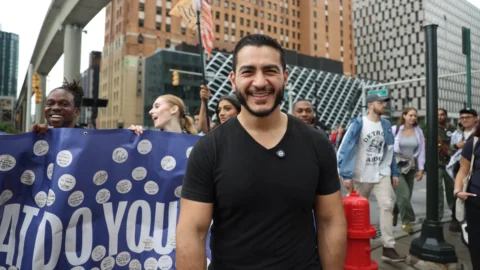
Last Tuesday Abdul El-Sayed, a Muslim epidemiologist and son of an Egyptian immigrant couple, obtained his Democratic nomination for one of the two seats of the Michigan in the federal Senate. He defeated Haley Stevens, incumbent House Representative from Washington, with 48,5% of the vote, compared to 47,5% for her challenger and 4% for a third candidate, Mallory McMorrow.
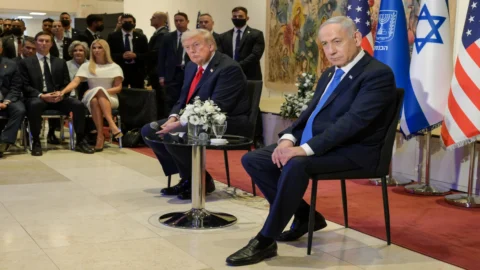
The Facebook page of Islam Channel, a London-based satellite television channel, interprets El-Sayed's victory mainly as a defeat of the American Israel Public Affairs Committee (Aipac), a lobby that, according to an estimate by the “New York Times”, would have financed Stevens' campaign with approximately 32 million dollars through the United Democratic Project, a Political Action Committee (PAC) linked to this organization (Jennifer Medina and Theodore Schleifer, After Michigan Loss AIPAC Weighs a Second Effort to Defeat El-Sayed, August 5).
Numerous observers have expressed a similar assessment, albeit less explicitly and directly. El-Sayed himself, in an interview published by the hyper-progressive magazine "Mother Jones" on the eve of the elections, portrayed the following day's vote as a clash between himself and AIPAC, rather than between himself and Stevens.
El-Sayed and the Islamic lobby
A supporter of the Palestinian cause, a proponent of the thesis that a “genocide” was carried out in the Gaza Strip by the IDF and an inveterate critic of Benjamin Netanyahu's alleged influence on Donald Trump's Middle Eastern policy, El-Sayed has positions that are unequivocally contrary to the interests of the State of IsraelDespite his narrow margin over Stevens, his success was undoubtedly aided by the fact that Michigan has the sixth largest Muslim population in the Union and the second largest population of Arab origin or ancestry.
It's no coincidence that in the final days of the election campaign, the Council on American-Islamic Relations, an association of Muslim activists, dedicated itself to mobilizing thousands of Muslim voters in support of El-Sayed through robocalls. It's too early to assess whether his candidacy could constitute a real turning point in the foreign policy orientation of the Democratic Party, or even the United States, as some commentators are perhaps too hastily suggesting. A real shift will largely depend on El-Sayed's ability to win a Senate seat in the 2019 elections. midterm of next November 3rd.
Nevertheless, the strong Aipac's involvement in the primaries of the Democratic Party in Michigan leads us to question the influence that pressure groups representing the interests of foreign countries or entities are able to exercise in American politics, moreover in broad daylight and in full compliance with American legislation.
A nation of immigrants and their pressure groups
The United States has set itself up as a Multiethnic society since their birth. According to the first census, carried out in 1790, less than ten years after the formal achievement of independence from London in 1783, inhabitants of English ancestry were only 48% of the total population.
Since the late eighteenth century, immigrants seeking American citizenship have been required to swear to renounce any form of allegiance to their native nation. However, a complete severing of these ties has generally proven impossible, even for those in the generations immediately following the immigrants, due in part to trivial factors such as solidarity with people of the same ethnic origins and the need to support relatives and friends in their homeland.
This situation has favored the emergence in the United States of organizations aimed at obtaining from Washington policies and programs favorable to the interests of their members' countries of origin. These groups have operated by mobilizing voters from their respective national minorities to exert pressure on the White House and on senators and representatives in Congress, or to support candidates in elections who are willing to accommodate these associations' demands.
The activism of ethnic lobbies
These dynamics have been at work for a long time. For example, in the mid-nineteenth century, Italian Risorgimento exiles who had fled to the United States, especially after the failed uprisings of 1848-1849, attempted, albeit unsuccessfully, to gain the support of the Washington government for the political unification of their homeland. After the outbreak of the First World War, Americans of German and Irish descent campaigned for the preservation of US neutrality: the former to prevent intervention against Germany, the latter in the hope that—without Washington's support—the United Kingdom would be defeated and the conditions for Irish independence from London would be created.
Italian-Americans, however, were not satisfied with Washington having entered the war against Germany alone on 6 April 1917 and put pressure on the United States to also open hostilities against Austria-Hungary, that is, against the Empire that subjugated the "unredeemed lands" of Trentino and Venezia Giulia.
The activity of Italian-American lobby This continued after World War I. They switched to the Republican Party in the 1920 presidential election to retaliate against Democrat Woodrow Wilson, who, at the Paris Peace Conference, had opposed the assignment of Fiume to Italy. They then threatened to do the same in the 1936 elections if Democratic President Franklin Delano Roosevelt and his party, which held majorities in both houses of Congress, enacted sanctions against the Fascist regime in retaliation for the Italian invasion of Ethiopia the previous year. After the end of World War II, Italian-Americans mobilized against the imposition of a punitive peace on Italy, for an increase in immigration visas available to Italian citizens, and for their country's inclusion among the beneficiaries of Marshall Plan aid and among NATO members. Similar pressures also affected ethnic minorities numerically smaller than Italian-Americans, estimated to number around five million in the years surrounding World War II.
A particularly significant case was that of the Americans of Armenian ancestry, an ethnic group of fewer than 80.000 individuals in 1919 and just over half a million today: for decades, until a declaration to that effect by Joe Biden in 2021, they fought to have the United States officially define the killing of approximately 1.5 million Armenians by the Turkish Empire during the First World War as “genocide.”
The so-called action has also been decades-long China Lobby, with objectives that have changed over time and had alternating outcomes: support for China following the Japanese aggression of 1937, support for Chiang Kai-Shek's nationalists against Mao Zedong's communists during the civil war, exclusive recognition of the Republic of China after the proclamation of the People's Republic of China, defense of Taiwan's independence.
A similar consistency of commitment has characterized the Irish-AmericansIn particular, with the resurgence of clashes between unionists and nationalists in Northern Ireland in the 1970s, Irish-Americans formed the Irish National Caucus in 1974, which is still active today, to balance British influence in Congress in Washington and support candidates in favor of the unification of an independent Ireland from the United Kingdom.
Instead, the Cuban American National Foundation, which arose among Cuban exiles and their children, has pushed the US government and Congress since 1981 to implement policies aimed at overthrowing Fidel Castro's regime, especially through the ironclad application of economic sanctions.
The American Israel Public Affairs Committee
AIPAC, which claims to have nearly seven million members, is considered the most influential of these pressure groups.
Established in 1956 as a development of theAmerican Zionist Committee for Public Affairs, which was founded in 1954, has been operating for seventy years with the aim of promoting US diplomatic, political, and military support for Israel. Its importance is primarily due to the funding it is able to provide to election campaigns, not directly but through its associated PACs.
Its power has grown since the Six-Day War (June 5-10, 1967)—which pitted Israel against Egypt, Jordan, and Syria—thanks to the massive contributions raised from Jewish US citizens. The disbursement of these funds has for years enabled the election of politicians aligned with Israel and the defeat of candidates with opposing legislative agendas. Rather than its ability to influence the Jewish electorate, it is the money AIPAC is able to deploy that has given it political strength.
Jews, in fact, tend to side largely with the Democratic Party (despite Trump's proven pro-Israel program, the tycoon obtained only 36% of their vote in 2024) and are a minority (2,4% at the national level) that usually fails to make a difference, except in cases of neck-and-neck races in the two states where they are most concentrated: New York (9%) and New Jersey (6%). On the other hand, in the campaign for the election of midterm This year, AIPAC has already raised over $104 million. However, as the Michigan result helps demonstrate, despite its large funding pool, AIPAC's ability to influence US politics appears to have waned for the past decade.
The most significant example in this regard came in 2015. AIPAC, in fact, failed to prevent Democratic President Barack Obama from signing the Joint Comprehensive Plan of Action, the agreement on limiting Tehran's uranium enrichment in exchange for a progressive easing of international sanctions, which had been strongly opposed by Israel due to the Iranian regime's alleged unreliability in respecting the agreements, but had obtained the green light from the five permanent members of the UN Security Council, Germany and the European Union.
Trump's unilateral withdrawal from the agreement in May 2018 marked a temporary resurgence of AIPAC's influence and a partial realignment toward the Republican Party, compared to a traditional bipartisan approach under which the advocacy group works with both Democrats and Republicans.
Voting by national minorities during the Cold War and in the years after
Confirmation of the Democrat Harry S. Truman At the White House in 1948, the vote of Italian-Americans contributed, to a certain extent, to the vote of the Italian-Americans, grateful to the president for the aid provided to Italy through the Marshall Plan and that of the Jews, mindful of the recognition of the State of Israel by the Washington government just eleven minutes after its proclamation.
Four years later, the election of Republican Dwight D. Eisenhower was attributed, at least in part, to his commitment to liberating Eastern European countries from the yoke of communism. This promise won him the support of ethnic minorities from those nations. This was the case, for example, of the Americans of Polish ancestry, who left the Democratic Party because they accused Roosevelt of having allowed the establishment of a Soviet-style regime in Warsaw with the Yalta agreements of 1945.
As the Cold War unfolded, however, national security concerns took priority over ethnic lobbies' claims in determining the outcome of the elections. The latter regained some prominence after the end of the conflict between the two blocs.
An example was the defeat of Democrat Al Gore, outgoing vice president of the Clinton administration, in Florida in 2000 and the subsequent election of Republican George W. Bush to the White House in a close race that saw the difference of just 537 popular votes out of a total of nearly six million in the state. Bush's victory in Florida was driven by the support of the Cuban-American electorate, a retaliation for the federal government's decision to authorize the repatriation of Elián Gonzáles, a six-year-old boy fleeing the Castro regime.
The boy had been temporarily entrusted to relatives living in Miami after his mother died in the sinking of the makeshift boat on which the two had attempted to reach the United States. His father—who remained in Cuba—had demanded Elián's return to the island, and the Clinton administration had ultimately granted the request, sparking outrage from the anti-Castro lobby in the United States, which is widely represented and active in Florida.
The Michigan precedent
Something similar happened in 2024 right in MichiganTrump won the state from Democrat Kamala Harris by just over 80.000 popular votes. In the previous Democratic primary, over 100.000 voters—13,2% of the total voter turnout, mostly residents of Wayne County, home to the state's Arab community—sent a group of delegates to the national convention who pledged not to award the nomination for a second term to Biden, who was still running for the White House at the time.
This choice was an expression of dissent from the policies of the Biden administration, of which Harris was vice president, which had failed to negotiate a ceasefire in Gaza and had allowed Israel to bomb Hamas militants, which also affected thousands of Palestinian civilians.
Presumably, many of these disgruntled voters abstained from voting in the November elections or voted for Trump or third-party candidates in order to further express their protests over the failures of the federal government's Middle East policy.
Not surprisingly, in Dearborn, a Detroit suburb where nearly two-thirds of the residents were of Arab descent, Harris won just 15.000 votes, compared to the 31.000 received by Biden in 2020, against the 18.000 received by Trump, who had instead obtained 13.000 four years earlier, and the 7.600 awarded to Jill Stein, the Green Party candidate.
Statewide, Stein received 44.600 votes, with another 6.600 going to independent candidate Cornel West, who was running for vice president alongside Melina Abdullah, the first Muslim woman to run for the second federal office.
Furthermore, in the district of the 12th district of the House of Representatives corresponding to the city of Dearborn, Democrat Rashida Tlaib, the daughter of Palestinian immigrants and a strong critic of the Biden administration's policies regarding the crisis in the Gaza Strip, was confirmed in Washington with more than 24.000 votes, more than one and a half times those garnered by Harris in the same area.
Beyond El-Sayed
A new wave is emerging in the Democratic Party growing rift between the moderate component and the progressive one of social democratic inspiration.
Republicans are divided between lifelong anti-Trump supporters, unwavering supporters of the tycoon, and die-hard MAGAs. The latter accuse The Donald of reneging on his promise to fully release the dossiers of billionaire pedophile Jeffrey Epstein and of abandoning the initial goals of his "America First" agenda to embark on military adventures in Venezuela and, especially, Iran, which have diverted resources from solving the country's internal problems, if not actually exacerbated them.
Some repentant Trump supporters – like journalist Tucker Carlson, former Georgia Congresswoman Marjorie Taylor Greene, and incumbent Kentucky Congresswoman Thomas Massie – are even considering forming an alternative conservative party. It's conceivable that, given the fragmentation of the two major parties, ethnic identity, related issues, and pressure groups representing foreign interests could play a role in voting choices and election outcomes, as has happened with Arab Americans and Washington's Middle Eastern policy in Michigan.
These dynamics, however, do not necessarily lead to change. While AIPAC prepares to fight to prevent El-Sayed's election In November, the pro-Israel lobby already achieved some successes on the same day as Stevens' defeat.
For example, in Michigan itself, Jeremy Moss won the Democratic nomination for the House seat that Stevens vacated, defeating Aisha Farooqi, a supporter of cutting off US military supplies to Israel.
Furthermore, AIPAC's support, demonstrated by over $2 million in funding, contributed to Wesley Bell's victory, securing the Democratic nomination for Missouri's 1st District House seat. Bell defeated former Congresswoman Cori Bush, known for her criticism of Israel over the Gaza issue, by a wide margin (59% to 37%). More generally, AIPAC claims victory over thirty candidates in the primary elections held on August 4 in Kansas, Michigan, Missouri, and Washington State.
La pro-Palestinian lobby US Campaign for Palestinian Rights claims to have led to the elections of midterm Eleven candidates. In short, the game is still on. But it remains to be seen whether Americans, who vote in the primaries at a much lower rate than in the November elections, feel truly invested in Middle Eastern affairs and are no longer simply interested in their impact on fuel prices and, indirectly, food prices.