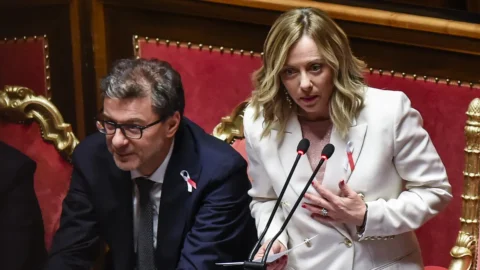
Il Senate approved the Budget 2026 with 113 yes votes, 70 no e 2 abstentions, closing a parliamentary process that was at times turbulent and now handing the ball to the Camera for final vote expected 30th DecemberThe fourth budget law of the Meloni government, with a total value of about 22 billion, has gone through moments of great tension, ranging from pensions to building amnesty and through internal divisions within the majority, with heated confrontations between Deputy Prime Minister Matteo Salvini and Economy Minister Giancarlo Giorgetti. During the parliamentary examination, the Commission approved a major amendment that five provisions removed consider controversy, in the light of doubts lifted from the Quirinal.
The 2026 budget passes the Chamber of Deputies: all the measures in brief.
The government claims a prudent law, more streamlined than the previous ones of the Meloni Government, with the aim of having Italy exit the excessive deficit procedure as early as 2026, a year earlier than agreed with Brussels. Let's look at the details main measures.
Taxes and duties: reductions, new taxes, and tax breaks
The main measure concerns the reduction of the second Irpef tax rate from 35% to 33% for 13,6 million taxpayers up to 50 thousand euros. For contracts renewed in 2024, the law introduces a taxation 5% tax relief on salary increases paid from January 1, 2026, extended to incomes up to 33 euros, with a 1% bonus on productivity wages.
La first home is excluded from the ISEE calculation up to 91.500 euros, the threshold which rises to 200 thousand euros in the capitals of metropolitan cities and increases by 2.500 euros for each child after the first.
Among the new taxes, the following stand out: €2 tax on non-EU parcels under €150, the 1% withholding tax on invoices between companies from 2029 (0,5% in 2028) and the doubling of the Tobin Tax. The car insurance premium rates for injuries and assistance rise to 12,5% for contracts from 1 January 2026. The capital gains on cryptocurrencies they go from 26% to 33%, with a reduced rate of 26% for tokens pegged to the euro. Finally, the scrapping quinques It allows you to pay bills from 2000 to 2023 in 54 bimonthly installments with a reduced rate of 3%.
La tax-free threshold for meal vouchers increases from 8 to 10 euros and progressive increases in excise duties are expected cigarettes.
Pensions and welfare: new rules and targeted cuts
The maneuver modifies pension windows and funds for pensions Early retirement. The extension of the "Opzione Donna" (Women's Option) has been scrapped, and the possibility of combining supplementary fund income for early retirement is eliminated.
Funds for early workers and those engaged in arduous activities will be progressively reduced: the fund for early workers will reach 190 million from 2034, while that for arduous workers will drop to 40 million from 2033. The continuity of theInclusion check (Adi) is guaranteed, but the first month's salary in case of renewal will be reduced by 50%.
From 2026, the minimum allowances increase by 20 euros per month and theobligation to pay severance pay to the INPS Fund It also extends to companies with at least 50 employees, with an extension from 2032 to companies with 40 or more employees.Automatic enrollment in supplementary pension schemes for new hires in the private sector it will start in July 2026, with the possibility of waiving within 60 days.
Businesses and Investments: Incentives, Transition 4.0, and Zes
Businesses benefit from the extension of the hyper-depreciation until September 30, 2028, valid for capital goods and intangible assets related to Transition 4.0 and 5.0, with “Made in Europe” constraint and exclusion of the extra green bonus.
The Transition 4.0 tax credit receives an increase of 1,3 billion, while for the Six In Southern Italy, €532,64 million is expected for those who have already submitted applications. Insurance companies will be required to pay an advance of 85% of their contributions to the National Health Service (SSN) on vehicle and boat insurance premiums.
Banks, insurance and financial sector
The financial sector will contribute over 12 billion in tax coverage. For the banks, the deductibility of losses goes from 43% to 35% in 2026 and from 54% to 42% in 2027. TheIRAP increases by 2 percentage points for banks and insurance companies, with a deductible of 90 thousand euros and the exclusion of SIMs, SGRs and industrial holding companies.
The tax exemption threshold of dividends drops to 5% or a minimum amount of 500 thousand euros.
The officials of the Ministry of Economy and Finance will be able to enter the control bodies of the participating companies, while the gold reserves of Bankitalia they are defined as the property of the "Italian People".
Home, school and social support
Il House plan receives 200 million for 2026 2027, while the flat rate tax on short-term rentals remains unchanged: to 21% for the first property, it rises to 26% for the second and becomes business income from the third. For the school, 20 million are foreseen for school books and a contribution of up to 1.500 euros for families with an ISEE up to 30 euros.
For the social protection, the law allocates 7 million to fight violence against women and 2 million for the fund for innocent defaulters.
Sport, defense and culture
40 million are expected for insurance policies for law enforcement and firefighters and a further 40 million to the Sports Fund managed by Coni and Sport e Salute. Cinema Fund and audiovisual will suffer cuts of 90 million in 2026 and 200 million from 2027, while the Rai will see reductions of 10 million in 2026.
For the defense, the Ministries of Defense and Infrastructure will identify projects and strategic areas to strengthen the domestic production of armaments and weapons systems.
Local authorities and administrative simplification
The maneuver introduces 63 amendments for the local authorities, Improving flexibility in debt, mortgages, and the management of unrestricted surpluses. Advances to municipalities will be increased from 10 to 20 years, and the terms of standard healthcare needs and the mandates of the water crisis steering committee will be extended. Temporary staff in the Special Offices for Reconstruction will also be regularized.
Rules removed and measures withdrawn
Some controversial measures have been excerpt: among these arrears of underpaid workers, revolving doors in the public administration, secondment of magistrates, Covip regulations, building amnesty, sale of light cannabis, and raising the cash threshold to 10 euros.
Opposition protests, majority applauds: reactions to the budget
The reactions to the maneuver were many and colorful. George Salvitti (FdI) highlighted the "43 billion" reduction in taxes on labor and called the budget law a "different snapshot from the left's self-destructive narrative," also citing increased investments in healthcare and the improvement in families' purchasing power. Carlo Calenda (Azione) spoke of a prudence that was understandable, but criticized the lack of "a strategy," while appreciating the reintroduction of Industry 4.0 and healthcare funding. Matteo Renzi (IV) defined the maneuver as “ugly, soulless” and “mediocre like Giorgetti”, with ironic references to Baglioni's concerts and Mike Bongiorno.
Maurizio Gasparri (FI) thanked Giorgetti for an "uncomfortable" job and for the support measures for families and law enforcement, while Francesco Boccia (Pd) criticized the management of pensions, underlining how the government's choices worsen inequalities and penalize women, young people, and the most vulnerable workers. Finally Maximilian Romeo (Lega) claimed the exit from the infringement procedure, calling it a "slap in the face for the Euro-lyricists" and highlighted the strengthening of the healthcare system, the reduction of the tax wedge, and the support for the middle class.