There will not only be gas and armaments in future EU industrial policies: the Cold War scenario has also put the sustainability of the European chain of food supply. After the invasion of Ukraine, a part of Europe has in fact discovered itself to be very fragile even in terms of food.
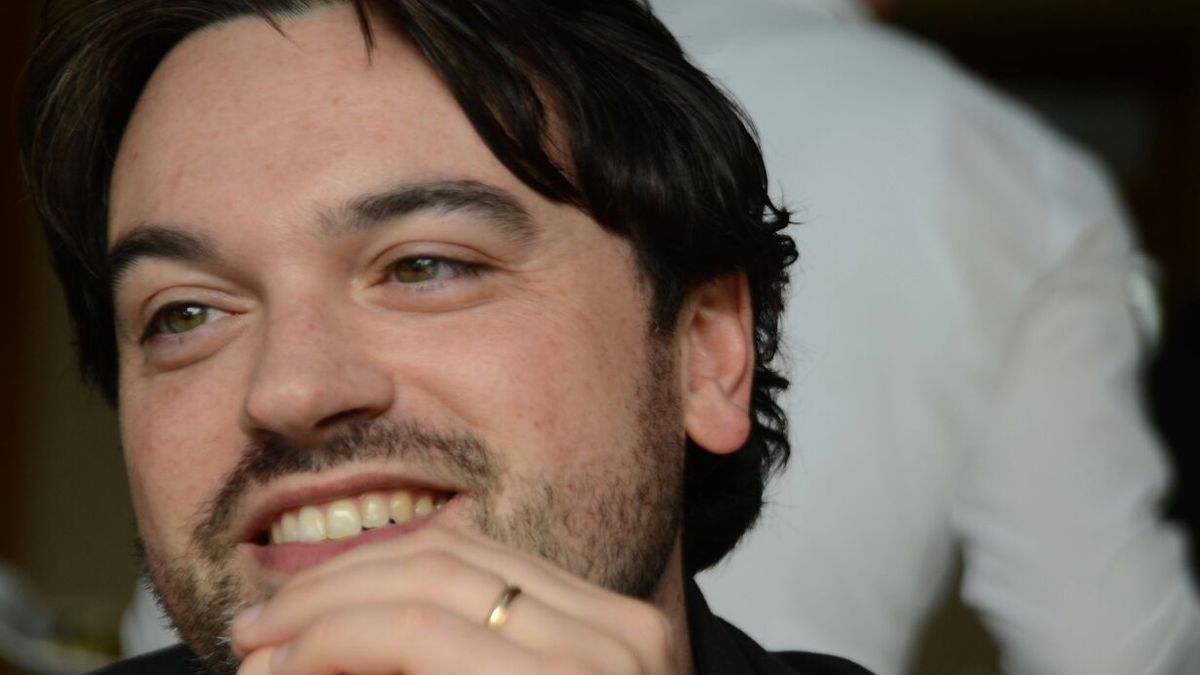
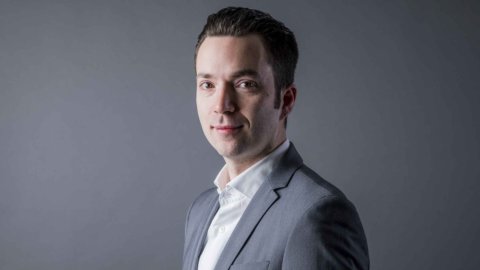
Mattia Pedon sits on the board of directors of Pedon Spa, one of the world's big players in the market of cereals, legumes and seeds. Lui began his career in China in 2010, first in Tianjin and then in Dalian, working for Agricultural Commodities Supplies, a subsidiary of the group active in the selection of legumes. He speaks perfect Mandarin and knows Cantonese; he yes is Graduated in International Economy and Trade at Guangzhou University. This year he has taken on the position of purchasing director of the cereal giant based in Molvena in the Vicenza municipality of Colceresa.
The connection with China is not accidental, because on the other side of the world, due to obvious demographic and historical issues, the policy of food supply has taken on a strategic value in the national economy in recent decades.
«In China, the centrality of food supply policy is so important that it can almost be touched by hand. In the cities where I have lived, for example a Tianjin where there is one of the largest agricultural ports in the world, there are endless rows of warehouses for soybeans, rice and sunflower seeds. They are the government's strategic reserves organized at the regional and municipal levels.
What is happening globally?
«There is a lot of nervousness regarding food and agricultural raw materials. There are many reasons: the increase in fertilizer and energy prices, foreign supply chains at geopolitical risk, difficult years due to climate change and an agriculture that in many sectors has not had sufficient incentives to renew itself».
In your specific industry?
«We operate mainly in the legumes, cereals (not wheat) and oilseeds market. As mentioned, the nervousness is great and in some transport "routes", I am thinking of Kazakhstan for the seeds, there are major delays and a significant increase in costs. If imports from Russia and Ukraine stop, we are in for a huge deficit of wheat, sunflower, corn and soybeans. Translated: European farmers will try to plant these products more and less niche products, such as legumes and cereals other than wheat».
Globalization, as conceived in the last thirty years, seems destined to freeze. What will change in the geopolitics of food?
«These are scenarios that are linked to the size and availability of agricultural land on the various continents. In Italy and in Europe there are no prairies of Canada, Argentina or Uruguay. If Russia were to leave the European market, it would be a problem in the short term. However, it can be replaced in the medium to long term. It must be clear: for the needs of the European market we cannot have in mind a "garden" agricultural economy. There are certainly market niches and then there are crops managed with self-driving airplanes and tractors».
Who has the bounty to replace Russia's agricultural capacity?
«In the short term, as no one said, the same reasoning as for gas applies. At the moment we are not independent, neither in Italy nor in Europe. Bear in mind that agriculture is organized in cycles and harvests. Even partial dependence on Russia will be inevitable at least until the 2023 harvest. From September of that year, Russia will be able to replace some products. We import flax from Russia, a raw material that Kazakhstan is also able to produce. We import sunflower seeds from Ukraine, whose production Bulgaria could also increase significantly».
What chronology of events have the price dynamics on your particular market followed?
«This is the third unfavorable year for our products. The first resulting from the unexpected peak in consumption after the European and global lockdowns that sent prices soaring and left the markets empty. The second characterized by a reduction in production due to meteorological problems in almost all of our hemisphere. We come to the present day with the geopolitical problems of prices, logistics and energy».
Are there concrete risks for the supply chain?
«In our products I tend to exclude this possibility, certainly for certain varieties there may be problems, but it is our job to anticipate them. All those who bought the product grown by Russia and Ukraine are forced to find an alternative. The same for those who sold products to Russia».
Can Western technology support the retreat from Russian agricultural dependence?
«I'll give you an example: a farm with which we have a partnership agreement uses drones to release antagonistic insect eggs in popcorn corn fields. The technology is there, but much more can be done. Only now, in times of war, do we realize how strategic agriculture and its supply chain are. Until now Europe, also due to the average size of its agricultural crops, has organized itself in a sort of elite or boutique agriculture. The next common European agricultural policy will perhaps have quite another significance. After 50 years of peace, the importance of thinking about a plan of strategic reserves in the food production chain was no longer felt".