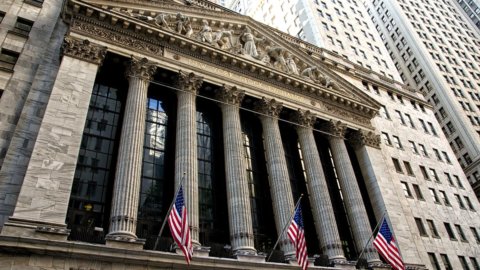
Markets no longer trust the Fed. This is perhaps the most disturbing lesson of the violent downturn that hit Wall Street yesterday, dragging the Nasdaq to a loss of 4,99% which did not spare the most noble names in technology: Alphabet, Apple, Microsoft, Tesla and Meta, down by 8% just as Mark Zuckerberg visited Mario Draghi and Vittorio Colao to illustrate the opportunities of the metaverse.
Why this sudden turnaround? On Wednesday, the stock exchange credited Jerome Powell who assured traders that "there has never been talk of a 75-point increase in the cost of money." Yesterday, on the contrary, the law of numbers prevailed: the productivity of US workers, according to statistics, fell at the fastest rate since 1947 in the first quarter (-7,5%), while the growth of the unit cost of the work, suggesting that rising wage pressures will help keep inflation high for a while.
From here the feeling that rates will rise more and faster than Powell confessed, jeopardizing the stability of the economy. Write theEconomist: why trust a banker who until the end maintained that inflation was not a problem against the opinion of the most authoritative economists? And so the uncertainties of Wall Street complicate his already dramatic international situation.
Asian stock markets down. In Tokyo, inflation rises to 1,9%
Stock exchanges in Asia Pacific are mostly down this morning. An exception is the Tokyo Stock Exchange (Nikkei +0,5%), in its first session after the holidays. The consumer price index reached +1,9% in April on an annual basis, marking the greatest acceleration in the last seven years.
Sales mainly affect Chinese techs. Hang Seng Tech -5%. The Csi 300 of the Shanghai and Shenzen price lists loses 2,5%. The other price lists are in the red: Kospi of Seoul -1%. Sydney S&P ASX200 -2%. Mumbai BSE Sensex -1,5%. All the currencies of the area are down, starting with the Bath, -0,8%. Indian Rupee -0,5%, Yen -0,3%. The dollar index rose last night to its highest level in the last twenty years.
Flat futures in Europe and the USA. T bond at 3,06%
The euro/dollar trades at 1,053. US stock futures are flat this morning, as are European stock exchanges. Yesterday, in addition to the collapse of the Nasdaq, there was a drop of 3,55% in the S&P index. Dow Jones -3,11%. The yields of T-bonds are once again in fibrillation: 3,06%, on the highest since November 2018.
Musk raises 7 billion Ellison, principles and Bitcoin platforms
A Saudi prince, Oracle founder Larry Ellison, the cryptocurrency platform Binance and the Sequoia fund are some of the lenders who accepted Elon Musk's invitation to invest in Twitter for 7 billion dollars. Once the acquisition of Twitter is completed, the Tesla tycoon will temporarily assume the role of CEO. The intention is to return to the stock exchange after three years.
OPEC+ ready to increase oil supply
The recovery of oil continues, on the third day of rising, around 109 dollars. OPEC+ said it was ready to agree on a new monthly increase of 432 barrels per day in June. The OPEC+ meeting comes in the aftermath of the European Union's proposal for a gradual oil embargo on Russia. The two coordinated oil releases so far account for just 9 percent of total reserves, said Fatih Birol, the director of the International Energy Agency.
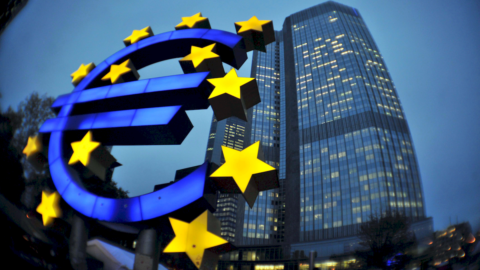
Lane (ECB): we too are preparing for "a sequence of increases"
Europe first runs and then slows down at the mercy of the extreme volatility of Wall Street, in free fall after the unexpected flight that accompanied the rise in US interest rates. Nor does the uncertainty that reigns on the front of Europe, committed to building a common line on the embargo, help. In this context, even the super dove Philip Lane, powerful chief economist of the ECB, gives in to the prospect of raising rates.
“I think it is clear that at some point we will move rates, not just once, but over time – he said during a meeting of the Brueghel Institute – The question is not understanding when the ECB will start moving, but how fast and at what pace it's going to raise interest rates." In short, Frankfurt is preparing "for a sequence of increases".
London brings rates to 2009 levels. Norway will follow in June
What is certain is that, after the US turnaround, Europe risks isolation in the face of a current of increases by central banks. Yesterday, after Australia, India and Brazil it was the turn of the Bank of England. Yesterday the Monetary Policy Committee of the "Grey Lady" decided to raise the bank reference rate by 25 basis points, from 0,75 to 1 per cent. The decision was taken with six votes in favor and three against: the UK's benchmark rate hadn't been this high since 2009.
During the week, India, Iceland and Brazil also raised their rates. Conversely, Norges Bank kept rates unchanged at 0,75%, as widely expected, but reiterated its intention to hike in June as inflation is rapidly rising. “The rate will most likely be raised in June,” Governor Ida Wolden Bache said.
The BTP at 3,03%, spread at 200
After yesterday's momentary improvement, the pressure on the Btp is once again being felt. In the late afternoon, a current of sales drove up the 3,03-year yield to 2019%, the highest since February 1,04. The spread between the Italian and German 199-year bonds (0,72%) rose to XNUMX basis points (+XNUMX) .
The choices of central banks are reflected in the various currencies. After a leap in the euro, following a dovish Fed, the single currency reversed course and returned to the 1,053 area with a drop of 0,85. The pound even went down, losing about 2% against the greenback, with the cross around 1,237.
The Wall Street landslide buries Europe. Milan -0,6%
European stock markets, after a euphoric start, are holding back on the wave of the violent declines of the US markets. Piazza Affari loses 0,6% and closes at 23.759 basis points. Frankfurt -0,5%, Paris -0,43%, Amsterdam -0,36% and Madrid -0,71%. London, on the other hand, was saved (+0,2%), on the day of the 25 basis point increase in rates and the double-digit increase in inflation to 10%.
Fly Airbus, skid BMW
Airbus takes off in Paris (+6,2%): the Franco-German group has announced the objective of increasing the production of the A -320 to 75 aircraft per year (+50%).
After a morning on positive ground, BMW lost 1,8% after the quarter in profit thanks to the revaluation of its stake in the Chinese joint venture.
Unicredit shines, Caltagirone moves on Mediobanca
In a session of extreme volatility, Unicredit shines (+2,08%) on the wave of the positive assessments of analysts on the accounts. The group led by CEO Andrea Orcel has calculated that without the impact of the war it would have recorded a quarterly profit of 1,16 billion, but the conflict cost 915 million and the bank still closed with a profit of 247 million.
On the banking front, a new round of the game for control of the Generali/Mediobanca axis is approaching. The institute led by Alberto Nagel is in the sights: Francesco Gaetano Caltagirone, leader of the opposition at Generali, has risen in Mediobanca +0,4% to 5,499%. According to Consob communications relating to significant shareholdings, the owner of the Messenger has increased his stake by 3,003% through the purchase of three vehicles.
Stellantis likes it, but closes in the red
After a sprint morning, Stellantis closed in the red (-0,7%), in line with the automotive sector. However, analysts judged the results for the quarter favorably: Bestinver Securities, Equita Sim and Banca Akros confirmed the buy rating and the target prices, respectively, between 26 and 28 euros, 20 euros and 23 euros. Citi analysts also confirmed the buy rating, underlining that the increase in revenues in North America is evidence of the success of a new business model launched in the region. Pirelli -2,8%.
Black jersey for Moncler, Ferragamo shoots ahead of the counts
The black jersey belongs to Moncler who, after a positive start, decidedly reversed course, closing at -5,6%.
In the luxury sector, on the contrary, Salvatore Ferragamo stood out (+3%) outside the main list, thanks to the positive expectations for the next quarterly accounts.