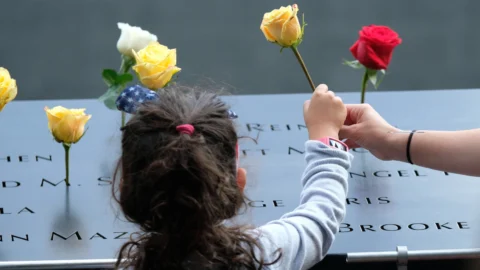
They have passed 250 years since that 4th July 1776 in which the Thirteen American colonies decided to break with Great Britain and to imagine itself as a nation. But that day was not the birth of only the United States. A political promise was born destined to shape modern history: liberty, self-government, rights, equality before the law. Two and a half centuries later, that promise returns to center stage. And it does so in an America that celebrates itself, but can no longer hide its fractures.
Today, July 4, 2026, the United States celebrates its first 250 years of history as a rich, innovative superpower, still capable of attracting capital, talent, and imagination. And yet America today no longer appears as a self-confident democracy which for decades has claimed to be a model for the world. It is a divided country, riven by mistrust, tensions over civil rights, clashes over immigration, and a growing concentration of political power around President Donald Trump. Thus, in Trumpian America, Today's "Independence Day" takes on the face of paradoxOn one side there are fireworks, parades, flags, patriotic speeches and major public events and on the other there is a country where many citizens doubt the health of their democracy and where several independent observers denounce a backsliding in terms of rights, the rule of law, and institutional checks and balances. From immigration policies to the crackdown on ICE, from attacks on minorities to pressure on universities, the media, and federal agencies, the last year has further exacerbated the gap between America's founding myth and its political reality.
This is the paradox of July 4, 2026: the United States celebrates freedom even as it furiously argues about who can truly enjoy it.
July 4, 1776: the American myth is born, but the date was disputed
The American national holiday remembers the adoption of the Declaration of Independence by the Continental Congress the 4 July 1776. It was that document, primarily drafted by Thomas Jefferson and then discussed and corrected by Congress, to sanction the separation of the Thirteen Colonies from the Kingdom of Great Britain, then governed by George III. The National Archives, however, recall an often forgotten detail: the Declaration was adopted on July 4, but the signing on the parchment document did not begin until August 2nd. Not on the holiday, as one of the most widespread myths about Independence Day would have it.
Even America's symbolic date could have been another. Political separation from Great Britain had been voted on 2 July 1776, with the approval of the Lee resolution. The next day John Adams He wrote to his wife Abigail, imagining that July 2nd would become "the most memorable epoch in American history," and that future generations would celebrate it with parades, games, bell ringing, bonfires, and illuminations from one end of the continent to the other. Adams was only two days off. The American imagination chose the Fourth of July, the day of the adoption of the Declaration, and since then that date has become the civil rite par excellence of the United StatesFlags, barbecues, picnics, baseball games, official speeches, and fireworks. A national liturgy that each year attempts to symbolically mend an often divided country.
In 2026, however, This ritual comes loaded with tensionThe question is no longer just what was born on July 4, 1776, but what remains today of that promise. The United States continues to present itself as the homeland of freedom and liberal democracy, but Trump's second term has made a fracture that has been open for years: that between the American myth and its political reality.
What makes the contrast even stronger is the text of the Declaration of Independence, where one of the most famous formulas in modern political history resonates: All men are created equal and endowed with inalienable rights, including life, liberty and the pursuit of happiness.Two and a half centuries later, those very words are back at the center of American debate. Who is truly included in that promise? Who can exercise those rights without hindrance? And how much remains, in Trump's America, of the universal idea of freedom envisioned in 1776?
July 4, 2026: America's Bitter Birthday
With the 250th anniversary of the Declaration of Independence, Independence Day becomes the culmination of a long celebratory campaign, built between official events, commemorations, exhibitions, ceremonies and educational programs throughout the country. America250, the institutional initiative linked to the anniversary, presents July 4th as the most important moment of a national path designed for celebrate the past, telling American history and looking to the future. But the context makes the anniversary less straightforward.
According to the Pew Research Center, Americans reach 250 years of age in a climate that the research center openly defines as a "sour mood", a state of mind to loveo. The majority says dissatisfied with the direction of the country and a significant portion believes the best is already behind us. The most political finding concerns democracy: again according to Pew, Americans are more dissatisfied with the functioning of their democratic system than citizens of other high-income countries. Eighty-six percent of Democrats and independents close to the Democrats say they are dissatisfied with how American democracy works; among Republicans and voters close to the GOP, the figure rises to 51%.
It's no longer just a partisan fracture. It's a crisis of confidence that strikes at the heart of the American narrativeThe country born to claim the right to self-government celebrates itself while a growing part of the population doubts how that self-government works.
The patriotic show between Washington and Philadelphia
Despite political and social tensions, July 4th will try, at least for one day, to showcase the image of a united country. celebrations will span across the United States, from the big cities that symbolized the American Revolution to the smallest communities, in a national celebration made of parades, flags, public ceremonies and fireworks.
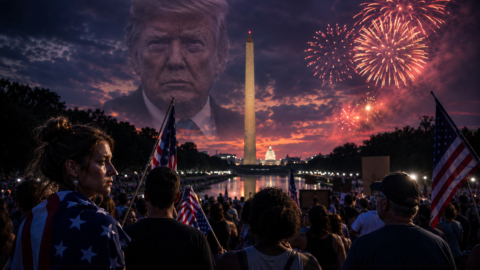
Il the symbolic center will be WashingtonOn the National Mall, between the Lincoln Memorial, the Washington Monument and the Potomac River, the great “Salute to America” event is planned, with military flyovers, shows and fireworks in the evening. Donald Trump's speech at the Lincoln Memorial It will be one of the highlights of the day, in a capital city under lockdown and ready to welcome over a million visitors. To make things even more difficult, there will also be the weather, with extreme temperatures already announced.
If Washington will be the political heart of the show, Philadelphia remains the birthplaceIt is here that the Declaration of Independence took shape in 1776, and it is here that 2026 becomes a year of celebrations. New York will also have its role, with the naval parade in the bay and the traditional fireworks display, while Boston, South Dakota, and many other cities will host events related to revolutionary history and American identity. The anniversary, in short, will not be just a federal celebration. It will be a great national storytelling operation, in which each city will try to reclaim a piece of the birth of the United States.
Trump and freedom turned into a partisan flag
La the celebration machine moves on two levels: on the one hand America250, an institutional and bipartisan structure created to coordinate national celebrations, then there is Freedom 250, an initiative linked to the White House and Donald Trump's political narrative. The White House presents July 4, 2026, as "the most important milestone in the country's history": 250 years of American independence. A solemn formula, constructed to celebrate the national myth, but which also shows how the anniversary has become a political platformThe anniversary that should unite America around its common origins thus ends up within the Trumpian narrative of homeland, borders, order, and national identity.
This double direction reflects the polarization of the country, with the anniversary transformed into a symbolic battlegroundThe Guardian, citing a Democratic congressional investigation, reports accusations leveled at Trump for "hijacking" the 250th anniversary and twisting it to political and ideological ends, fueling suspicions that the national commemoration could also become a tool for electoral mobilization. And so, in Trump's America, even patriotism becomes a battleground. Freedom is increasingly seen less as a shared space and more as a partisan identity: borders, order, the primacy of the executive branch, attacks on adversaries, distrust of the media, universities, federal bureaucracy, judges, and intermediary bodies.
The result is a celebration that risks overturning its meaningJuly 4th was born as a celebration against the arbitrary power of a distant monarchy. In 2026, it also became the stage for a presidency that has made the strength of the executive branch, the personalization of power, and permanent polarization the cornerstones of its political action.
Civil rights, migrants and minorities under pressure
The question of American freedom cannot remain abstract. It becomes concrete when we consider rights. Human Rights Watch, in the World Report 2026, accuses the Trump administration of having conducted a broad attack over twelve months against fundamental pillars of American democracy and the rules-based international order. In another report on the United States, HRW openly speaks of "grave cause for concern" on the eve of the 250th anniversary.
The most obvious terrain is that of theimmigrationTrumpian rhetoric has brought back the border at the heart of national identity, turning migrants and asylum seekers into permanent political targets. But the issue isn't just about borders. It's about the quality of rights afforded to those living in the United States, the transparency of the detention system, the protection of minorities, and the possibility for all to access the same perimeter of freedom promised by the American myth. Civil rights organizations also paint a picture of intense conflict. The ACLU presented its assessment of Trump's first year back as a legal battle against attacks on civil rights and fundamental freedoms, claiming over 200 lawsuits and more than 110 cases against the administration. The picture is that of a country where the preservation of rights no longer depends solely on politics, but increasingly on the courts and the capacity of civil society to resist.
In this sense, July 4, 2026, exposes the profound contradiction of a country that, born from a declaration of rights, now finds itself debating who should truly benefit from it.
A free, but less self-confident democracy
To say that the American democracy is under pressure This doesn't mean it has collapsed. The United States remains a country with strong institutions, a free press, an active civil society, courts capable of challenging political power, and a federal system that retains many checks and balances. Freedom House continues to classify the United States as a “Free” country, with a score of 81 out of 100 in the 2026 report. But this very rating makes the problem more interesting. The United States is still free, but less solid than their self-representation would suggest. Freedom House places the American case within a global context of declining freedoms, reporting that freedom worldwide has declined for the twentieth consecutive year.
The most delicate issue remains the relationship between the Supreme Court, executive power and constitutional rightsSome recent Court decisions have strengthened Trump's agenda and fueled fears of an "imperial presidency," with an executive increasingly intent on influencing federal agencies, immigration policies, economic regulation, and civil rights. But the system of checks and balances, the checks and balances that underpin the American institutional architecture, has not disappeared. It is under strain, but continues to generate resistance. The case of ius soli also demonstrates this.The Supreme Court has Trump was inflicted a political and legal defeat, rejecting an attempt to limit birthright citizenship by executive order. In a majority decision of 6 justices to 3, the Court ruled that the president cannot change by decree the guarantees of the Fourteenth Amendment to the U.S. Constitution, which since 1868 has recognized citizenship to persons born or naturalized in the United States. The ruling confirmed a line of case law consolidated for over a century and reminded us that changing a constitutional principle requires more than the president's will: a revision of the Constitution would be necessary.
Trump's America has not erased American democracy. He made it more conflictual, more identity-based, more exposed to the leader's strength and less capable of creating common ground. This is perhaps the true fracture of the 250 years: not the end of the American model, but its transformation into a permanent contest over what freedom, citizenship, and democracy truly mean.
The American myth put to the test of the future
July 4, 2026, will be filled with powerful images: the fireworks on the Potomac, the flags on the National Mall, the celebrations in Philadelphia, the parades, the speeches, the constant reference to the Founding Fathers and the Declaration of Independence. But behind the patriotic choreography, a more difficult question remains: Is the United States still the land of freedom and democracy?
The answer can't be just yes or no. Yes, because America remains a free democracy, an economic and technological powerhouse, a country in which civil society, the media, the courts, and many institutions continue to exercise a controlling role. But also no, or at least not as much as before, because the promise of 1776 appears more fragile today, more polarized, more unequal.
Trump didn't invent all of America's fracturesMany were already there: inequalities, structural racism, distrust of institutions, a crisis of representation, a cultural war on rights. But Trumpism has accelerated them and transformed into a method of government, leading America to a stage where freedom and democracy are no longer shared words, but rather rhetorical weapons to be used in political conflict.
250 years after the Declaration of Independence, the United States celebrates its founding myth at a time when that myth is most debated. The country born against arbitrary power must grapple with the temptation to concentrate power. The nation that proclaims itself a haven of freedom must contend with rights under pressure. The democracy that for decades claimed to be a model for the world today struggles to convince even many of its own citizens. July 4th remains a holidayBut in 2026, it's above all a question: is the American promise still alive, or has it become a myth to be ignited once a year with fireworks?