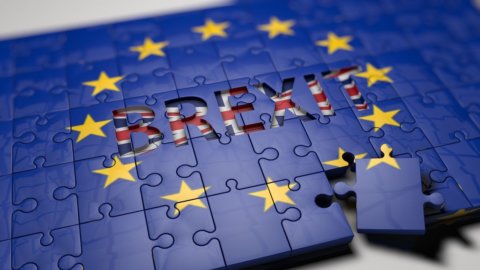
While the British government is practically on vacation, with eight months to go before the 29 March 2019 deadline, the most realistic option on the negotiating table at the moment – both for internal political issues UK both for the intransigent negotiating positions of theEuropean Union – seems to be that of one Brexit very soft. So soft that according to Boris Johnson, former Foreign Minister of Government May, it would be a Brexit in name only, but not in fact. The days of the slogan that initially guided the campaign of the current conservative prime minister "no deal is better than a bad deal" therefore seem to have been overtaken by a greater awareness of the real socio-economic effects that leaving the EU would imply for the British.
By avoiding the no-deal, benefits for European defence
Although May's government plan did not fully convince the Union, which recently expressed its perplexities regarding the implementation of some of the proposed solutions, the recent British White Paper on Brexit was not rejected because some elements would be "very useful" according to Michael's words Barnier, responsible for the negotiations for the EU.
Reaching a compromise is crucial to avert the hypothesis of a "no-deal" Brexit, which would have highly negative consequences on the economies of both parties, with important repercussions also on theaerospace and defense and of security.
La creation of a scenario which, on the other hand, provides for a substantial alignment by the British to the single market, the customs union and the jurisdiction of the European Court of Justice would make it possible to maintain a situation similar to the current one at an economic and commercial level with the regular and free flow of products, workers, capital and services, and a strong alignment of regulatory standards.
These conditions would undoubtedly favor the definition of a partnership between the EU and Great Britain in the field of defence, not only allowing the preservation of the close and fruitful industrial and intergovernmental cooperation ties held up to now, but also facilitating the participation of the United Kingdom in the projects launched within the European Defense Fund (EDF) and the Permanent Structured Cooperation (Peach).
European initiatives and British participation: the rules of the game
While the European Commission's position in the Brexit negotiations seems to be guided by the imperative of guaranteeing the maximum coherence and cohesion of the single market, and thus preserving the European project from growing centrifugal and nationalist impulses, several aerospace, defense and security (Airbus in particular) have pointed out that the exit of Great Britain from the EU without any agreement, or without an advantageous agreement, would have important negative repercussions which could also condition their industrial strategy.
This position seems to have succeeded in influencing the negotiations for the definition of the regulation of the European Defense Industrial Development Program (EDIDP). Rules which, against the 500 million euros allocated for the three-year period 2018-2020, currently provide that companies based in the EU and controlled by companies from a third country - or by the government itself - can benefit from the funds, provided that the State in which they are based provides the necessary guarantees to the Commission regarding the governance structure, independence from third country interference and protection of sensitive information. Cooperation with companies based in Great Britain, on the other hand, is subject to further limitations and activities involving them would not be eligible for funding under the programme.
The approach adopted to regulate participation in programs financed by the Edf starting from 2020 appears to be even more inclusive compared to the Edidp. The proposed regulation of the Commission, in fact, provides that all those subjects based in member states of the European Free Trade Association (EFTA), including the United Kingdom, are eligible. To find out whether or not this position will be confirmed, we will have to wait at least for the beginning of next year, when the decision-making procedure of the so-called trialogue should begin.
As far as PeSCo is concerned, however, the definition of the criteria for the participation of third countries should take place through a Council decision by the end of 2018.
Strategic autonomy and cooperation with London: what right balance?
The definition of an EU-UK cooperation agreement in the field of defense will necessarily have to take into account the objectives of the Union, which with the launch of Edf and PeSCo aims to support efforts towards a higher level of ambition and an appropriate level of strategic autonomy. To date, European defense cooperation has taken place mainly at an intergovernmental level, and many capability-building cooperations – including the Eurofighter – have seen Great Britain play a leading role. If on the one hand the participation of a third country in these initiatives could compromise the achievement of a certain strategic autonomy, it is also true that the exclusion of London from the European defense architecture would constitute a great loss for the EU both in terms of financial resources both in terms of capacity, with negative repercussions especially as regards the implementation of the most ambitious projects, both in the PeSCo and EDF fields.
Not only that, the failure to define adequate cooperation mechanisms with London would also risk compromising the European integration efforts themselves. In fact, some European countries could be led to prefer intergovernmental collaborations, outside the EU framework, in order to be able to include Great Britain.
In this context, to define a partnership between the EU and the United Kingdom without British participation risking questioning European efforts, the Union will necessarily have to introduce greater clarity with respect to this dossier. This is especially true with regard to its level of ambition and the definition of an "appropriate level" of strategic autonomy, advocated in the EU Global Strategy. Only in this way can a cooperation relationship be outlined that reflects and respects the interests of both parties, as well as the defense and security of Europeans.