Being wealthy and associated with finance and business are not in themselves impediments to government duties. The concern is rather the potential conflicts of interest that arise from wealth and business connections.
This justified concern has been accentuated with the entry into office of the second administration of Donald Trump, although US federal ethics regulations require members of the government to sell their stocks and shares in companies or entrust them to a blind trusts.
In full respect of its antonomasia, in fact, il tycoon he formed an executive of the super-rich with personal fortunes estimated at over 460 billions of dollars, if we take into consideration not only the heads of departments, but also undersecretaries, advisors of various levels and diplomats.
According to the magazine Forbes, for example, the family of the ambassador to the Organization of American States, Leandro Rizzuto Jr., had assets of $3,5 billion in 2017, while the fortune of the special envoy for the Middle East, Steven Witkoff, is said to amount to $XNUMX billion.
To limit ourselves, instead, to only department secretaries appointed by Trump and still awaiting confirmation by the Senate, their total wealth, according to the ABC television network, would be in the order of seven billion dollars, compared to just 118 million for the members of Joe Biden's cabinet who have just concluded their mandate.
The most billionaire among billionaires
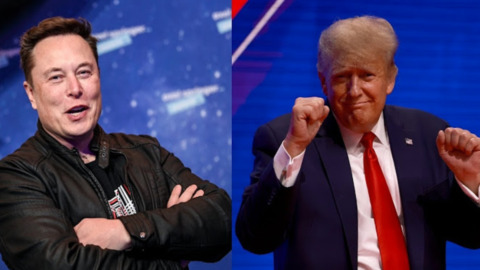
The lion's share of the Trump administration's billionaires is obviously made up of Elon Musk, owner of X (formerly Twitter), Tesla and SpaceX: alone he would have assets valued between 360 and 400 billion dollars. Musk, however, is not formally a member of the government, because the Department of Government Efficiency (DOGE), which Trump put him at the head of, is not a real ministry, but an advisory committee.
In fact, Musk's nomination did not need to be ratified by the Senate. Yet Musk's conflicts of interest are evident because at least about 10% of his personal fortune is thought to derive from previous contracts signed by his companies with the federal administration, and the profit prospects for the South African-born magnate have undoubtedly increased with Trump's entry into office.
Will it be the United States or Musk's profits that reach Mars?
Among the many goals of his presidency, set out in his inaugural address last Monday, The Donald also included the pursuit of the “manifest destiny” of the United States “among the stars by launching American astronauts to plant the “Star-spangled Banner on the Planet Mars.” This commitment sent Musk into raptures, and he did not fail to show his enthusiasm to the world by raising his arms in jubilation at the president's words.
La resumption of space exploration It does not only involve a call to the spirit of the pioneers and the noble ideals of John F. Kennedy's New Frontier, which in 1969 brought man to the Moon when the presidency had already passed to Richard M. Nixon. The large-scale revival of American space travel means above all lucrative business for SpaceX.
Musk's private aerospace company, in fact, aims to become the main contractor of NASA, the federal agency responsible for U.S. space programs and research, with which SpaceX has already signed orders for over 15 billion of dollars in the last ten years.
Perhaps SpaceX is even aiming to replace NASA. In any case, it is reasonable to assume that the realization of Musk's aspirations will be facilitated by his role as DOGE chief, as the outsourcing of some NASA functions to benefit SpaceX may be presented as a contribution to reduce public spending (Musk has promised to cut $2 trillion in spending) and to make the federal government's actions more efficient.
It is also possible that Musk's plans will find the support of NASA's director-designate, Jared isaacman, who has collaborated in the past with the owner of DOGE and, in turn, is an entrepreneur in the private aerospace industry. Other members of the new government are also somehow connected to Musk, starting with Howard Lutnick, the financier that the CEO of SpaceX would have wanted at the head of the Treasury Department but had to settle for the fact that he was entrusted with the Department of Commerce, and Sriram Krishnan, the White House advisor for Artificial Intelligence.
A century and a half of conflicts of interest
Beyond holding a more or less formal position, Musk's role in the Trump administration once again and in a macroscopic way the issue of conflict of interest within the federal government. This is a problem that has affected the United States almost since its independence.
The first holder of the Treasury Department, Alexander Hamilton (1789-1795), was suspected of having used his position to facilitate some financial speculations conducted by James Reynolds, the husband of his lover, Maria Reynolds. Furthermore, a supporter of the federal state support for the nascent manufacturing industry, Hamilton was a shareholder in one of these companies together with the Undersecretary of the Treasury Tench Coxe.
Even national emergencies of such vast proportions as military conflicts did not protect the United States from the prosecution of personal business interests by members of the government. For example, during the Civil War between the North and the South, during the ten months he served as secretary of the Union War Department, between March 1861 and January 1862, to move troops, weapons, and supplies Simon Cameron made use of the railway network of Northern Central Railroad, of which he was a shareholder, and excluded the rival Baltimore and Ohio Railroad from government contracts: in that short period the profits of the company in which Cameron held shares grew by 40%.
The interpenetration of business and the U.S. government increased at the dawn of the twentieth century, coinciding with the growth of the functions of the federal administration in the economic life of the United States. Lyman Gage, William McKinley's Secretary of the Treasury between 1897 and 1902 implemented a rigid deflationary policy to meet the needs of private credit institutions, the same reality from which he himself came as former president of the First National Bank of Chicago and to which he would return at the end of his government term as president of the United States Trust Company of New York.
Andrew Mellon, the wealthiest American banker of the post-war period, had to resign from about sixty boards of directors to be confirmed as secretary of the Treasury Department, a position he held for over ten years, from 1921 to 1932, during the presidencies of Republicans Warren G. Harding, Calvin Coolidge and Herbert Hoover. The latter was himself a millionaire engineer, who had become wealthy as a consultant to mining companies of which he came to be a part owner. If, as Coolidge stated in 1925, "The principal business of the American people is business", the government teams of those years at least partly reflected this statement.
The Government of Millionaires
Perhaps the greatest concentration of businessmen in government during the twentieth century occurred in the first Republican cabinet. Dwight D. Eisenhower (1953-1957), which not by chance went down in history as the administration of “nine millionaires and a plumber”. The plumber was Martin Patrick Durkin, former secretary of the trade union, who was appointed to head the Department of Labour.
All other members of the government came from the business sector, finance or related activities. This also applied to the only woman, Oveta Culp Hobby, head of the Department of Health, Education and Welfare, who owned one of Texas's most widely circulated daily newspapers, the Houston Post.
The potential conflict of interest of members of the Eisenhower administration emerged explicitly as early as the Senate confirmation hearings of Charles Erwin Wilson, the former chairman and CEO of the automobile industry General Motors, to the post of Secretary of Defense.
Asked if he might make decisions that were contrary to the needs of his former company, Wilson said he had believed for years that “what was good for our country was good for General Motors and vice versa.” The media seized on the final part of his statement and suggested that Wilson would subordinate the interests of the United States to those of General Motors. Wilson responded that he had been misunderstood.
However, it is a fact that some initiatives of the Eisenhower administration met the needs of the automobile manufacturers. In particular, in 1956, the Federal Highway Aid Act, promoted by the president, allocated 25 billion dollars for the construction of an interstate highway network, a development plan that represented a very strong incentive to purchase motor vehicles and therefore to the growth of profits for companies in the sector.
Eisenhower's foreign policy was also shrouded in the shadow of conflict of interest. The Secretary of State John Foster Dulles he was a partner in the law firm Sullivan & Cromwell, which looked after the interests of the United Fruit Company, the American multinational tropical fruit company that had been expropriated by the Guatemalan government of President Jacobo Árbenz Guzman, overthrown in 1954 by a coup fomented by the CIA, whose director was Allen Welsh Dulles, the younger brother of Washington's foreign policy chief.
A historically bipartisan problem
Conflicts of interest, real or potential, have not been the prerogative of Republican administrations alone, those that at least once were closer to the business world. The Democrat Franklin D. Roosevelt, appointed in 1934 Joseph P. Kennedy, father of the future president, at the helm of the Securities and Exchange Commission, the federal agency recently created to oversee the regularity of stock market operations.
Kennedy had been one of the few stockbrokers who had managed to profit from the Wall Street crash of 1929 and, therefore, was certainly an expert in the stock market. However, he had also been a financier of Roosevelt's election campaign and the fact that his fortunes continued to grow even after 1934 suggests that public office had some positive impact on his private affairs as well.
Moving on to the late twentieth century, the second Secretary of the Treasury of the Democrat Bill Clinton, Robert Rubin, in office from 1995 to 1999, had worked for twenty-six years at the investment bank Goldman Sachs before joining the government. His successor, Lawrence Summers, had been for about a year and a half the executive director of the investment fund DE Shaw & Co. before returning to the federal administration in 2009 as director of the National Economic Council under Barack Obama.
George W. Bush and the Resurgence of Conflicts of Interest
Indeed, the advent of the 21st century has not brought about the overcoming of conflicts of interest within the federal government. Just think of the case of Dick Cheney. Before being elected vice president in the George W. Bush administration in 2000, Cheney had been CEO of Halliburton, a multinational company specializing in the supply of equipment for the extraction and distribution of crude oil.
In December 2001, fifteen months before the start of U.S. military operations against Saddam Hussein's regime, Cheney's former company received a no-bid, $XNUMX billion contract from the federal government to restore Iraq's oil fields and pipelines to working order in the event they were damaged in a potential war between Washington and Baghdad.
Cheney's cabinet colleague, Condoleezza Rice, national security adviser in the first Bush Jr. administration and secretary of state in the second, had been a member of the board of directors of the oil company Chevron. After all, both Bush Jr. and his father, George H. W. Bush, came from families with deep-rooted business interests in oil extraction.
Beyond Musk
The new Trump administration's potential conflicts of interest don't stop with Musk. For example, Pam Bondi, the next attorney general (the American version of a European state's attorney general), as a lawyer has looked after the interests of GEO Group, a private company that operates prison facilities and immigration detention centers and which in 2019 derived more than half of its revenue from contracts with federal agencies.
The Energy Department will be led by Chris Wright, former CEO of Liberty Energy, a company specializing in fracking, the hydraulic compression of rocks to extract hydrocarbons which has a devastating impact on the environment, as well as a member of the board of directors of Oklo Inc., a nuclear energy producer.
The Treasury Department is set to be headed by Scott Bessent, co-founder of the hedge fund Key Square Group. Sean Duffy, Trump's nominee to head the Department of Transportation, was a lobbyist for the Partnership for Open and Fair Skies, a coalition of major U.S. airlines, and fought in particular to scale back regulations on air travel safety and to limit emissions of gases responsible for global warming.
The new Interior Secretary's main political sponsor, former North Dakota Governor Doug Burgum, is harold hamm, a tycoon in the field of crude oil and natural gas extraction. Hamm would have even wanted Burgum to be a candidate for vice president instead of J.D. Vance. But the Interior Department was certainly not a minor fallback for the entrepreneur, considering that it will be the department in charge of issuing the permits to carry out Trump's invitation to "drill, baby, drill."
Vance's choice was supported above all by Peter Thiel, whose venture capital firm Trump’s vice president worked for as a young man before entering politics. It was Thiel who helped propel Vance into the Trump camp and who largely financed the campaign that brought Vance to the Senate to represent Ohio in 2022.
Palantir Technologies, one of Thiel's companies specializing in big data analysis, has one of its main clients in the federal administration and it can be assumed that it can further develop its business relations with Washington thanks to the political recognition credit it has gained with Vance, also in light of the observation that both seem to share a project of transforming the government apparatus in the direction of technological authoritarianism.
The Trumpian acme
Even more disturbing is the prospect of a conflict of interest that could have Trump himself at its center. After having long opposed them, calling them a "scam", The Donald has converted to criptovalute.
On the Friday before his inauguration, he even launched his own, $Trump, issued by two companies, CIC Digital LLC and Fight Fight Fight LLC, attributable to the Trump Organization, the holding company of the tycoon, which would own 80% of it.
$Trump was followed by $Melania. The latter had a slow start, falling from $13 to $4. Instead, the market value of $Trump has increased rapidly and, beyond the momentary fluctuations (it was listed at $10 on January 18 and, after a peak of $74,59, it settled at $39 on January 22) it is destined to consolidate its growth, enriching those behind the companies that minted it, if cryptocurrencies, which have so far been excluded, become part of the strategic financial reserves of the United States.
The decision on this matter will obviously be up to the president, namely Trump himself. The Donald will be able to justify it by arguing that cryptocurrencies will contribute to reduce public debt federal. The latter currently amounts to about 36 trillion dollars, compared to the fact that the United States holds bitcoins worth 19 billion dollars, seized from criminals. However, the decrease in the federal state debt will correspond to a enrichment of the same tycoon, with all due respect to ethics.
. . .
Stefano Luconi teaches History of the United States of America in the Department of Historical, Geographical and Ancient Sciences of the University of Padua. His publications include The “Indispensable Nation”. History of the United States from its origins to Trump (2020), US institutions from the drafting of the Constitution to Biden, 1787–2022 (2022) and The Black Soul of the United States. African Americans and the Difficult Path to Equality, 1619–2023 (2023).
Books:
Stefano Luconi, The Race to the White House 2024. The Election of the President of the United States from the Primaries to Beyond the Vote of November 5, goWare, 2023, pp. 162, €14,25 paperback edition, €6,99 Kindle edition
Stefano Luconi, US Institutions from the Drafting of the Constitution to Biden, 1787–2022, goWare, 2022, pp. 182, €12,35 paperback edition, €6,99 Kindle edition