Already cultivated in Mexico 9.000 years ago, imported into Europe by Christopher Columbus after the discovery of America, but already known also in Asia and Africa, the hot pepper has found a second home in Italy. In our country about 700.000 quintals are consumed a year but only 30 percent is grown in Italy, especially in Calabria, Basilicata, Puglia, Lazio, Sicily and Abruzzo, vice versa 70 percent is imported from Asia.
With some problems for our health. In fact, in the East it is cultivated with procedures that are not a little worrying, pesticides not permitted by our legislation are used, underpaid labor is used, it is dried in the open air and therefore at the mercy of the bad weather of the weather and the surrounding fauna.
But all this reverberates on the prices which are very low compared to the made in Italy chilli which, in compliance with phytosanitary and processing procedures, has higher costs. This means that despite the large consumption of chili peppers in Italy, some native species are disappearing as they cannot stand up to Asian competition.
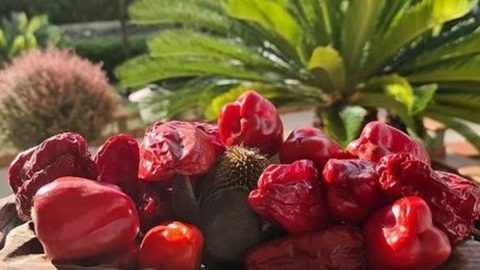
This is the case of the Tri pizzi pepper, also known more familiarly as Minni di vacca, due to its shape, characterized by three protuberances at the lower end of the fruit which resembles that of a cow's udder.
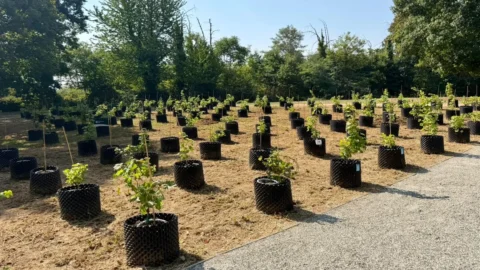
In Calabria it grows in the Monte Poro area, in the province of Vibo Valentia, a very rural area, where there are no polluting industries but only farms.
"We grow it - says Gabriele Crudo, producer of tri-pizzi - in an area which includes a dozen municipalities, including Spilinga", the locality known for its 'nduja, the spreadable salami of which this variety of chilli is an essential ingredient.
In recent years, the number of producers of this fine variety of chilli pepper has dwindled, yielding to the sometimes devastating logic of the market. And his future was at risk.
Fortunately, Slow Food intervened and included the Tri Pizzi pepper in the Ark of Taste, the project with which foods at risk of extinction are identified all over the world. With the tri-pizzi pepper, the list of Italian products reaches a thousand mentions.
«The price of chili peppers is too low - says Crudo - Fresh it is sold at 80 cents per kilo, but the producer gets nothing from these figures, because each individual plant requires time and commitment and ensures a limited quantity of chili peppers, which varies from 300 to 800 grams per season».
According to Crudo, a fair price, capable of ensuring a future for cultivation, fluctuates between the euro and the euro and fifty per kilogram. "This variety of pepper must be protected and supported, because otherwise in five or six years we will reach the point where no one will want to grow it anymore".
Today there are about ten producers: «Like me, who's 34 years old, there are seven or eight other young people. We have small farms, we grow about one hectare of chili each, trying to carry on a centuries-old tradition handed down from our grandparents to our parents and ensure that a product that has always been used a lot continues to arrive in the kitchens of the area».
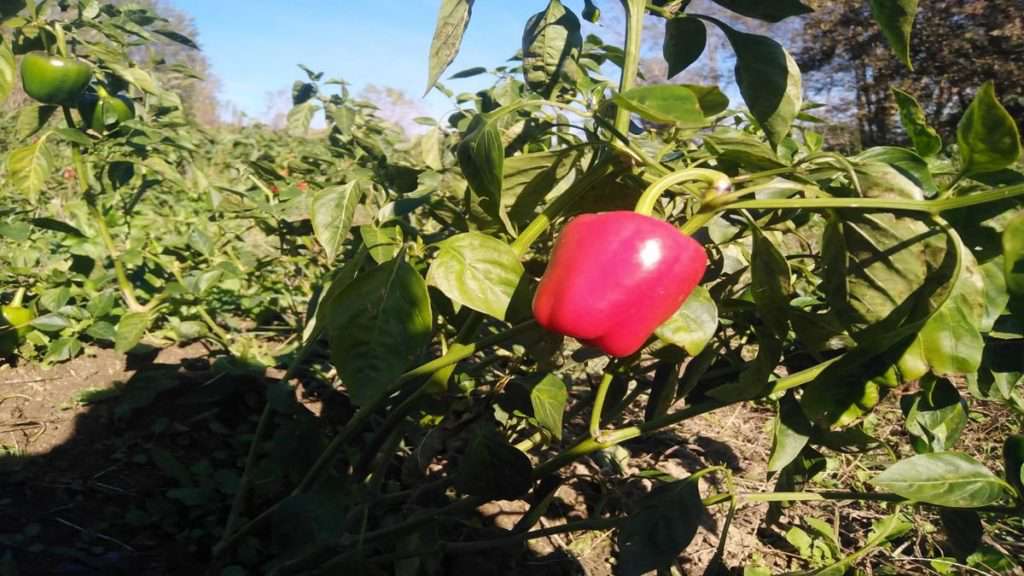
For the 'nduja, first of all, but also for the soppressata, or for making preserves and preparing aubergines in oil: thanks to a pulpy fruit, tasty but not excessively spicy.
In this area, in fact, the dark soils are very fertile and the microclimate favors an intense formation of dew which makes irrigation almost superfluous.
In Spilinga, it is the fundamental ingredient of 'nduja, the spreadable and very spicy cured meat, symbol of Calabrian butchery, but it is not sufficient to cover the entire need for the local nduja production. The pulp of the tri pizzi is thick, it does not get lost in the processing, it gives the 'nduja a bright red color, a particular aroma and an aromatic, spicy and decisive taste, but without excesses, and without covering the flavors of the meat or leaving an aftertaste bitterness of many poor quality 'nduja.
But its uses are varied: dried and powdered, it is mixed with olive oil and a little vinegar to treat the surface of the Monte Poro pecorino, naturally protecting the cheese from dangerous moulds. It is also used to give color and flavor to other local cured meats, such as the soppressata. The antioxidant properties of the chilli pepper naturally preserve the meat and allow you to produce cured meats without additives.
Wanting to ensure a future for tri pizzi and the other 999 Italian products included in the Ark of Taste (globally there are 5.327 in 150 countries) – does not mean looking back nostalgically, stubbornly thinking that "once" everything was better, chasing a historical period now closed. On the one hand, to use the words of Gabriele Crudo, it means «creating an economy in this area, making people work on farms».
On the other hand, it is the best way to preserve domestic biodiversity, i.e. the species selected from agriculture and breeding. Each has a characteristic that makes it unique and important: the tri pizzi pepper, for example, grows without the need for irrigation, taking advantage of the nocturnal humidity ensured by the microclimate of this area.