Although most Italians have heard Cesare Battisti's name pronounced at least once, few know his life, human history, political battles, passion for history, geography, writing. Most people associate Cesare Battisti with his tragic death in the so-called Pit of the Martyrs of the Castello del Buonconsiglio in Trento, on 12 July 1916. The phrase with which the historian Mario Isnenghi defines Battisti as "one of the most cited but least known from the twentieth century."
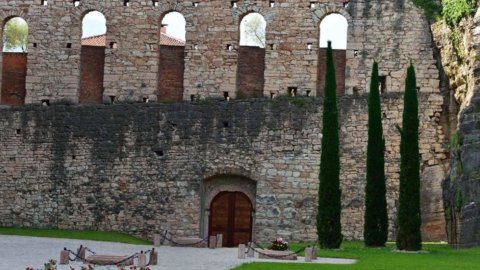
As part of the initiatives on the First World War and on the occasion of the centenary of his death, the exhibition intends, through a selection of precious works of art of the time and rare historical testimonies, to illustrate to the general public a personality of great human depth and culture that has played an important role in the recent history not only of Trentino but also of Italy and deserves to be known in its complexity and modernity. His human story, unraveled between strong ideals and passionate action, becomes the key to understanding the unique social and cultural climate of Trentino at the watershed between the nineteenth and twentieth centuries, where ferments inspired by the Italic civilization and ferments stimulated by transalpine experiences coexisted in the same territory , leading to a fruitful but troubled collective experience, which was soon destined to suffer the blows of the clear change brought about by the end of the Great War and by the annexation to the Kingdom of Italy. July 12, 1916 marked the epilogue of a life led without saving, until enlisting in the Alpini corps and being captured on Monte Corno. On that day, imprisoned in one of the cells created in the Loggia del Giardino of the Castello del Buonconsiglio, to then be tried and sentenced to the gallows by the Austrian military tribunal, whose sessions took place in the ancient Stua de la famea, he in fact climbed the halter erected in the courtyard behind the building.
From that moment his tragic end, together with that of Fabio Filzi and Damiano Chiesa, attributed to the ancient residence of the prince-bishops of Trentino the role of a real "deputed place" of Baptist memory, perhaps even more than his mausoleum on the Doss Trent. At the same time it did not fail to be a formidable starting point for war propaganda, to then continue and consolidate itself as a glue myth for the national ideal of an Italy that came out shaken and battered by the Great War. Thanks to the large availability of Italian and foreign museum institutions that have granted the loan, the exhibition includes the exhibition of paintings, sculptures, books, documents, photographs, maps, historical relics, through which the itinerary winds through the rooms. The historical approach and the art-historical approach to the theme, conducted in parallel and in close interconnection, have made it possible to shed new light on many aspects and connections hitherto little explored and to discover as yet unknown episodes. The first section paints a picture of the lively cultural situation of Trentino in the Austro-Hungarian context before 1914, with paintings by Giovanni Segantini, Eugenio Prati, Bartolomeo Bezzi, Alcide Davide Campestrini, Umberto Moggioli, but also Franz von Defregger, Albin Egger-Lienz . The landscapes of Guglielmo Ciardi and the illustration photographs of a Trentino still predominantly rural alongside the paintings of social subjects by Felice Carena introduce in the second section the growing commitment of Battisti, who has now returned to Trento after graduating in Florence, in social, political and cultural aspects of his land, from socialist militancy to the election as deputy in Vienna, which he leads together with the experience of a young geographer in the field with his innovative research on the lakes of Trentino.
The third section is dedicated to the period immediately preceding Italy's entry into the war, during which the people of Trentino were instead immediately involved in the Austro-Hungarian war effort, which sees Battisti engaged in the interventionist campaign in Italian cities, the call to arms, the refugees of Katzenau, and, in parallel, the works of Depero, Balla, Bonazza, but also of Kriegsmaler, such as Alfons Walde, Albin Egger-Lienz, Hans Josef Weber-Tyrol, Hans Bertle, the latter first witness of the capture of Battisti on Monte Corno. Other historical and figurative testimonies - those of Beltrame, Pogliaghi, Sartorio, Sottssass, D'Andrea, Guala, Viani, Mantelli, Morando - recount the crucial years of the war, the immense efforts carried out on the Alpine peaks and the Austro-Hungarian military machine, headquartered in the sixteenth-century halls of the Castello del Buonconsiglio. Finally, the last part is dedicated to the creation of the myth of Battisti, with fundamental works that build its iconography, such as the paintings by Carrà and Barbieri, executed in 1934 for the important but still little-known "Concorso della Regina", the sculptures of Minerbi, of Wildt, the sketches for the Victory Monument in Bolzano and the Monument of Cesare Battisti in Trento, alongside decorative projects for the Castello del Buonconsiglio until now little if not completely unknown, which saw the work of personalities from great highlight of the art between the two wars. As an aid to the visit and understanding of the sections, also of an emotional nature, a series of story-telling will be proposed with special video installations that accompany the crucial junctions of the exhibition narration, based above all on epistolary documentation and other available sources.
The initiative, promoted and organized by the Castello del Buonconsiglio museum. Monuments and provincial collections, sees the involvement of the Historical Museum Foundation, the War Museum of Rovereto, the Agiati Academy of Rovereto, the Bruno Kessler Foundation, the Società di Studi Trentini, the Department of Letters and Philosophy of the University of Trento , and the Municipality of Trento.