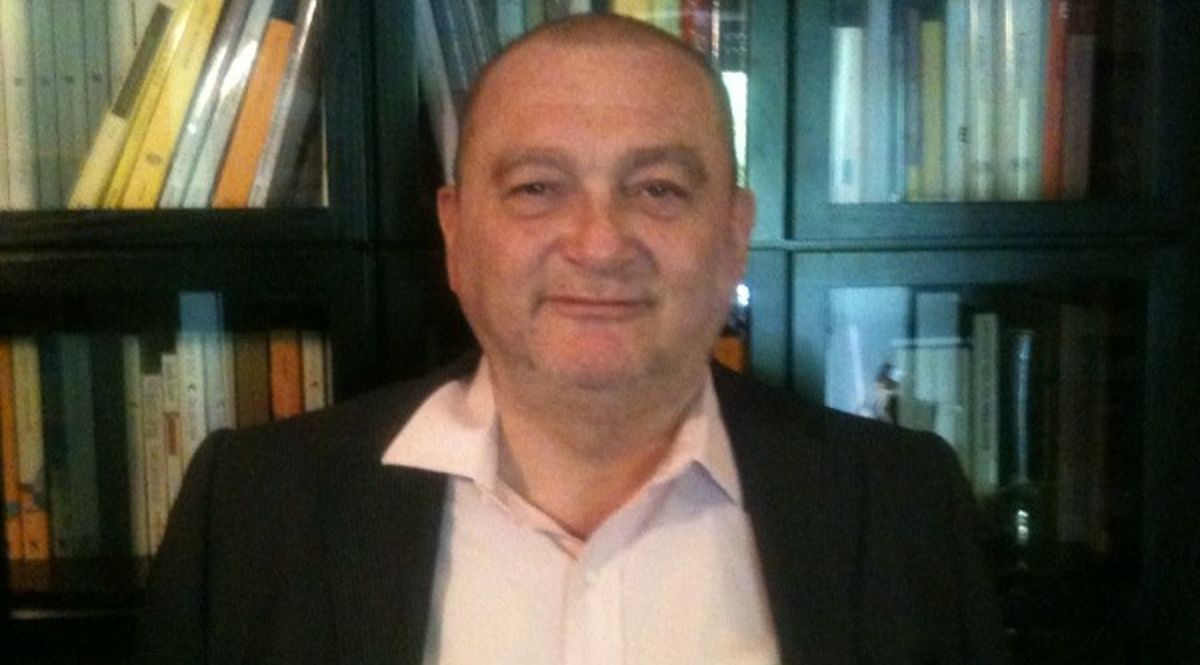
If not now, when? Giovanni Tamburi, demiurge of Tip, architect of the Made in Italy parlour, is not the type to rest on his laurels. On the contrary. He is ready to put his long market experience at the service of a possible agency to speed up the times and ways of strengthening the capital of Italian companies, the real weak point of Italian capitalism, populated by companies that are too small and too fragile, given the dependence from the banking system. “Why not?” he says. “In his time I was a member of the privatization commission of the Ministry of Budget and of the advisory board for privatizations in Milan. I don't back down if there's something to do”. Even if he certainly has plenty to do, given the shareholding package kept in the coffers of this financial company which sits on a generous billion in capital gains on the stock market, but which is certainly not a dormant partner, if anything an engine in constant motion , especially at the time of the great restart.
When everything looks good. Or not?
“Governor Visco spoke of year-end growth of 5%. In a confidential way, however, there is already talk of 6%. It feels like a dream since we come from a long period of zero point increments”.
All good, maybe too much. Price racing can stall the machine, many experts say…
“And let them talk nonsense. They've been repeating this refrain for years. At least since 2015 when they warned me against the bubble. I have the feeling that giving space to these Cassandras is not a good service for savers".
The usual optimistic Tamburi to the bitter end.
“So far I have not been wrong about the qualities of our enterprises. Today, then, we can add various new and positive macro factors: capital arriving from Europe, almost 300 billion available for growth, a figure we have never even imagined. The constant decline in the cost of public debt which frees up other resources. Finally, the Fiscal Compact has ended up in the attic and will stay there if we do the right things”.
And what are the right things?
“The real weak link is the undercapitalization of companies, which puts our system in conditions of inferiority. We have companies that are too small, conditioned by a short-term vision, under the banner of individualism”.
Can we grow and grow this system?
Unfortunately I don't see much on the subject right now. And it's a real shame because it's the right time for the breakthrough. I am convinced that Mario Draghi, the great architect of privatizations, is able to develop, as he is probably already thinking, a package of fiscal stimuli capable of enticing the undecided. Then there is a formidable alibi: Covid -19. I had to merge the company or sell because forced by the contagion".
In short, what makes the M&A process difficult is also a sort of psychological block of entrepreneurs who find it difficult to get out of the role of boss or young owner.
“It certainly is. But, above all, there is a certain unreasonable trust, fueled by the climate created by the pandemic. Some are led to believe that the banking moratoriums will last who knows how long. And that, via Sace or who knows what other channel, public aid will continue to pour in. But the money coming from heaven will sooner or later cease. I think sooner rather than later."
Also because the mentality is changing. Until recently, IRI 2 was in fashion, ie public intervention under the direction of Cassa Depositi e Prestiti. Today…
This idea, like that of a sovereign wealth fund, ended up in the attic. Fortunately.
But will Draghi last?
“It can't not last. He is convenient for everyone, even those who pretend to disagree. Don't ask me for forecasts on the Quirinale, because that's not my job. But I am convinced that, supported by the agreement with Brussels, Draghi will complete what we need: the reform of the judiciary, the revision of the bureaucracy that suffocates businesses, and a tax package that favors recapitalisations, either with concessions, incentives on dividends and other operations which, with a modest cost in the short term, can considerably increase tax revenues over time".
It looks like a dream book.
“Not at all. As long as everyone cooperates, including banks. It is not a matter of forcing the industrialists to sell the boat. But to convince them to put the liquidity, the 1.800 billion in circulation, inside the companies. The banks, from suppliers of credit often conditioned to social needs, to directors of this revolution, in which the institution finances only the working capital, not the equity. It is a possible revolution, given the current conditions of the markets. Already in 2022 many knots will come home to roost".
At the cost of repeating myself. Dreams end. And inflation can jam the engine.
“But let's look at the real numbers. Our companies increase orders by 20, 30, even 40%. The internal market has also restarted. Of course, raw materials are increasing, but this is a guarantee of balance, a factor for stabilizing growth”.
But is China holding back, or not?
“And they do well, because in this way they avoid unsustainable financial imbalances. Furthermore, Beijing can now count on a rapidly growing domestic market. We are facing a new type of globalization. Covid has taught companies that it is necessary to be present in the three areas of the industrialized world. Woe to concentrating everything in a single continent”.
The fight is getting harder and harder, at each level. And the strongest win. Let's take the case of Stellantis. Thanks to public funds made available by the government, the group has decided to open the first electrical factory in the United Kingdom even if it will later build a gigafactory in Termoli.
I think economic nationalism is nonsense. I am convinced that there is always something to learn from others to do things better. Let's take the case of large-scale distribution, a record of France. Well Conad has taken over Auchan Italia. Nothing is irreversible."
Let's see the quality of the Italian recovery. Is it homogeneous or patchy?
“Some sectors still suffer. This is the case of tourism, including that linked to food and hospitality. For the rest, the recovery seems to me started. Of course, in the West the exit from smart working or the difficulty in finding specialized personnel weighs heavily. At this rate, the doors of immigration will reopen. For the rest, I see the car very well, the mechanics, the energy, the telecommunications, Prysmian”.
Speaking of Prysmian, don't you regret having sold part of the stake?
“I sold a portion of Club Deal stock but kept a stake in Tip. I sold the shares after ten years with a very good margin. But it is the fate of those who manage the capital to have to sell to ensure the remuneration of the partners. Having said that, Prysmian is a jewel that has crossed the threshold of 8 billion in capitalization”.
With excellent growth prospects on the US market, moreover…
“Allow me a note of personal merit. Our role on the board of directors was crucial at the time to support the acquisition of General Cable, guaranteeing a leap in size and market by silencing analysts who feared the increase in risks”.
Tip is not a dormant partner who limits himself to paying off coupons, therefore.
“It's not our function. These days we are working on the take-off of Oviesse, a company in which I strongly believe, as demonstrated by the attempts to imitate our platform. Today Oviesse controls about a fifth of the children's market with development prospects”.
What about tourism?
“He's halfway there. We have strengthened the air fleet and set up a five-star hotel in Venice, with investments in the order of 300 million. We are confident."
An area to focus on.
“I really like mechanics and electromechanics. Italy sits on a mine of opportunities between half of Piedmont, half of Veneto and all of Emilia”.
What news do you like the most?
“Aim takes off: more than 160 companies that have demonstrated that there is room on the Stock Exchange for small companies that intend to grow. We participate in Digital Magics and other investments. But, I confess, the size of Tip today is too important to scatter us on a market of a few million euros”.
And your least favorite news?
“I don't like Spacs. If an entrepreneur looks at the Stock Exchange he has no reason to proceed with this indirect formula. After all, even on Wall Street, the performances of the IPOs beat the SPACs. And then…
Then?
“I like those who put their faces on it”.
As indeed he has always done.