La ecological transition is also a social issue. In Europe, approximately 20 million people live a transport poverty condition, as indicated by Transport & Environment (T&E), the leading independent European organisation for the decarbonisation of transport. These are low- or lower-middle-income adults living in rural areas. poorly served by public transport, who are structurally dependent on the private car for their travel.
This dependence makes them such particularly exposed families to the rising cost of fuel, a trend that is set to intensify with the extension of the EU Emissions Trading System (ETS2) to the transport sector, planned for 2027. The affordability of sustainable mobility, in this context, is not only an environmental issue, but a social urgency.
Social leasing as a tool for inclusion
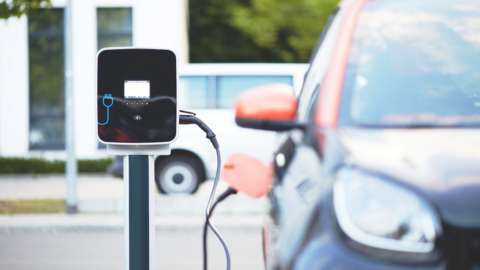
To meet this challenge, T&E proposes a concrete solution: social leasing. It's about a long-term rental formula with favorable conditions, designed to make electric cars accessible to low-income families. According to a study conducted with the Öko-Institut, between Germany, France, Spain, Italy and Poland – the five countries that represent 65% of the EU population – up to three million families they might benefit from this instrument by 2032.
The measure, already active in France, provides monthly fees between 130 and 215 euros for electric vehicles with a list price below 25 thousand euros. Public support plays a crucial role in making the model sustainable, which aims to eliminate the initial economic barrier to adopting zero-emission cars.
Esther Marchetti (T&E): “This is how we break the dependence on high fuel prices”
La transformative reach of social leasing It is well summarized by the words of Esther Marchetti, Clean Transport Advocacy Manager of T&E Italia:
“To free families from dependence on fossil fuel cars and the ever-increasing costs, we need a concrete help to go electric. Electric cars are still too expensive even for those with average incomes, while incentives often end up in the hands of those who don't need them. Social leasing can change that: by eliminating the initial price barrier, it makes electric cars affordable accessible to millions of people who, otherwise, would remain dependent on old, expensive and polluting vehicles”.
The model, therefore, not only democratizes access to sustainable mobility, but it acts as social equity lever, counteracting a regressive mechanism that penalizes those who are less able to invest in clean technologies.
A priority channel in Social Plans for Climate
To transform social leasing from a proposal to a structural measure, it will be essential to anchor it to Social Plans for Climate that each Member State will have to submit to the European Commission by 30 June 2025. These plans will define the use of the Climate Social Fund (CSF), an instrument largely financed by ETS2 revenues and operational between 2026 and 2032.
T&E estimates that in the five main countries of the Union the FSC can make available 16 billion euros to be allocated to social leasing. In the first year of the fund's operation, the available resources will amount to approximately 4 billion, an insufficient sum, however, to address the emergency effectively.
Anticipate resources to avoid emergency
To prevent the most vulnerable groups be hit by fuel price increases expected from 2027, T&E proposes to advance resourcesThe idea is to allow Member States to access a part of the future revenues of ETS2025 as early as 2, possibly in the form of guaranteed loans.
The goal is initiate social support programs promptly and decarbonization of transport, providing a concrete and preventive response to the inflationary pressures that will hit the automotive sector. Here too, social leasing represents a measure with a double value: social mitigation and a boost to the green transition.
A new market for European electric
Social leasing could also trigger positive dynamics also on the industrial side. According to T&E estimates, by 2032 electric cars purchased through this formula could represent 12% of the European electricity fleet. In some rural areas, the measure would cover up to 27% of households currently dependent on combustion-engine cars.
If European governments decide to prioritize vehicles produced on the continent, the program could also strengthen the European auto industry, stimulating demand in a segment that is currently underserved: that of affordable electric cars.
In order for social leasing to become a systemic tool, T&E proposes the creation of a European platform for affordable electric cars, foreseen in the future guidelines of the Clean Industrial Deal. This one-stop shop would facilitate the meeting between public demand, represented by the Member States, and the offer of the automotive industry, allowing to negotiate more advantageous conditions for national programmes.
Supranational coordination would make the use of resources more efficient and the large-scale deployment of the measure faster.
Sustainable Mobility: A Matter of Justice
Social leasing, if implemented with coherence and vision, represents one of the most concrete and inclusive responses to the challenge of climate justice. However, it is not enough on its own. To structurally address transport poverty, it will be necessary accompany this measure with the strengthening of public transport, incentives for active mobility, scrapping programs and investments in charging infrastructure.
Ultimately, what is at stake is the credibility of the European ecological transition. Making electric mobility accessible to low-income families is not only an act of social justice, but a necessary condition for the success of the entire climate project of the Union.