The protests began in January in Germany and reached Sanremo, intended as an Italian song festival. For common reasons against European policies and national reasons. Let's talk about the demonstrations that the newspapers summarized in "tractor protests”, that is, the regurgitation of the European agricultural world against problems that have remained under the carpet at a national level (for Italians the question of the difference between the cost of the product at source and what the consumer pays, in addition to the introduction of Irpef on land, abolished in 2017) and everything that can be inserted into the large file “green transition”. Namely: agreements to limit carbon dioxide emissions produced by livestock farming; agreements to increase the extension of land to be set aside to encourage the reproduction of fauna and pollinating insects; reduction in the use of pesticides to arrive at alternative methods. All decisions were scrapped after the protest, and it was easy to malign: never continue a conflict with (powerful) voters a few months after the June vote for the renewal of Parliament. Just as the negotiations with the main South American countries gathered in Mercosur on the free trade agreements, which has always been in the sights of European farmers. And finally the EU has introduced a mechanism that curbs zero-rate imports of wheat, corn and sunflower seeds from Ukraine which impoverish Poles, Hungarians, French and Italians.
In short, at least for the rules that concern everyone, the agricultural world of every part of Europe seems to have won across the board, never mind if this means delays in the roadmap for safeguarding the ecological future and that of the farmers themselves.
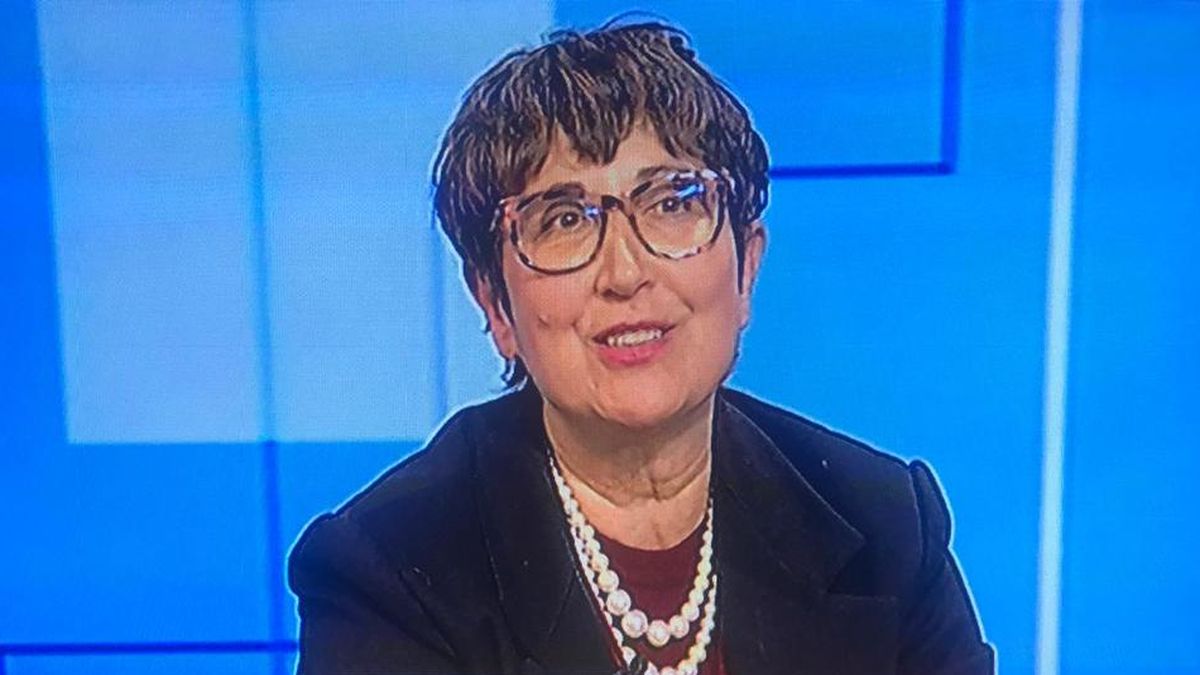
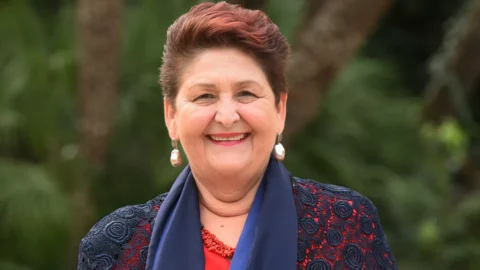
We talk about it with Teresa Bellanova, director of Italia viva, whose professionalism regarding the agricultural world, and the world of work in general, is universally recognized, having held all roles, from worker in the Apulian countryside to trade unionist, and then parliamentarian up to becoming undersecretary of Labor and Minister of Agriculture.
What is your opinion and what is your assessment of the tractor revolt?
“Let's start from the fact that we got to this situation because an enormous amount of mistakes were made. And let's establish some points of clarity: it is true that in the Italian agri-food sector there are many critical issues, but also many strong points. We must never forget that our agri-food is recognized as luxury all over the world, it is of the highest quality and that it is universally appreciated. And even the critical issues, compared to many years ago, when the sector was truly backward, there are no comparisons. Today the agricultural sector is above all innovation. And it concerns many young people and many women. Just think of the large number of students enrolled in agricultural and hotel institutes and agricultural faculties. This means that no slogans should be dedicated to the sector, but a lot of attention. For example, it would be necessary not to exploit the problems in view of the European elections. And this also concerns individual citizens who must remember that during the Covid phase, the only normality in our lives in which nothing was normal anymore, was the stability of the agricultural supply chain, as well as obviously that of healthcare. Now we need to respond to this sector, first and foremost with regards to income. One thing must be clear however, the problem we have today is not compliance with European rules, the CAP, as we know, but finding the human resources to employ in the sector. And therefore the work of immigrants in the agricultural sector is fundamental. But some more extremist parties continue to present themselves as the enemy of the country and of this sector."
So you think the revolt is right?
“I say that the protest is there and that we must take it into account. The government has made foolish choices above all because it does not know the sector. We list the three most serious problems that Italian farmers are facing in recent months: the increase in raw materials, the serious meteorological events that have affected the north and south of our country, the entry of wheat, corn and seeds of sunflower from Ukraine on our markets. And instead of managing these difficulties and supporting the sector, what does the government do? Cut the Irpef exemption, which is worth 248 million euros for the sector. One of two things: either you don't know the problems or you are inadequate, and I don't know which is worse. In short, cutting taxes for small farmers, for young people who represent the generational change in the sector, is not a gift, but a necessity. Of course, now they are going back, without having the courage to say that they were wrong."
And yet if all this seems sacrosanct, we have also witnessed a less honorable backtrack: that of the EU commission on the measures necessary for the energy transition. Weren't they also victims of the electoral climate?
“It is a sign of the weakness of politics. Of a policy that, instead of seeking consensus on the strategic vision, does not appear rigorous on the choices that concern the future of the sector, gives in and bends to contingent ones. And yet we must also be clear about this: the ecological transition is not done against farmers, but together with them, supporting them where they lose income. And it is foolish to suggest that the CAP, i.e. the European rules, is to blame for all this. On the contrary, the CAP guarantees the transition, but obviously the European rules must be accompanied with measures suited to each need. It is no coincidence that the protests are different country by country. In France they are calling for a reduction in diesel fuel and a ban on importing agricultural products from countries outside the European market; in Germany they want energy subsidies; in Holland they don't want to cull 30% of the livestock to reduce CO2 emissions; in Belgium they ask for compensation for all vehicles while in Italy they ask for the elimination of agricultural Irpef, reintroduced after it was canceled in 2017, fairer prices from producer to consumer, and not to review the CAP on fair redistribution".
What is your opinion on the CAP?
“The CAP, I continue to say, is a fundamental tool to guarantee food security, because you need good production practices and also reduce emissions. But you have to do it by supporting farmers: pesticides can only be replaced by science. You have to change the fleet of vehicles with new technologies, because to no longer use diesel you have to invest resources to have electric tractors and make sure that small farmers can buy them. The CAP is not a subsidy, it is not assistance, it finances a sector that must produce quality food and which must protect the environment. Among other things, it was approved by all EU member countries and supported by a European minister from the same political party as Meloni and Salvini. Finally, we must not forget that it is the most delicate sector, which affects the lives of families, because if we cannot access quality food at fair prices, it can create ungovernability in our countries".
You at Italia Viva were the only ones to denounce the Lollo tax which led to the increase in taxes for farmers: in the tractor revolt, in addition to disagreements on European politics, how much did the politics of the Meloni government and minister Lollobrigida weigh?
“We were the only ones because we are not part of political talk, we read the dossiers, we know the problems, we don't like to discuss the problems while walking around the television studios. Farmers' income has been a problem for some time because there is no doubt that once the goods have been produced, it is necessary to know who to give them to and for what value. But it doesn't happen automatically. Agreements need to be managed and monitored. When it arrives on the supermarket shelf the product has undergone a 300% mark-up. This happens because between the manufacturer and large-scale distribution there is a long chain: the intermediary, the wholesaler, the transporter, the packaging. What to do? Helping producers to join together to have more bargaining power would be the first way. As the apple growers of Val di Non did. Not to mention that the European directive should be strengthened which prohibits the unfair practice of double-down auctions which are gangmasters in suits and ties: whoever offers the lowest price gets on the shelves. The tractor revolt, in our country at least, was certainly triggered by the government's choices, primarily on agricultural income tax; but also for the disinterest shown in addressing supply chain problems."
Maybe farmers are not considered voters of this government? Unlike the rules for taxi drivers, which seem untouchable, no one thought twice about putting the Irpef back on the land...
“The fact is that this government has a backward idea of the agricultural sector. We cannot stand still, we must innovate. And you have to bring the industry with you on this project. So you don't have to start looking for resources through taxes, but on the contrary you have to invest in innovations. The agri-food sector is increasingly the one that must look to precision agriculture, to mechanical innovation, which must alleviate human fatigue and provide higher profitability. To the resources of the CAP, worth 386,6 billion, a third of the EU budget, 8 billion were added by Next Generation Eu to help rural areas achieve the green transition. 37 million will go to Italy. But the Pnrr must not be reduced to extolling the quantity of resources you take and those you allocate to the sector. It is necessary to accept the challenge to change: you have to think about logistics, you need to get products not only from large companies, you have to deal with hydrogeological instability. I have the feeling that the government doesn't have this awareness."
At this point in the revolt, in your opinion, what should a far-sighted government do to meet the demands of farmers without denying the policy of environmental sustainability?
“It's okay to simplify the rules and streamline bureaucracy. But we must also take into account the entire context in which farmers work. Let's take climate events: it means understanding what happened and acting accordingly. If one day the heat kills the crops and the next day a flood arrives, we cannot limit ourselves to dealing with the emergency. And then we need to continue with labelling: our products must be protected, but not in the way the government thinks, with the closure of borders, but on the contrary by widening them. We are seeing it these days when we talk about goods arriving from countries outside the EU, specifically Mercosur, from Latin American countries. There is talk of duties, closing borders, barriers. Our agriculture needs great openness, precisely because it is considered luxury it needs markets and exports. Today it is worth 60 billion per year, but it needs to increase. The consumer in Italy and around the world must know where and how that goods were produced. Made in Italy costs more, we know, than a product coming from a country without rules. But we can support it. And these choices concern only us. That is, to a competent and responsible government."
Why is there still so much illegal work in the countryside?
“This country has the most innovative law in Europe, the one against gangmastering (which among other things bears the name of Bellanova ed.), but to combat illegal work it must be clear that the ghettos must be emptied. If we continue to keep immigrants locked up in a kind of concentration camp, at the disposal not of entrepreneurs, but of slavers who think they can use these people for a few euros and make them live in the conditions we know, we will not be able to wage any battle against illegal work and against gangmaster. And those who persist in identifying immigrants as enemies are primarily responsible for the presence of illegal work."
In recent months the transmission belt between the very powerful Coldiretti and minister Lollobrigida has clearly emerged: what rating do you give to Prandini's policy?
“The members give the vote to their managers, but I believe that if we end up with slogans against Europe, against Europe's agricultural policies, obviously we cannot ignore it. I have always been convinced, even when I did another job, that transmission belts, by canceling the autonomy of individual subjects, are bad for all the protagonists. Responsibilities must be exercised, representation must be autonomous so that the whole and the parts find balance. Let's take the history of land taxes. If there had been autonomy, the mistake that was made would not have been made. Good politics listens to everyone and then decides. Comparisons must be clear and transparent."
Finally, a completely political question: in recent days Emma Bonino has launched the proposal of a list with an anti-sovereign purpose in view of the next European elections and open to IV. Action, +Europe with capacity for dialogue with the Democratic Party. Boschi appreciated it, Calenda rejected it. What do you think and, if Calenda backs out, is an electoral agreement between Bonino and Renzi possible?
“I think it is irresponsible not to commit to a purposeful list that addresses the European challenge. You have an aggressive right, a sovereignism that risks calling into question the foundations of Europe, you cannot face this challenge with childishness and personal resentment. I believe that anyone who avoids the construction of a list of objectives assumes the responsibility of facilitating sovereignism. As a pragmatic reformist that I am, I hope that politics prevails and that a list of goals is built. Who is he with?"