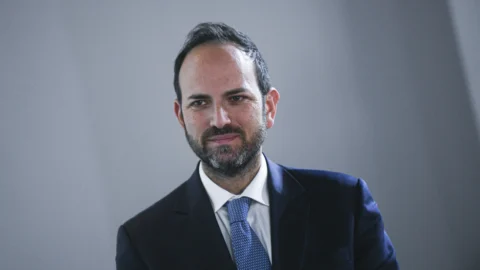
La justice reform "Doesn't this call into question the independence and autonomy of the judiciary at all? Whoever says so hasn't read Article 3 of the Nordio Law carefully enough, which radically modifies Article 104 of the Constitution. reducing the principle of autonomy and independence of the judiciary to an empty box. It is hypocritical to continue to affirm this." This is what is said by Enrico Grosso, from Turin, born in 1966, an authoritative name in our constitutional law.
Lawyer (son of Carlo Federico Grosso, one of the most famous Italian criminal lawyers) and full professor at the University of Turin – former student of Gustavo Zagrebelsky – today he is also the honorary president of the Committee “Right to say No” to referendum on justice. In this interview with FIRST onlineGrosso explains why “weakening the autonomy of the judiciary from political power” translates, for citizens, into a “drastic reduction in the scope for the protection of their rights”.
Professor Grosso, in clear and simple words, why—to quote the slogan of the Committee you chair—is it “right to say No” to the referendum on career separation?
Let's begin by clarifying that the referendum isn't at all, or at least isn't primarily, about the separation of careers. That's a slogan used to confuse and risks becoming almost an attempt to defraud voters. The real issue of the reform is the dismantling of the Superior Council of the Judiciary as the body that effectively guarantees and actively defends the autonomy and independence of the judiciary.
Then?
“It is right to say No to the attempt by politicians to bring the magistrates back into line, to bring them back, as Undersecretary Mantovano stated, seeking to amend the very constitutional provisions that effectively guarantee its independence, and therefore impartiality. For more than two centuries, all constitutions have entrusted the judiciary with the task of curbing the natural tendency of politics to abuse its power. For this reason, the judiciary must be guaranteed full and effective autonomy and independence from political power.
Otherwise?
Otherwise, it fails to truly perform that essential task, and the citizens pay the consequences. When the autonomy of the judiciary from political power is weakened, citizens see the scope for protecting their rights drastically reduced: the constitutional state was invented to limit power and subject it to the law. Only autonomous magistrates, independent of all other powers, can fulfill this essential task. But autonomy is not enough to proclaim in the abstract. It must then be preserved in practice, day by day. This is what the Higher Council of the Judiciary is for: to truly guarantee, beyond statements of principle, the autonomy of the judiciary from politics. Weakening the CSM means weakening this autonomy, and therefore weakening the concrete protection of citizens' rights.
It's clear that this reform won't shorten trial times, even those supporting the "Yes" vote admit it. However, given the public debate and the risks being feared, why will it undermine citizens' rights?
Because citizens' rights are effectively defended only if the judge is truly independent, and therefore can exercise his or her functions with true impartiality and impartiality. But the judge is truly third-party and impartial only if he or she is free, if he or she is not afraid. And he or she is truly free only if he or she knows that there is someone who defends that freedom on a daily basis. This function is assigned by the Constitution to the CSM, understood as a strong and prestigious constitutional body, whose members are capable, aware of their role, accountable, and well-legitimized. This reform effectively strips the CSM of its indispensable constitutional role and deprives it of the essential constitutional standing it requires: it splits it in two, requires that members representing the judiciary (but not, mind you, those representing politics!) be chosen by lot without any sensible merit-based selection criteria, and it deprives it of a fundamental function, namely that of disciplinary action.
Some kind of punishment?
These are blatantly punitive measures, which serve only to intimidate judges. Deprived of a constitutional body that truly protects their autonomy, they will inevitably be more fragile in the face of power, intimidated when it comes to making decisions that disturb it. These are the most difficult and delicate decisions, but often the most important.
According to the constitutionalist Stefano Ceccanti, factionalism exists and it is a status quo which must be overcome. Augusto Barbera calls the currents such a "maze" that AI is needed to figure out how many there are. Do you think this is an issue that doesn't arise?
On this point, we need to clarify and, here too, strive to overcome simplifications, propagandistic slogans, and partisan tones. We are all familiar with the news stories that, in recent years, have exposed the pathological functioning of the CSM, with the risk of jeopardizing the very prestige of the judiciary and the position of independence assigned to it by the Constitution. However, we must firmly maintain the distinction between the purely constitutional value of the associative pluralism of the judiciary and its degraded version, which is defined as current affairs".
That means?
“The pluralism of the judiciary, understood as 'plurality of points of view' and therefore an unavoidable and constitutionally guaranteed feature of its activity, has nothing to do with the current affairs, and Professor Barbera, who is a highly trained jurist and a fine interpreter of constitutional reality, cannot pretend not to know this. The so-called current affairs It is a degenerative disease of judicial pluralism, which has poisoned it when the opposition between the components of the judiciary (and within them) began to have, as its main battleground, the mere struggle for power and – above all – the relationship with power. current affairs It is the degradation of the legitimate and fruitful cultural debate on constitutional values into an opaque and unwarranted attempt to build 'relations' of power and with power, with the sole objective of defending interests far removed from the proper functions of the judiciary. All of this has nothing to do with the pluralism of ideas and the protection of the judicial function in the constitutional system. The phenomenon of pluralistic associations in the judiciary, however, cannot be simplistically reduced to the phenomena of factional degeneration that have been uncovered, and which the judiciary has resolutely managed to clean up.
Are you referring to the Palamara case?
“Allow me to say that continuing to wave the so-called 'Palamara case' as an excuse for an alleged need for moralize the judiciary It is not only instrumental, but highly suspect. The judiciary has largely come to terms with the 'Palamara case'. Has politics—the same politics that was only too happy to meet Palamara at the Hotel Champagne and thus influence, by interfering in a function that was obviously not its own, the decisions regarding appointments to the CSM—done the same? Let us always remember that the pluralistic articulation of the judiciary guarantees the truly 'diffuse' nature of its operations, aids and favors the impartial exercise of the judicial function, and protects it from attempts at 'capture' by political power. From this perspective, defending associative pluralism, as the associated judiciary is currently doing, means precisely combating the degenerations and undue intermingling that the 'Palamara case' has uncovered.
How do you respond to those who declare – Antonio Di Pietro first and foremost – that the independence and autonomy of the judiciary are not at all in question?
I reply that perhaps you haven't read Article 3 of the Nordio Law carefully enough, which radically and profoundly modifies Article 104 of the Constitution, reducing the principle of autonomy and independence to an empty shell. As I explained above, it's not enough to proclaim a principle in the abstract if it isn't supported by a system of rules that guarantee its effectiveness. Maintaining the abstract proclamation that the judiciary is independent in the Constitution is pointless if that principle is then stripped of the practical instrument that defends and ensures that independence on a daily basis.
Translated?
“It is hypocritical to continue to affirm, as Antonio Di Pietro declared, that Article 104 is not affected. It is indeed being affected! The radical modification of the nature and constitutional role of the CSM, through the distortion of the text of Article 104 that governs its composition, calls into question the very practical validity of that principle of autonomy and independence of the judiciary from political power, which finds its very protection in the CSM, and which will remain in the Constitution as a kind of defenseless simulacrum.
Why don't you like the drawing of lots for the CSM? Isn't it a legitimate method, considering it's a management body?
“Apart from the fact that not even the 'management' bodies should be composed using a criterion which is in itself random, and therefore unreasonable, such as drawing lots, it must be clear that the CSM, as I have tried to argue, is not at all a body of data management;".
What is that?
It is a body that, through the autonomous governance of all activities related to the careers and work organization of magistrates, contributes daily to the active defense of the judiciary from interference and pressure that the government, and therefore politics, could exert against it. Knowing that they cannot be transferred to another office or position—as can happen to any other public employee—except by decision of the CSM, helps the magistrate not fear deciding a sensitive case in a way that might displease a powerful figure, and suffer detrimental consequences for their career and even their personal life. For this reason, those who sit on that body must be prepared, competent, responsible, and sufficiently empowered to carry out this extremely delicate task with strength and determination.
And why, in your opinion, can't it be like this anymore?
Now, the CSM will inevitably become a weaker body, and less able to fulfill its role as a constitutional guarantor, when its members are drawn by lot rather than elected. Drawing lots is a demeaning and depriving members of accountability, completely inappropriate for ensuring a minimum level of competence for the complex functions for which they are assigned. The idea that all Italian magistrates, regardless of their experience, demonstrated ability, or acquired constitutional sensitivity, can serve on the body that guarantees the autonomy and independence of the judiciary is grotesque. Elections serve to choose the best, while drawing lots leaves the selection to chance.
In a basic way, how would you explain this to voters?
I ask Italian citizens whether they would agree to choose by drawing lots—that is, at random—their family doctor, their building manager, their savings manager. The truth is this: the introduction of the drawing lots is a key element in a comprehensive strategy to delegitimize and weaken the constitutional role of the CSM, reducing it to a mere bureaucratic body.
Some say that separating careers will create a category of "inquisitors" who will do nothing else their entire lives. In your opinion, is the possibility of switching from judging to investigating roles really a counterbalance to a potential obsession with prosecution?
"Certainly! In fact, I'll go further. The separation of careers, understood as the separation of educational experiences and the impossibility of exercising both roles throughout one's life, achieves the opposite goal to the one we—according to our stated intentions—want to pursue."
Why?
Because it creates a culturally separate, self-contained, self-referential public prosecutor who will quickly forget his assigned constitutional function, as he will no longer benefit from the circulation of formative experiences that make him, first and foremost, a 'magistrate'—that is, a public official assigned, just like judges, to the exercise of jurisdiction, in the pursuit of the general interest. He will inevitably be transformed, first and foremost on a cultural level, into an 'inquisitor', self-referential and totally devoid of sensitivity to the rights of those he investigates, because he will be led to this by an experience that, from his youth, will force him to think of himself as the accuser who must possibly secure the conviction of all those he investigates. As a category, public prosecutors will be led to conceive of themselves as a 'body'. A body—indeed—separate. A 'power' that is separate as well as, inevitably, hierarchical. This is a true heterogenesis of ends. I think, on the contrary, that a better public prosecutor would be one who has done the judge at least in part of his life”.
So, the exact opposite...
Legislation that sensibly pursues the objective of ensuring legal protections sought to be introduced by the so-called 'separation' should therefore, contrary to the very opposite of the reform we oppose, require all magistrates to perform, at least for part of their careers, both judicial and prosecution functions. Indeed, in an ideal world, all newly appointed magistrates should be assigned judicial functions, and should be able to access prosecution functions only after having served as judges for a suitable period of time, possibly holding both civil and criminal functions. A good magistrate is one who does not become stuck in the same role his entire life. He is one who experiences diverse experiences and is able to draw, from those diverse experiences, the answers to interpret as accurately as possible the infinite complexities that the administration of justice presents us with daily.
Your stated goal is to ensure this is a "citizens'" battle against a "wrong" reform, not a battle against the government. It's undeniable, however, that the deadline is 2027, and that the outcome of the referendum will be analyzed from that perspective. How, in the popular perception, can the referendum vote on merit be separated from the political one?
Everyone must do their part. Our goal is not to politicize the debate, but to explain the constitutional implications of the reform and the impact it will have on the real lives of all Italians. Therefore, I advocate for a serious, balanced information campaign that respects citizens and treats them as adults. From this perspective, I believe it is very important that the referendum campaign conducted by our committee differs, in tone and themes, from the one that the political parties that fought against the reform in Parliament will legitimately decide to undertake. We are not here to oppose the government, and we will not be trapped in the convenient narrative of those who want to portray a politicized judiciary attacking the majority currently in power.
What is your narrative then?
We are addressing all citizens who care about the Constitution and its values, and we expect broad participation because we know that Italians hold their Constitution dear and are reluctant to question its foundations. We've seen this many times in the past: when they're asked to tamper with the Constitution, citizens are wary and rightly wary. We trust this will be the case this time too.
According to the most recent polls, the "Yes" vote remains ahead, but a good 30% of voters remain undecided. How high is the risk that this percentage will remain unchanged and that Italians, ultimately, won't truly understand the referendum?
"This is what referendum campaigns are for: to inform citizens of what's at stake and make them aware of the choices they'll make. I'm confident that the strength of our arguments, if we're given the opportunity and time to explain them calmly, thoughtfully, and seriously, will ultimately emerge and prevail over the simplistic slogans we're hearing these days."
If separate voting had been allowed, would there have been at least one point in the referendum on which he would have given a Yes vote?
Look, the Nordio law essentially modifies only two articles of the Constitution. The bill, however, is only one. Article 104 is amended, weakening the CSM by dividing it into two parts and significantly changing its appointment criteria, as I explained above. And Article 105 is amended, removing the disciplinary function, and therefore the control over the ethics of magistrates, from the body—the CSM, to be precise—that should be constitutionally charged with regulating every aspect of the judiciary's activity, and entrusting it to a truly bizarre body, the so-called 'High Disciplinary Court,' partly drawn by lot and partly appointed (because it must be clear that the members of the High Court of political origin will continue to be chosen from a list of names that politics will promptly identify). A magistrate convicted of disciplinary proceedings will not even have the possibility of appealing to a 'third-party' judge, because the judges who judge him in the second instance will no longer be The United Sections of the Court of Cassation, the country's highest judicial body, but they will be members of the same High Court, only with a different composition, in an incredible and unprecedented violation of every basic principle of protection of the accused, furthermore in open conflict with fundamental rights expressly guaranteed by the European Convention on Human Rights. A clear, further threat to autonomy and independence.
In short, a No across the board.
"In short, the amendments all share the same spirit and the same uniform objective: to weaken the independence of magistrates and deprive the judiciary of a safeguard that allows it to exercise its constitutional function in complete freedom, without fear or constraints. The plan is unequivocal, and therefore our strongly critical response is unequivocal."
READ ALSO ABOUT THE JUSTICE REFERENDUM Interview with Gian Domenico Caiazza (Yes) / Interview with Luigi Zanda (No) / Interview with Stefano Ceccanti (Yes)