It is expected for the first half of March 2026Meanwhile, polls fuel calculations, forecasts and political projections that look straight to 2027, when the Meloni government will expire. referendum confirmatory on separation of magistrates' careers – which would strengthen the executive in case of victory or, in the opposite case, would give new life to the opposition – divides the audience of magistrates, lawyers, constitutionalists, technicians and politicians between those who support the reasons for the Yes and who those of the NoIt divides right and left (still leaving open spaces and question marks in the center), it divides jurists and experts in a complex, at times difficult, and decidedly complex field.
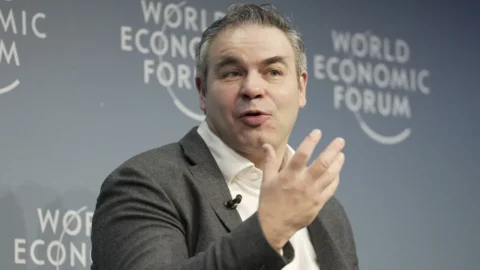
Stephen Ceccanti, a constitutionalist and former Democratic Party parliamentarian, is a full professor of Comparative Public Law at Sapienza University of Rome. It has been written of him that, when he discusses institutional reforms, he doesn't act like a "fan" but argues on the merits, dismantling and analyzing. He, who declares himself in favor of the "Yes" vote, FIRST online asked for clarifications and opinions on some of the most debated and contested points of this justice reform.
Professor Ceccanti, those who oppose the merits argue that, with the Nordio-Meloni reform, magistrates will be offered a career path through a separate competitive exam, led by a CSM composed entirely of prosecutors, and conducted entirely from the prosecutor's perspective. Therefore, this solution will inevitably exacerbate the aspects—let's call them "judicial excesses"—of which prosecutors themselves are accused. What is your response?
One can be for or against the separation of careers. If one is for it, the body that manages careers—the CSM—cannot be a single body. At that point, there is the problem of the balance in each of the two CSMs between magistrates and jurists of parliamentary origin. To preserve autonomy and independence, this balance must be similar to the current one, with magistrates predominating and a member chosen by Parliament as vice-president. For those who believe in separation, the remedy for the excesses lies precisely in separation. Once that path is chosen, with two CSMs, the issue of composition can only be resolved in this way.
The random selection process for the CSM is called "an abomination" by those who would not support the separation of careers. Conversely, there are those who claim, like Carlo Cottarelli, that "depoliticization will prevent games from being played." In your opinion, can it really be a fair remedy for the flaws of factionalism?
“Currentism exists and therefore it status quo It must be overcome. I would have overcome it, as far as magistrates are concerned, with a single-member constituency and not by drawing lots, which, however, is a legitimate method given the management body. But this does not prevent us from considering the positive aspects of the reform to be overall prevalent.
It's true that the left, with the National Association of Magistrates, is crying out about democratic danger. Don't you see any?
“Let's discuss real issues, not ghosts.”
Regarding ANM: should the association accept a televised debate with Minister of Justice Nordio (who has repeatedly insisted on this point)?
"If I were the ANM, I wouldn't have formed a Promotion Committee, a decision that politicizes the association. Once that step is taken, however, it cannot be exempted from discussions."
You, a former Democratic Party MP, said the Democrats' "No" was incomprehensible. According to former Democratic Party senator Luigi Zanda, there are obvious political reasons "forcing" the opposition to vote No: first, the almost zero involvement in Parliament regarding the text; and second, the government's move to have its own MPs call for a referendum, thus prompting a vote of confidence.
Excuse me, but I'm a voter. I'm called to vote in a referendum. I study the question and evaluate it based on that. How it came to be called is not my problem. I would have preferred a two-thirds reform and not to be called, but that's how it is. Has the majority closed its doors? Yes, but the opposition has proposed a compromise: separation yes, drawing lots no? It doesn't appear so. So the lack of dialogue is both our fault. Once approved by a majority, the referendum would have happened anyway because the opposition would have asked for it anyway. So these aren't relevant issues. The only issue is the merit of the question.
As for the outcome, who will tip the scales: perhaps the liberal democratic center?
“The referees are the citizens, who I hope will not vote for the political affiliation that is the basis of the vote in representative elections.”
The polls, however, continue to show the Yes vote in the lead. And it's undeniable that the consultation is already looking ahead to the 2027 general election. On a scale of 1 to 10, how wrong is the left if it mounts a referendum campaign centered around Meloni?
"I don't dare offer advice, also because I consider the position of not attempting a compromise to be wrong from the start. Having made a mistake at the beginning, it's unlikely the left will not make others."
Meanwhile, in January, the center-right will begin work on the electoral law. Following the victory of Roberto Fico in Campania and Antonio Decaro in Puglia, the governing forces are confident that the center-left will continue with a broad field. Hence the need, for Meloni & Co., to ensure "stability" with the voting system. What risks are there?
"When the two leaders declare a priori their unwillingness to form technocratic governments or governments based on spurious coalitions, it's inevitable to resort to a bonus if we want to avoid an unmanageable tie. If the conditions set by the Court in the Italicum ruling—at least 40 percent of the vote and a maximum of 55 percent of the seats—are met, there's no risk."
The "forest children" affair, public debate, and controversy: do you think the opportunity was seized to demonize judges ahead of the referendum and fuel the idea that magistrates are monsters?
“I declare myself incompetent on the matter and would avoid exploiting the legal cases that occur between now and the referendum.”
READ ALSO ABOUT JUSTICE REFORM Interview with Caiazza / Interview with Zanda