

Talk to him, and by great storyteller, envelops you with a spiral of persuasive words, simple and passionate, but heavy as a palace for their contents, and you feel taken out of the present, and sends you back in thought to Henry David Thoreau the great American philosopher who retired to the shores of Lake Walden, in Massachusetts, in a cabin in the woods, built with his hands, because – he claimed – in contact with nature, away from the frenetic rush to material well-being, one lives happier and closer to the truth.
The truth of Pino Cuttaia, the chef who managed the miracle of inserting the town of Licata, a bit out of the way, in truth, with his restaurant "La Madia", two Michelin stars, in that red line that connects the gastronomic routes of national and international prestige, is linked to this land like the root of an ancient oak. In his stories and therefore in his cuisine, philosophy of life, ancient customs, old traditions, gestures, flavours, sensations, memories are mixed, which he manages to amalgamate in a harmonic synthesis that is projected into a conception of cuisine that looks to the new, surprising you like an illusionist with his effects.
If it were a symphony, it would suit her character well "Poet and Farmer"which the famous Austrian operetta composer Franz von Suppé wrote as incidental music for theatrical performances.
Like the dishes that Pino Cuttaia presents to you on the table, the overture has a sweet and relaxing harmonious beginning which slowly becomes a crescendo up to the glorious and triumphal finale, but always with a hint of winking irony. Why it is at the end that the magician reveals his tricks and takes you back to the origins and then you are surprised to find yourself entangled while savoring high quality cuisine in the roots of its all-Sicilian oak.
Those saints as heroes…
But to tell the truth, the first surprise, knowing his story, is that Pino Cuttaia, as a young man, didn't think at all about cooking but about the reasons of the spirit. He wanted to become a priest. The vicissitudes of his life, orphaned of his father at the age of 11, had brought him to a seminary, safe place for those times in that of Licata. Cuttaia likes it: ”When I was little I wanted to be a priest because the parish was the only place where you could play. And then going to the oratory, seeing the films, hearing the stories of the religious, we were fascinated by the figures of the saints, from San Domenico Savio to Don Guanella to Don Bosco, for us they were real heroes, important people admired for the good they did ”.
But when a little older it is time to leave for Rome to move towards an ecclesiastical career, it is Pino's mother herself, Mrs. Carmela, widowed by her husband at a young age, who opposes the religious. “My mother said only one thing to the priest: I have only one son and I don't want him to become a priest. Thankfully, he had nothing against priests. But my mother wanted, in respect of dad's memory, that I carry on the surname of the house, that I get married, start a family. And that was more important to her than her vocation. Which then, to be honest, maybe I, happy to live in a healthy, clean environment with my companions, hadn't fully matured. But mum had understood it before me”.
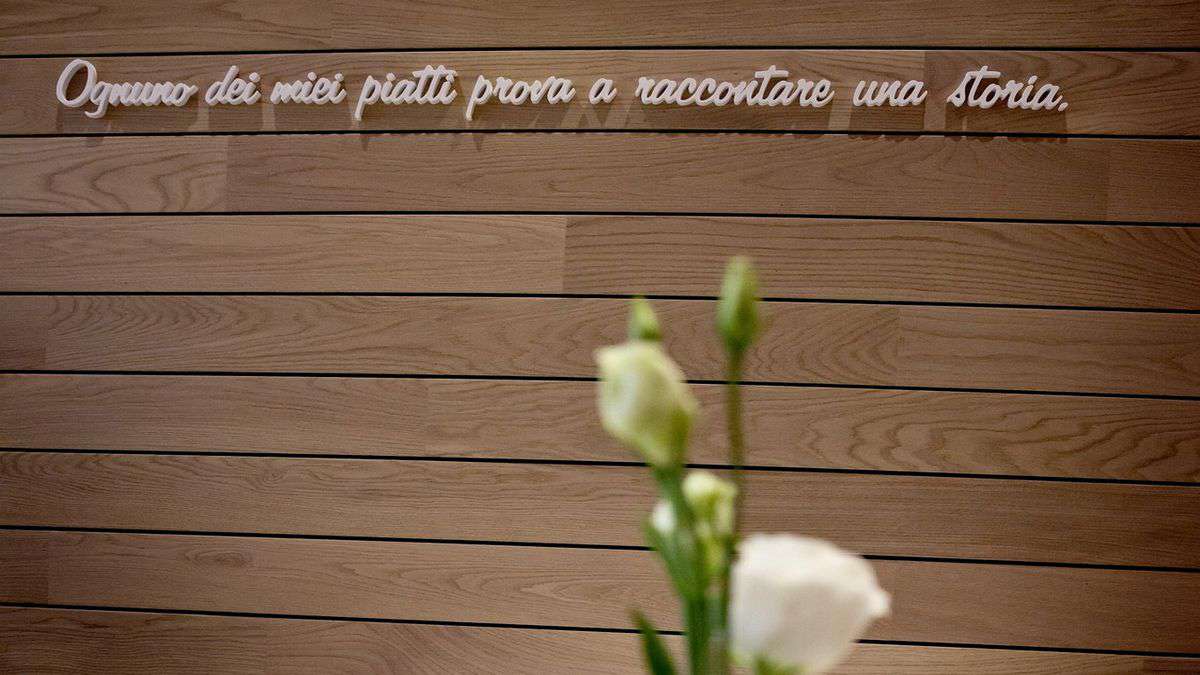
And so, instead of the train to Rome, the young Cuttaia took a train to Turin, where his mother had found a job as a seamstress. We are in the 80s, our job seeker is serving at the table in some pizzeria. The proposal comes from a friend: “He told me if I would help him wash the dishes in a restaurant. I replied resentfully: "Are you mad on New Year's Eve?" He finally convinced me by saying that the champagne opens at midnight and since I had never drunk it, I accepted. And I haven't left the kitchen since that time." Jailbird was the champagne and this new world that lay before his eyes. Actually, not right away. Because Cuttaia, envying his friends employed in factories who had some money to spend on entertainment, he decides to apply to Olivetti and manages to get hired.
The road to freedom passes through a sliced onion
But that doesn't last long. He had achieved relative security but had lost his freedom: "My life was in a certain sense doomed, the idea of stamping the clock, of being a number didn't suit me". A red onion suddenly struck him. On the weekends, to supplement his salary, he went to work in the kitchen of a restaurant. And a day, as she sliced an onion, she looked at it as one might look at a magician's crystal ball. In there she saw his freedom take shape. That onion could be cut into slices, cubes, wedges, he could take all the liberty he wanted. “It was this vocation – notice the term that refers to his seminarian experience – really strong that made me change my mind”.
The next day he was already outside the factory walls to begin building his career as a cook. “My family didn't agree, theirs was a job mentality. But I always say that when one discovers freedom it is difficult to stop him. Of course, it was difficult to make my mother digest my aspiration for life. When I told her, she exclaimed between fears and disappointments "I lost a son!".
And you can understand it: in the 80s the cook was not yet the public figure he has become today, he didn't go on television or in the newspapers. He was a mysterious figure always bent over the stove, to the point that when you went to a restaurant you knew the waiter, not the cook who remained locked up in the kitchen, you never saw him".
“Once they asked me a question: do you know an elderly cook? Not really in the village, I knew an elderly carpenter, an elderly farmer, an elderly shoemaker. And he said to me: because they die young. He couldn't give me an explanation but I thought about it. Not only did they not grow old but many did not even have children. I found the answer later, retracing my entire career. The cook did not lead a social life so he did not marry and consequently had no children. Once upon a time, restaurants had a family-run kitchen while the cooks worked in the hotel. And in hotels the preparation of breakfasts began at dawn, and it went on until late in the evening, in unhealthy environments, the environment was heated with the burners, one was in contact with the heat for fourteen to sixteen hours a day and this also created reproduction problems because the cooks become sterile, that's why there is no cook's son. Others died of lung cancer: at the time there were no suction machines, so the fumes were sucked in from morning to night. Not enough, many cooks died of cirrhosis of the liver. Alcohol was the only satisfaction they had in life. Many cooks in the kitchen on the shelf of bottles of brandy and cognac always kept a small steel bowl of those used for crem caramels. Then I understood why: you didn't have to see if the glass was full or empty. The cooks invented alcohol in the kitchen – he says with bitter irony – because they had to drink it: the nuance of brandy or cognac was not needed for the food, it was needed for the cook. And in this I remember that I decided not to use alcohol in the kitchen because I can get the acidity I need with a vegetable instead of alcohol. All in all, it was tough."
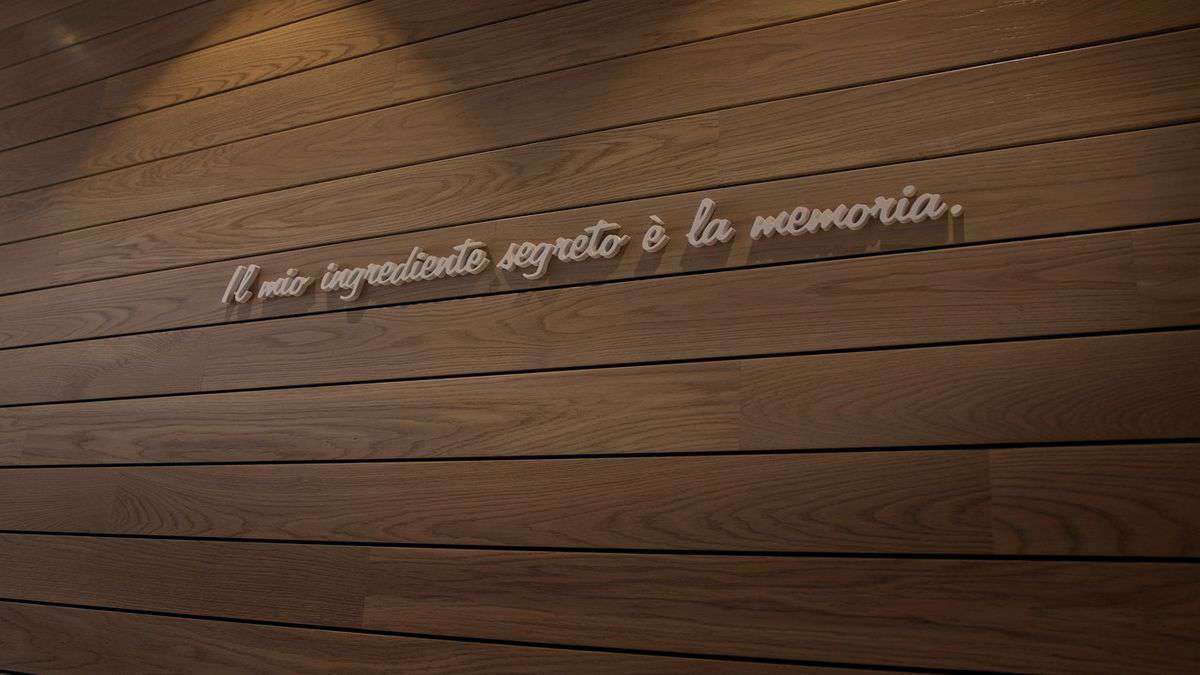
All these things Pino Cuttaia perhaps ignored at the time of his choice of life. But he was still adamant in his determination of him even when, inquiring better, he discovered that the life of a chef in the kitchen is not all roses and flowers. Why actually the kitchen appeared to him as the only place where his brain could range beyond the limits of the physicality of four walls or of a country or an island.
“Maybe my mother didn't understand that I wanted to communicate. A desire that I carried inside and she pressed me because I have never actually been too social ”. And when a friend, in fact, told him, "I would never do your job because you are always closed within these walls, the response of Pino, Chef philosopher and poet, was: "See if you within your walls discover freedom you are a free person, because what matters is the thought, not what others see”.
The return to Sicily with the rigor of the Piedmontese school
And so his freedom and passion for this job led him to climb all the steps of culinary experience and knowledge until he became one of the most prestigious names in Italian food and wine. A forced march in learning stages with the strength and stubbornness of a Sicilian mule. In fact, Cuttaia has not gone through the ABCs of a hotel institute. His training was acquired in the field, in the kitchens of various renowned restaurants. Especially a "The Smile" of Soriso (Novara) where Angelo Valazza ex international entrepreneur and his wife Luisa, graduate in literature, painter, self-taught in the kitchen (as well as our Pino) had captured two Michelin stars with their refined restaurant in a remote Piedmontese village, and then in "The Patio" in Pollone (Biella), where Michelin-starred Sergio Vineis created a cuisine that was attentive to the territory, but open to innovation and radiance.
With this baggage of 'Nordic culture' Cuttaia thus decides to return to Sicily and take possession of its territory by putting into practice the rigor and precision on the job that he had learned in his Piedmontese experiences in a kitchen of the memory that had to express the warmth, the passion , the raw materials and recipes of his Sicilian childhood. “From this meeting – he explains today – my idea of cooking was born: a kitchen in which to reinvent memories, transforming them into perfect dishes to celebrate seasons and symbols of the gastronomic history of my people”.
A cuisine that has received unanimous acknowledgments from critics and the public. Certainly the satisfactions amply repaid him for the hard years of apprenticeship: first the Michelin star in 2006, then the doubling in 2009 (and since then always preserved) to follow the Pommery "Dish of the Year" Award with the Nuvola di mozzarella for the "L'Espresso" Restaurant Guide in 2013 then the call to cooking for the First Ladies of the world's greats in Catania on the occasion of the G7 in Taormina in 2017; then the election as "Chef of the year" for the "Golosario" and again the presidency of Le Soste di Ulisse, the association that brings together Sicilian chefs and finally his Cuttlefish Egg, which has become the symbolic dish of the 2014 edition of Greedy identity.
And today at his "Madia" in Licata it is not uncommon to hear languages from five continents spoken at the tables to the point that Cuttaia has had to equip itself with an accommodation facility for customers who face a long journey from Italy and abroad, as far deep south of Licata, to enjoy the pleasures of its cuisine.
Needless to ask him how to become a great cook. The experience of life, stubborn and tenacious, of study, sacrifice and concentration bears witness. But one can ask him what a great Chef is for him. He answers you a little disarming you: “A great cook is a good craftsman, he is not an artist. Once, passing between the tables, a customer asked me to compliment me: are you the artist who made this dish?”.
At the time I was embarrassed. So I went to look up the difference between an artist and a craftsman in the dictionary. The word artist says in the dictionary: he is a person who reproduces something unique and unrepeatable. Moving on to the word "craftsman" there was already my sentence: he is a worker who reproduces something. The difference is all there. The cook is a craftsman because he reproduces something he has thought of. It must be reliable, because the result of his thought must go to everyone, his is an operation of democracy, because his cuisine must be good to be appreciated by everyone. The artist in the moment that he does something unique attests to an individual presumption ”.
The key ingredient: memory in black and white
Surely one of the fundamental ingredients of his cuisine is the memory, the testimony of a Sicily in black and white with all the charm and wrinkles of its history, places and people. “When you do artisanal cooking at the table we can have awakenings of forgotten flavours, flavors which, with the speed with which we are going, we no longer have the time to conjure up in our kitchens, there is no more mum or aunt or grandma to remind us. So in my opinion a cook linked to memory or roots – and here the philosopher-poet-peasant returns – can create more emotions and then the kitchen not only becomes yours, but it belongs to everyone, it is involving, it is participation and exchange. This is the beautiful thing about communication which is the basis of my gastronomic vision”.
The memory is that of his mother and grandmother: "They educated me through the domestic gesture, a sort of care that smacks of ancient and unspoken knowledge, the knowledge of the ingredient and of the flavors, of the seasonality made by the greengrocer knocking at your house, of simple habits: the slice of meat when you were ill, meatballs with tomato sauce on Sunday morning, the stairs full of the smells of meat sauce that made the entrance halls the quintessence of desire and that evoked, in memory, a very strong idea of family.
They gave me attention to detail, concern for the well-being of others. For example, my grandmother didn't let me leave the house if I didn't have a handkerchief in my pocket, well placed and well ironed. A veritable nightmare of perquisition blocked me at the door, to verify her presence. A kind of amulet of affection, the only symbolic protection that the family could sometimes offer, contained in that square of fabric. A remedy for shame and embarrassment towards strangers, a comfort for the tears that might have come, the pride of simplicity” .
And this path of care and attention is the same one Pino Cuttaia follows to arrive at a dish. Asking questions, returning to the essentials, removing the superfluous, thus giving the purity of memory.
It is therein search of that moment when everything is simply perfect, this is what defines the Wow effect, in which taste, sight, smell, touch and hearing meet to enhance the experience of the body and the pleasure of the mind.
The Wow effect cannot be expressed in words. For Cuttaia it is "the taste of childhood that is released in the taste buds, the color that revives a buried memory, the crunch in the mouth that brings to mind noises of nature, it is the velvet, the crepe, the viscous, the porous, the silkiness , the texture held between two fingers. If it is true that growing up means asking because it means asking for things that no one tells you, it means discovering, it is equally true that growing up is also, or perhaps above all, rediscovering. For this reason the main ingredient of my dishes is memory, for this reason for me cooking is a gift that people give to themselves and to their memories”.

During a chance meeting on the Omani beach of Salalah I came across this site.
Thank you for this Interesting source of knowledge for the many food and wine enthusiasts.
Until the next newsletter then
Roberta Lotto