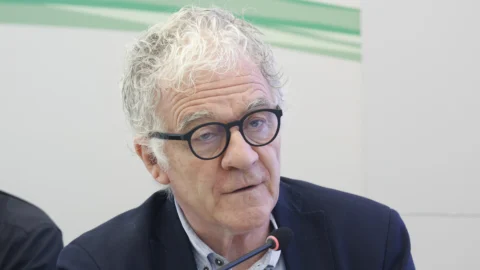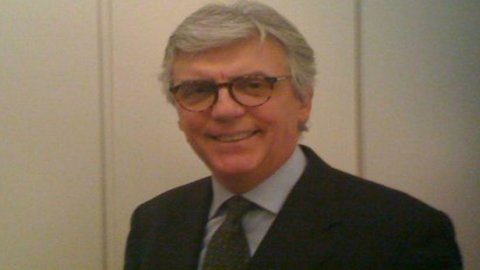
Enrico Letta has room for maneuver far greater than that available to Mario Monti. Both because the international liquidity situation is much less tense and, above all, because "the idea that the pressure of the spread was a beneficial element, capable of bringing economic and monetary policy decisions back into a virtuous circle has now faded: a such an assumption now survives only in small circles in the Bundesbank”. Words from Mario Noera, professor of law and economics of financial markets at Bocconi, who invites the premier to move immediately and decisively to give a jolt to the economy. "And it takes tens of billions, not less," he warns.
An invitation that Letta would gladly accept. But the pot weeps…
“It won't be a walk. But I invite you to re-read the reflections of economists at the time of the reconversion of the Russian economy: in certain situations the sequence of interventions has a decisive weight. It's not just what you do that counts, but also the timing and effectiveness of the ad effect. As demonstrated, last example, by the action of the Japanese central bank”.
Speaking of Japan, after the start of Tokyo's expansionary policy there was an almost unanimous consensus. With the exception of Germany…
“Today the international framework allows spaces much greater than those found by Monti in November 2011. The new Japanese policy, in harmony with the American choices, has had the effect of rethinking monetary policy on a global level. Faced with this new reality, Europe tends to resist, also due to the difficulty in rethinking the structure of the founding treaties of the Union, both monetary and political. But this poses very significant problems of resilience in the face of the wave triggered by the action of Japan which, like the USA, tends to act on the denominator, through growth, rather than on the numerator, through austerity”.
However, Europe has not changed course so far.
“The risk is to pay the highest price in a competition which will, as usual, have winners and losers. And Europe, under the weight of the recession and the rigidity of its rules, has only two possibilities to break the vicious circle: to reopen an international table to address the questions raised by the expansive policy which sooner or later will unload on the exchange rate. Or start discussing the role of the ECB again. Unfortunately, however, the time is not right. The result is that Europe thus tends to screw itself up, becoming even more vulnerable”.
It is in this situation that the Italian novelty fits in…
“We can say, in terms of economic policy, that a mildly Keynesian solution has emerged in Italy. We got there in a non-linear way, with sometimes dramatic passages. But the result, all in all, is the best possible. In theory, I would have liked more radical Keynesian solutions, but I fear that they would have had very destabilizing consequences for the European situation. However, another important result was achieved, of the opposite sign: this government solution has curbed Berlusconi's populusism”.
Letta can count, thanks to Napolitano, on a solid background on home soil. But German intransigence remains away from home. Or not?
“I don't think there can be a turning point in sight, at least in terms of official announcements. However, I believe that a situation of negative non-interference can be established by Merkel. More cannot be asked, also because the Chancellor has to deal with the Eurosceptics. However, there is room for manoeuvre, albeit a small one. In a few weeks, Italy will almost automatically exit the excessive deficit procedure. This will allow investment to be deducted from the deficit. Then, in October, once the German elections have passed, the heaviest obstacles will be faced, starting with the banking union on which Germany does not hear us".
In the meantime we have a few bullets, not many actually, to shoot. As a use them?
“The most urgent thing is the payment, as quickly as possible, of the overdue payments to companies. I understand the resistance of the bureaucracy: I have no doubts that part of that money could end up in improper hands, based on inflated contracts or worse. But the gain to the economy far outweighs any collateral damage. I refer to the debate that opened up among economists after the end of the Soviet Union. On that occasion it emerged that, for the effectiveness of the reforms, the sequence counts as much if not more than the contents. Therefore a strong gesture is needed ".
And then what?
“The postponement of the Imu is good. I think it is urgent to attack the problem of tax rates. First for companies and then, in a softer way, for personal income tax, at least for the weakest groups. The corporate income initiative would have a major psychological impact: it is useless to put Holland and Luxembourg on trial for having attracted companies and capital with a light tax policy which, moreover, is also practiced in the Baltic and Scandinavian countries. The important thing is to move on the terrain of being able to attract investments”.
How can a strategy of this kind be reconciled with the fiscal compact?
“With this fiscal compact it is not possible. But I am convinced that many things, in deeds if not in words, can change. Germany itself must compensate for the effects of the slowdown in the Asian economies which have absorbed a large part of its exports. Berlin is crossed by concerns of different kinds. Merkel's own statements on the rate cut lend themselves to a double reading: one eye on the traditional policy of the strong currency, but another aimed at the risk of a slowdown in the manufacturing industry.