Autogrill, Atlantia, Enel, Lottomatica (now Gtech), Luxottica, Fiat, first with the purchase of Case (industrial vehicles) then Chrysler, are just a few, and the most famous, of the names of the Italian companies which in the last fifteen years have conquered leading positions in international markets through strategic acquisitions abroad. Not to mention Unicredit, which has become the second largest European bank. And of the many medium-sized enterprises that have followed the same path. This is to say that the refrain that is unleashed every time a famous Italian brand is acquired by a foreign company, that we are a land of conquest, that we are not allowed to go abroad and that in short we need protection for our brands historians, it does not seem so justified.
Instead, it would be necessary to reflect on the reasons why certain phenomena occur. And the conclusion would probably end up being the same: because continuing to be successful on the increasingly competitive global market requires a leap in quality and in organisational, financial and managerial dimensions which is very demanding. And it's easier to rely on someone who has already made this leap than to do it alone. Especially in the Italian economic context.
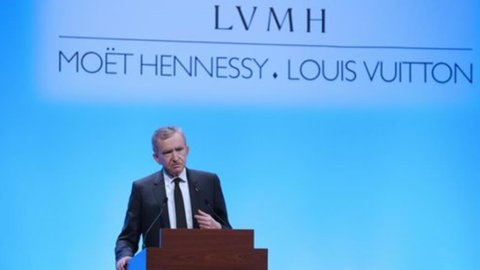
Let's take fashion and luxury: branding and style matter. But in the world market for luxury products it is necessary to control demand through widespread distribution in large consumer centres, which now range from Europe to the USA to the very important countries of East Asia. In a sophisticated market, this allows you to always be in tune with the preferences of potential customers and avoid counterfeiting, a central problem for these companies. It is also necessary to update and renew the range, to always be on the frontier of competition. All of this requires massive resources. As the then General Manager of Fendi told the Financial Times a few years ago, when the brand was bought by LVHM he controlled three stores: distribution was left to dealers. In two years the system was revolutionized and over 150 shops were opened all over the world. The range of production was expanded to the levels we know now through a reorganization and strengthening of the creative part.
Size also pays off because being larger allows you to be in a more favorable position in many negotiations: those with many brands, such as LVHM or Richemont or PPR (now Kering) can afford to occupy entire floors of mall of Kuala Lumpur or Chongqing, occupying the best positions with its shops and presumably snatching more favorable conditions. Finally, a complete range of brands, of different levels and of different productions, allows us to cover the market, follow the customer and balance the revenue streams. In short: the luxury conglomerates have an economic reason and in fact they thrive. On the other hand, they are not alone: even the acquired brands benefit from belonging to larger groups, nor does it seem that this makes them lose their character: on the contrary, these groups thrive precisely on the dynamism and vitality of brands which for this reason are kept autonomous. The successes of Gucci and Fendi, the revitalization of Pucci, the birth of new brands of new designers are there to bear witness to it. This is also why the original entrepreneurs often stay and willingly stay in the groups that buy them.
That's also why Italian lai when a fashion brand passes into foreign hands doesn't seem so justified: it's not a football match in which you have to play for the home team and there are probably development prospects instead. If anything, the concern should be for the other brands, which are unable to take advantage of the economies and synergies enjoyed by the large groups.
Which brings us to the question: okay, but why can't it be done in Italy? And the answer is perhaps in some characteristics of our economic system, limited capital, inability to create a system, but even more in the characteristics of our capitalism. In the first place, artisan capitalism, in which the entrepreneur is the inventor, creator, but also the master: and therefore unsuitable for managing portfolios of initiatives leaving them largely autonomous. Witness the failure of some aggregations around historic brands, for example Jil Sander around Prada, failed due to the difficult relationship between the owner of Prada and the Jil Sander stylists. On the contrary, Arnaud and Pinault are neither stylists nor creators: they are aggregators, trained in completely different sectors (construction, electrical materials) and then perceived the possibilities that opened up in the luxury market, putting together their empires, also taking advantage of lucky.
So why aren't aggregators formed by us? And here is a second characteristic of our capitalism: the importance of "relationship" and the fascination of power. Too often our aggregators prefer to put their money (and very often lose it) in those initiatives that give them prestige and relationship with power: from newspapers, to banks, to large fruitless stock exchanges in communications, to the real estate business. The attention to luxury and big brands is only that of consumers. Luckily for the Italian system that there are the French ……