On March 21st, the feast of Saint Benedict patron of Europe, many associations, workers' and employers' unions, adhering to a Romano Prodi's proposal, have invited their associates to exhibit in their homes and factories the flag of Europe together with the Italian one to celebrate european pride day. An event that sees citizens as protagonists to remember the popular, supportive and progressive soul of the European construction. A great ideal of the founding fathers at the end of two destructive wars and which in all these years, between ups and downs, has built a set of ties between peoples and offered concrete advantages to all citizens, first of all that of peace which it won over the conflicts fueled by various nationalisms.
An important day also in view of the elections for the renewal of the European Parliament on 26 May which will serve to remind everyone of the real stakes of these votes: start a new path for Europe or go back to the sovereign selfishness that has already brought so much pain to our continent.
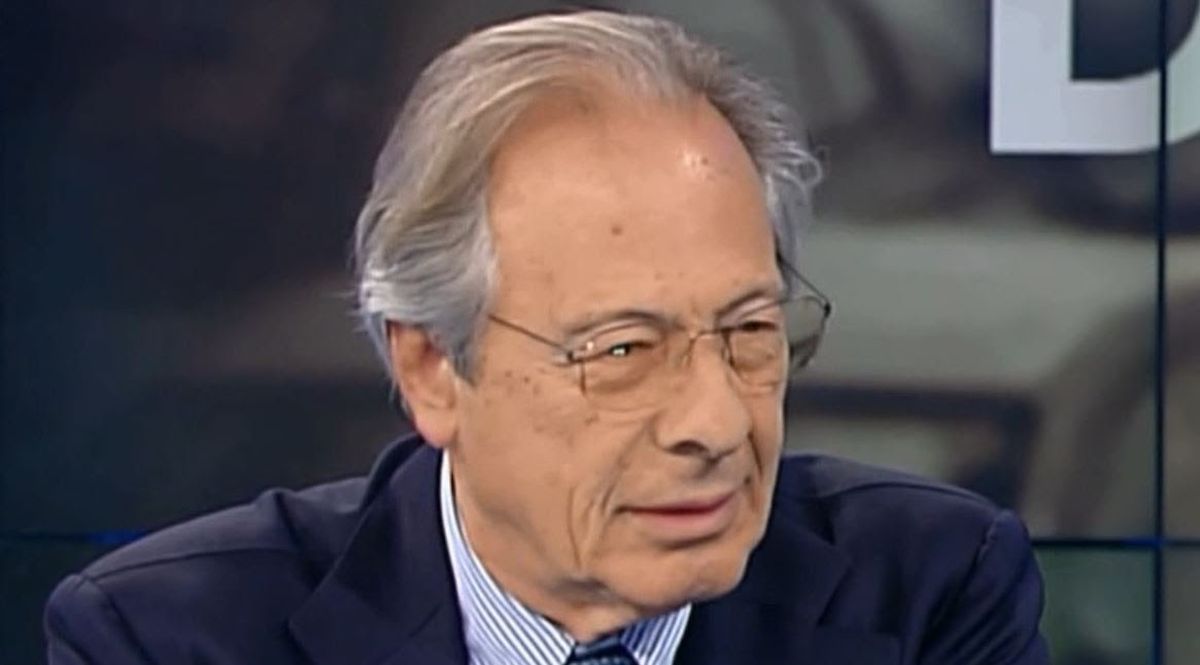
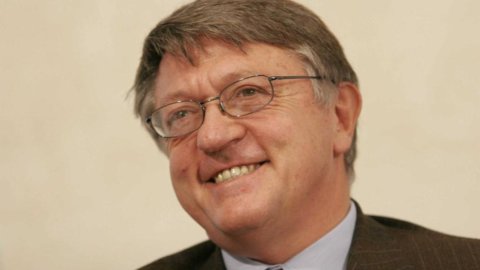
To understand the meaning and importance of this day, we asked Stephen Micossi, economist and expert on European issues, former director general in Brussels, to choose among the many, two main reasons which, in his opinion, make the construction of Europe appropriate and convenient for all citizens. Obviously apart from the long period of peace that the European Union, allied with the United States, has guaranteed to all the countries of the Old Continent which for centuries had been rivals. An asset, that of peace which with the passage of time and with the fading of memories of the horrors of war, tends to fade in the consciences of younger citizens.
“Two achievements – replies Micossi – seem fundamental to me: the construction of a large integrated market for goods and people with the single currency which constitutes a strong bond; and the possibility of being able to weigh in on the geopolitical and economic scenario of the world. No single European country possesses the strength to sit down at the tables where the rules of international trade are established and where attempts are made to extinguish the hotbeds of instability that constantly flare up in various areas of the globe starting with the Middle East. Our integrated market and the single currency are a shield against instability external and at the same time, if we know how to be united, a premise for making our voice heard with respect to the other major global players, the United States, China first of all and then Russia, India and Japan".
But to do this, must we take further steps towards integration, as Macron states in the manifesto just released in all European countries?
“In fact, Macron's appeal has a very positive political and ideal value. It is important to address citizens directly by proposing steps forward in the fields of defence, energy and the economy, even if ambiguities remain in the French position on the aspect of sovereignty which has always been a taboo for France and which has prevented progress in European integration even when Germany was more willing. However, now it seems that the tide has changed, but to give substance to these advances it is necessary to establish that on many issues, starting with foreign and security policy, the European Council must vote by majority, overcoming the current unanimity which ends up being paralyzing".
Italy runs the risk of not participating in the discussion on how to advance the construction of Europe because the current government seems more oriented towards limiting the powers of the Community than towards advancing it towards greater integration…
“It would be essential for Italy to participate and try to put the issue of growth back at the center of the European agenda. Europe will certainly restart after the elections on the basis of the Franco-German engine to which both the northern countries and Spain, Portugal and Greece will join. And one of the objectives of this leading group will be to lay a sanitary cordon around Italy to avoid the risk of contagion that can come from a country that persists in not bringing its debt under control and whose governors continue to demonstrate perplexities about European rules and the Euro. Also in the next European parliament, in all likelihood, a majority will form between the Popular Party, the Socialists, the Liberals of the Alde and the Greens. If Italy is still dominated by sovereign parties in the elections, it will remain cut off from all offices and therefore will have no weight in the decisions".
But the Northern European countries that formed the so-called Hanseatic League do not want Europe to strengthen its instruments to encourage greater growth. Their economies are doing quite well and they don't feel this need.
“These countries do not want to hear about risk sharing precisely because, in their view, Italy is a source of instability. As a result, they block the growth of the Brussels budget, the banking union and any instrument capable of offering a safety net to countries in difficulty. After all, all these tools were designed as a shield against crises from outside the area. But if the crisis is generated within a country by declarations or acts of its rulers, the others do not understand why they must be called upon to share the risk of insane policies. Yet greater growth in Europe could be in everyone's interest. And to achieve it, it would be necessary to open the energy, transport, telecommunications and digital service networks to competition. In all these fields, a great effort of technological advancement is required which fragmented markets find it difficult to make as their limited size would not be able to repay the necessary investments".
But then is Italy on its way to being alone? This exposes us to serious risks of stagnation or even recession as indicated by the latest forecasts of the OECD which give a decrease of 0,2% for our country, the only one among European countries that is going backwards…
“We have no other way than to start a serious debt reduction process. It is not so much a question of making an additional maneuver to contain this year's deficit by a few decimals, but of giving first of all to the markets and then to our European partners the assurance that our country will do everything necessary to increase growth and to contain current spending. On the other hand, we have so far given vague and contradictory indications. We have put safeguard clauses for 2020 billion in our accounts for 23 but at the same time our ministers say they will not be used. So we effectively declare that our budget is not covered and therefore in all likelihood we will let the deficit go well beyond 3% with a consequent further increase in debt".
But then why are the markets not reacting, and indeed the spread seems to have settled at 250 points, down by 30-40 points compared to a month ago?
“The markets are quite calm, and in any case they profit from interest rates that are a couple of points higher than those of the main Euro countries, because they believe that our governors will not have the courage to go all the way and that they will not as soon as the market should show signs of disaffection with Italian securities, as happened in November when demand did not cover the entire quantity of securities offered by the Treasury, they should be ready to make a hasty retreat. But this does not lead to a real change of course but to marginal adjustments that avoid the crash, without however giving any boost to the economy. In short, we walk on the edge of the ravine, we don't fall, (at least for the next few weeks) but we certainly can't think of running again.
The main thing that our rulers should do is to set a policy capable of changing the market's expectations on our debt and on our ability to reform the system to achieve greater competitiveness. The reduction of the spread not only to the level of Spain (150 points below ours) but even to the level of France (200 points below) should be a major national objective because it is obvious that without this reduction we will not be able to grow or improve our prospects employment for citizens. To do this, the government should reduce current expenses, cutting the basic income and the 100% to make them compatible with our economic situation and with the general interest of regaining credibility in Europe to go and deal with the things that most interest us in order to have also from Brussels a greater boost to growth. But will the current rulers who won the elections on the basis of unrealistic promises have the strength to back down?”