If in the countries of the Middle East and North Africa the spread of the pandemic seems to be slowing down, but shows no signs of stopping yet, the governments of the region are preparing for a gradual reopening, with progressive easing of the lockdown. Overall, the area records more than 700 thousand cases of contagion, with Saudi Arabia and Iran by far the most affected countries, but also less populous states such as Bahrain, Kuwait and Qatar have experienced a high incidence rate of COVID-19. In this context stimulus and economic support packages have been allocated to varying degrees, of which the largest were those of the United Arab Emirates (77,2 billion dollars), Saudi Arabia (32 billion), Israel (23 billion) and Qatar (20 billion). But, despite the cautious optimism, fears of a new wave of infections in the second half of the year remain high throughout the region. And, as reported by theISPI, governments are faced with the difficult choice between tackling the coronavirus and boosting the economy.
If in Saudi Arabia a three-phase process has been launched, starting with the reduction of the curfew schedule, the resumption of internal flights and the reopening of the offices, however pilgrimages to the holy places of Mecca and Medina remain blocked as well as international flights. At the same time it was declared that in the current situation the reduction of public spending is a priority, cutting 26,6 billion from reform projects and initiatives. Just the reform program of Crown Prince Mohammed bin Salman, contained in the Vision 2030, will suffer considerable cuts in the face of the changed economic situation. The flagship of Saudi mega-projects, NEOM, a futuristic smart city on the coast of the Red Sea whose cost is around 500 billion, will be among the first to suffer delays.
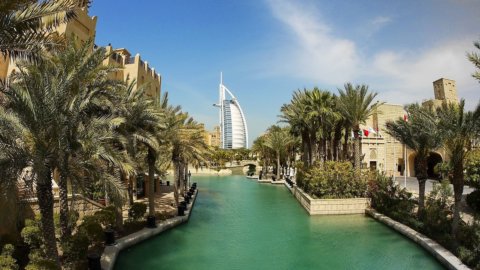
In United the reopening of shopping malls, restaurants and beaches are matched by new restrictive measures on internal travel with the obligation for residents to request a permit. The decision of the Bureau International des Expositions (BIE) of postpone Expo Dubai 2020 one year: from 1 October 2021 to 31 March 2022. The outbreak of the pandemic, with the consequent closure of many countries affected by COVID-19, the suspension of activities and the blocking of international connections have effectively blocked the start of the pavilion construction phase, while the climate of uncertainty makes any short- and medium-term forecast difficult.
Il Qatar, for its part, has prepared a restart in four phases from mid-June, without prejudice to the possibility of reintroducing restrictions if necessary.
The sector most affected by the pandemic crisis is travel and tourism, followed by the hotel and catering sector, by hydrocarbons and transport, all crucial areas for economic stability and employmentas well as in the economic development plans of many countries, especially Saudi Arabia, the Emirates and Egypt. For the latter, the collapse of tourism will have serious consequences precisely because of the importance that the sector has in the national economy, both in terms of employment (about 10% of the workforce), and for the incidence on the GDP (between 10 and 15%) and for foreign currency revenues . If in 2019 tourism revenues amounted to 13 billion, by 2020 the sector could register a collapse of 75%. The situation of the Jordan, where tourism makes up 12,5% of GDP. Here the government has promoted various support packages for the sector which, however, are insufficient and reflect the limited economic capacity of the country which has once again resorted to IMF loans. From this context of crisis growth opportunities emerge instead for pharmaceutica and healthcare sector as well as for ICT, e-commerce and digital services.
The International Monetary Fund has predicted a contraction of the GDP of the Mena region of more than 3% in 2020 with data ranging from -12% in Lebanon, which is going through a very serious financial crisis, to -1,1% in Kuwait. If the recession has heavier repercussions in Israel (-6,3%), Iran (-6%) and Algeria (-5,2%), not even the oil monarchies of the Gulf will be spared (Saudi Arabia -2,3% , Emirates -3,5%, Oman -2,8%, Qatar -4,3%,) where the effect of the pandemic added to the collapse in the price of crude oil. Finally, it should not be excluded that the strong socio-economic unease in the region could give rise to new and more widespread waves of protest which the pandemic seems to have only temporarily interrupted.