

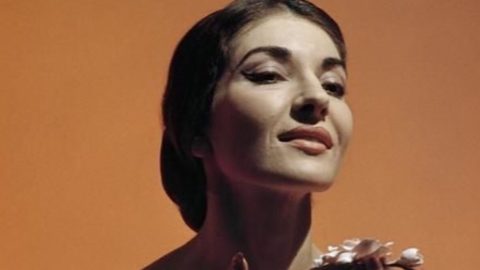
It was the year 1965, when on May 29th it was represented at the Theater of the Opera di Paris la Norma by Bellini, the absolute protagonist Maria Callas. But the singer didn't sound much in 'voice' that evening, and before the curtain rose on the fourth act, the guests were told that the protagonist was too tired and that the evening was over. In 1977 she died of a heart attack, but she had already become the unforgettable Callas. On October 16, 1977, the Drama to the Scala – where the soprano had been the interpreter of 181 performances in 23 different roles – commemorated her with a series of cultural initiatives. In 1979, al Museum Carnavalet di Paris, an exhibition was set up with his memories. One of her best biographers, the critic John Ardoin, has published two books about her: Callas e The legacy of Callas. Ardoin was not an admirer of the singer, so much so that when he heard her in the interpretation of Lucia of Lammermoon of Donizetti, he said that his was a very imperfect performance. He returned the records, but she couldn't forget his voice, so he bought the records back and listened carefully, no longer to the sound, but to the musical message that made up the piece. Callas said about herself “People who hear me for the first time usually don't like me” Callas replied, and added “But then I always manage to convince them”.
His was a dark voice, echoing and with a kind of magnetic vibration, capable of an obsessive effect to the point of never forgetting it. She also had a great ability to tailor her voice to any part. To this peculiarity of hers, she accompanied an equally extraordinary stage presence and an abundance of dramatic nuances. Zeffirelli himself said about her “in front of her the other artists are singing armchairs”. Her stage realism and her participation were practically total, a striking example was her role of Violetta in Verdi's traviata, to the point that several times the audience thought that the singer was really ill. I wonder what mysterious fusion of imaginative intellect and inner strength combined to give birth to the "divine Callas" and her legend? Her real name was Maria Anna Sofia Cecilia Kalogeropoulus, second daughter of Greek parents who emigrated to New York shortly before she was born, it was 1923. “I was the ugly duckling, fat, awkward and friendless” she said of herself one day. Her passion for her, she already started at the age of three, listening to the family pianola and at the age of eight she took singing lessons. Once a teenager, her mother took her back to Greece to enroll her at the Athens Conservatory. The famous soprano Elvira de Hidalgo said of her that “she was awkward, ashamed of herself and had a thousand complexes except for one thing, her own voice. But she was also gifted with a strong will and an extraordinary memory, learning a tune after hearing it once. He made his professional debut at the Athens Opera House at the age of 18, but his real debut took place in August 1947 in Verona, with the interpretation of Gioconda by Ponchielli. In those years he met Giovanni Baptist Meneghini, a billionaire who was twice her age and whom she married two years later. While the orchestra director Tullio Serafin he became her mentor. During her rise to the top of opera, she lost 30 kilos and transformed from a vocal phenomenon into a great performer and a very charming woman. His face had an almost hypnotic quality, and she was aware of it to the point that she used her eyes to reach the maximum tension during the entire interpretation. One day, during a rehearsal of Medea at the Opera House in Dallas, Texas, Maria Callas knelt in a kind of paroxysm, pounding her fist on the floor and invoking the gods, a gesture that no singer would ever dare. because it put a lot of pressure on the diaphragm. She had the courage to attempt the impossible. She was also characterized by a difficult character, she often quarreled with conductors and directors. In her later years of her greatest successes, what mattered most to her was her commitment to her profession; and behind her diva was a passionate and impulsive woman.
The retirement from the stage coincided with the failure of the marriage with Meneghini and marked the beginning of the relationship with Aristotle Onassis, a bond that lasted nine years. The last public appearance took place in 1973-74 in a series of concerts which however revealed the decline of his voice. On the morning of September 16, 1977, after having breakfast in bed she felt dizzy and fell over. She got up, but she died of a heart attack before the doctor arrived.

Pingback: Tale of Sunday, Callas and Borsino of the artists on FIRST Arte - FIRSTonline