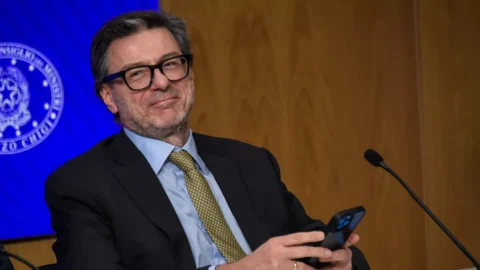
The Government has given the green light for the 2026 budget law. A "serious and balanced maneuver, which is worth 18,7 billion and responds to the concrete needs of families and businesses,” said the Prime Minister Giorgia Meloni opening the press conference following the cabinet meeting that approved the measure, which was also attended by the two deputy prime ministers, Matteo Salvini and Antonio Tajani, and the Minister of Economy, Giancarlo Giorgetti.
The budget's approval came after numerous disagreements that necessitated an unscheduled majority summit yesterday evening. At the meeting, Brothers of Italy, Forza Italia, and the League managed to reach an agreement on the most controversial issue: the contribution of banks (and insurance companies) to the budget law.
Meloni: "A serious maneuver that focuses on four priorities."
The one we approved is “a serious maneuver "This budget focuses on the same major priorities as the previous ones: family and birth rate, tax cuts, business support, and healthcare," Meloni said at the opening of the press conference. The Prime Minister, after thanking "the majority for their unity" and for working "with an eye on the results," outlined the measures contained in the budget law. "We will give 1,6 billion more for families”, he said, underlining that “we are increasing the bonus for working mothers from 40 to 60 euros per month” and “we are excluding the first home from the ISEE calculation with the limit of the cadastral value”.We intervene on the personal income tax, we are focusing on the middle class” with a measure that weighs “around 2,8 billion euros”, “we are putting 1,9 billion on wages" with a tax break on productivity bonuses and holiday and night shifts, Meloni added.
Then, answering a question about the businesses, The Prime Minister stated, "I know they expected more," but "for businesses, we're talking about around €8 billion in investments." There is "super and hyper depreciation with eligible investments amounting to €4 billion." However, she added, "we are evaluating the possibility of using the mid-term review of the cohesion policy to significantly increase these resources." And "for new hires, a super deduction of 120% of labor costs is being introduced, rising to 130% for certain more vulnerable groups." Furthermore, "we are extending the elimination of the sugar tax and plastic tax until 2026" and "we are refinancing the New Sabatini Law."
Another chapter, the Health: "Since we took office, we have allocated additional resources, bringing them to 136,5 billion by 2025. With the new budget law, we have allocated, in addition to what was earmarked for 2026, an additional 2,4 billion for the national health fund, which therefore increases by 7,4 billion from 2025 to 2026."
Meloni: "There's a wage problem in Italy."
Responding to a question on wages after the speech by the President of the Republic, Sergio Mattarella, who spoke of “imbalances in wages” and “wages that are too low”, Meloni said: “We know that in Italy there is a problem related to wages, which won't be resolved overnight. In the ten years preceding our government, the purchasing power of Italian wages decreased by more than 2%, while in the rest of Europe it grew by 2,5%. The good news is that this trend has now reversed: wages have started to grow again faster than inflation, so the strategy the government has implemented is bearing fruit,” the Prime Minister emphasized, then discussing measures to combat poor work. This will involve “stimulating contract renewals for incomes up to 28 euros,” and it is expected that “the 5% rate will be applied to the portion of the increase, both for renewals in 2026 and 2025,” the Prime Minister explained.
Meloni and Giorgetti on banks: "There's no punitive intent, the impact is bearable."
Meloni finally spoke about the banks: in the budget coverage, "there is a significant contribution from banking and insurance institutions, which I want to thank," said the Prime Minister.I don't fear any backlashI said that there was no punitive intent"The goal was to focus on priorities while maintaining a path that allows us to be serious and credible," she explained. "We asked the system to lend us a hand. The interlocutors were open, and then there were discussions within the majority. I understand the cultural principle underlying Forza Italia's request that a tax on extra profits should not be introduced." "I found awareness within the banking system and a willingness to lend a hand. We can disagree on the amount," Meloni concluded.
Economy Minister Giancarlo Giorgetti also addressed the issue of banks, stating that "the impact of the measures adopted on the banking and insurance systems is absolutely bearable. Some of these measures are agreed upon, and some—I'm referring to the two-point increase in IRAP—are... they accept them reluctantly. But we know: when you tax, those who are taxed are not happy,” said Giorgetti, who then explained what the contribution from the credit institutions will consist of.
How the banks' contribution works
“The interventions on the banks are a mix of structural and cyclical nature”. Among the measures envisaged are “the possibility of release the reserves” placed in capital with the 2023 law, “the'increase in IRAP, a new regime for the deductibility of doubtful debts spread over multiple financial years and the limitation of the tax carry-forward of losses.
Responding to a question about what decisions the banks will make regarding the measure that allows them to pay a reduced tax rate to free up the capital set aside as reserves, the number one in Via XX Settembre said: "The banks will make their assessments based on this year's results, which however seem to be good to me." "TheThere is always a risk that these resources will not arrive." he added, but invited investors to look at "the dividend policies that banks have promised their shareholders. They will decide whether to release this capital or not, and we offer to do so at attractive rates."
Giorgetti on personal income tax, scrapping, and pensions
La sterilization of the Irpef tax rate cut The reduction from 35 to 33% will occur "above 200 thousand euros," Giorgetti announced, emphasizing that taxpayers in the 50 to 200 thousand euro bracket "will benefit from the rate reduction."
" scrapping It has a duration of 9 years with bimonthly installments of the same amount open to all those who have declared and not paid, it is not a pardon for those who were clever by not declaring their taxes,” he added, explaining that “we discussed a minimum instalment of 100 euros but at the moment we have decided against it”.
Speaking instead of the increase of theretirement ageThe minister confirmed that "sterilization is confirmed with an additional month from 2027 and another two from 2028." "Parliament will be able to change things in 2027, but for now it's two months," he added. A €20 increase is also expected for minimum pensions.
"We confirm that we are on the verge of divestments., we have some shareholdings on which we need to complete the divestment process,” Giorgetti later declared.
Giorgetti: "The €12 billion defense loan was financed with Italian government bonds (BTP) and Safe bonds."
The 12 billion in defense spending "could be financed either with BTp or with Safe, "This is closely related to the NRRP, with long-term loans that must be repaid," clarified Economy Minister Giancarlo Giorgetti, responding at a press conference on the budget. "We believe this is the case, and we are working on it, and we have encouraged our national defense giants, Leonardo and Fincantieri, to seek discussions with European entities for projects that could be included in the SAFE plan," he added.
Salvini: "The budget includes a contribution for separated parents."
The budget "will include a tangible tax benefit for separated parents struggling with housing, hundreds of thousands of them, both women and men," Deputy Prime Minister and Minister of Transport and Infrastructure, Matteo Salvini, said at a press conference following the cabinet meeting. "We know that very often, it's fathers who sleep in their cars, at Caritas, who return to their parents' homes. Therefore, providing a financial contribution to separated parents to help them get back into the home system is something that's included in this budget law, and it makes me very proud of this move for social equity," explained the minister and League leader.