A cut was expected and a cut has arrived, but the key word that has characterized this board of directors is only one: uncertainty. Until we understand the evolution of the trade war and reach a definitive agreement on tariffs with the United States, it is almost impossible to make certain predictions on inflation and growth and therefore establish what monetary policy should be undertaken. And although the suspension granted by the US administration to the European Union will expire on July 9, given Donald Trump's continued excesses, anything could really happen.
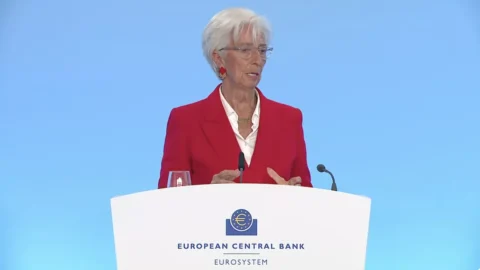
“In the current conditions of exceptional uncertainty, the appropriate monetary policy stance will be defined following a data-driven approach, with decisions being taken on a case-by-case basis at each meeting,” confirmed the ECB President. Christine Lagarde at a press conference in Frankfurt. Lagarde reassured, however: "With today's cut, the ECB is reaching the end of its monetary policy cycle." "We are in a good location to navigate the uncertainty that is on the horizon,” he added.
ECB cuts rates for the eighth time
With only one vote against within the board, the European Central Bank has cut rates by 25 basis points, bringing the deposit rate from 2,25 to 2%, the rate on main refinancing to 2,15%, the rate on marginal lending to 2,40%. From June 2024 it is the eighth time that the Eurotower intervenes on the cost of money.
As for quantitative easing programs, the ECB says that the Asset Purchase Program (APP) and the Pandemic Emergency Purchase Program (PEPP) "are being reduced at a measured and predictable pace", since the Eurotower no longer reinvests the principal reimbursed on maturing securities.
The ECB's new inflation projections
With regard to projections, theinflation could fall to an average annual 2% in 2025, to 1,6% in 2026 and return to 2.0% in 2027. “The downward revisions compared to the March projections, equal to 0,3 percentage points for both 2025 and 2026, mainly reflect lower assumptions on Energy prices and a stronger euro", reads the press release. Thecore inflation will rise by 2.4% in 2025 and by 1.9% in 2026 and 2027, with little change from March. Speaking at a press conference, Lagarde stressed explained that “most indicators of core inflation suggest a sustainable stabilization at the 2% target” and expectations for 2027 give inflation at the 2% target”.
Uncertainties about growth
As for growth forecasts, much will depend on the'impact of the trade war and the decisions that will come on the duties. As of today, Frankfurt for 2025 confirms the estimates in March, forecasting a growth of 0,9% given "the stronger-than-expected performance of the first quarter". For the 2026 Instead, the estimates are reduced to 1,1% (from 1,2%), while for the 2026 a growth of 1,3% is expected (also confirmed in this case).
In the press release issued at the end of the board meeting, the ECB underlines the current context of “high uncertainty” and warns that the trade war could affect growth and inflation estimates. “While uncertainty over trade policies is expected to weigh on business investment and exports, especially in the short term, increased public investment in defense and infrastructure will increasingly support growth in the medium term,” the ECB president said at a press conference in Frankfurt, adding that “the Eurozone economic outlook is weaker in the short term” and citing among the restraining factors the uncertainty relating to tariffs and the strength of the euro which make exports more difficult. “At the same time, several factors keep the economy resilient, including a strong labor market and more favorable financing conditions thanks also to the rate cuts implemented by the ECB”.
The ECB has developed several scenarios that vary according to the possible course of the trade war: "A further worsening trade tensions in the coming months would determine levels of lower growth and inflation to those of the baseline projections. Conversely, if trade tensions were to be resolved with a favorable outcome, growth and, to a lesser extent, inflation would be higher than in the baseline scenario”, warned the Governing Council in the post-meeting statement, according to which the tariffs imposed by the US represent a shock to demand that therefore manifests its impact on economic activity and inflation in the same direction.
Lagarde: “I will not leave the ECB early”
During the press conference following the announcement, Lagarde once again denied the hypothesis of her possible early farewell to the ECB to go and lead the World Economic Forum in Davos. “I am fully determined to complete my mission and to complete my mandate", said the number one of the Eurotower. A few days ago, it had been theThe Financial Times to raise fears of a possible early exit by the ECB's number one.
ECB to pause in July?
According to many analysts, after the cut established today, the ECB will take a break in July, to understand what the real impact of the trade war on the economy is. Further possible cuts could instead come in the meetings of September and October.
“As expected, the ECB cut rates by 0,25%, taking the deposit rate to 2,0%. As trade uncertainty continues to pose a risk to euro area economic growth and underlying disinflation looks set to persist, we expect two further rate cuts, which could take the deposit rate to 1,5% by the end of the year. We are closely monitoring fiscal developments and pension fund flows, which could create attractive opportunities for fixed income investors,” said Simon Dangoor, Head of Fixed Income Macro Strategies at Goldman Sachs Asset Management.