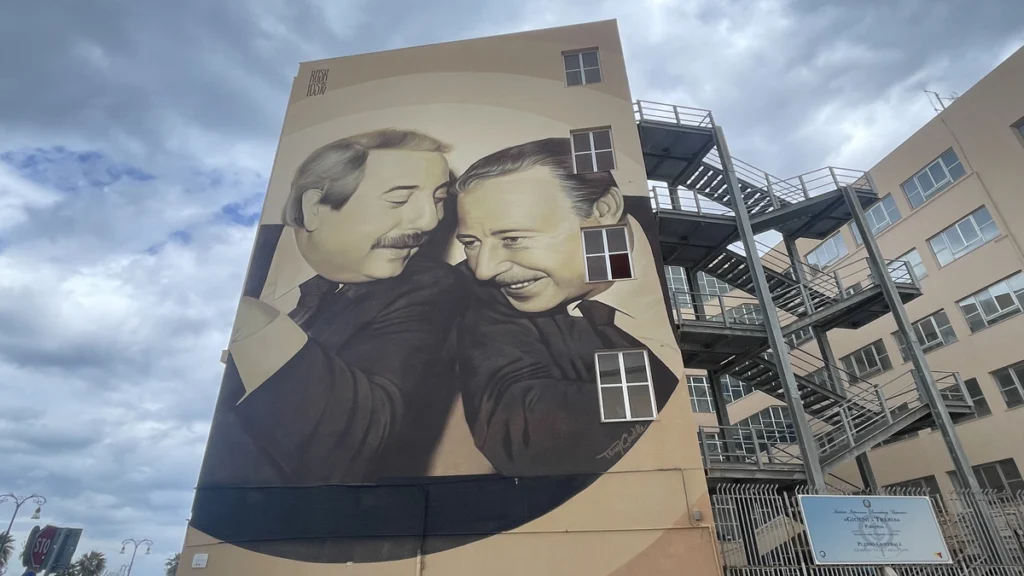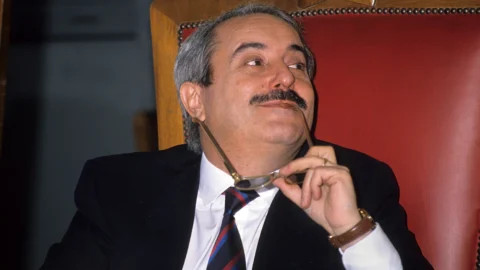
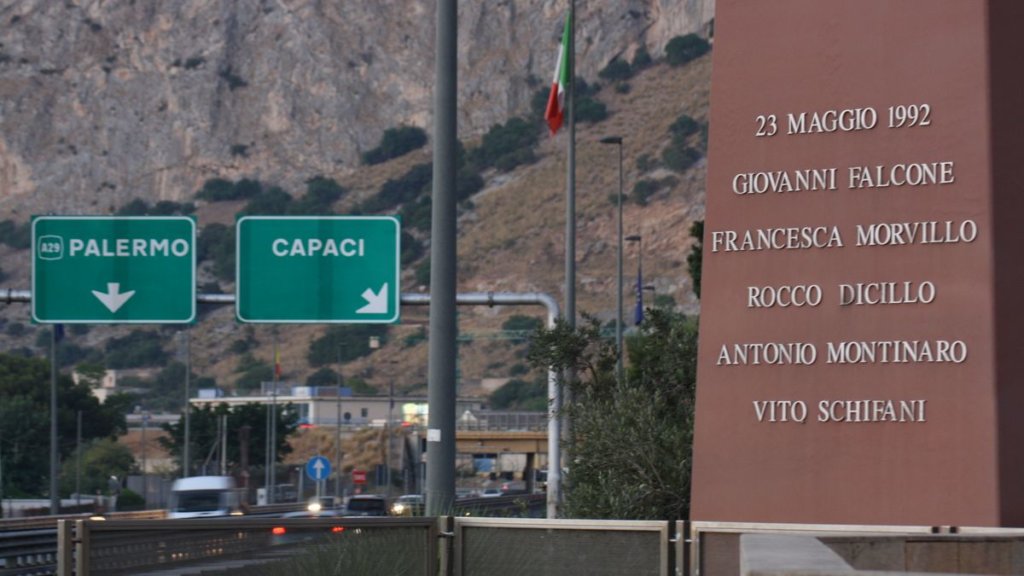
23 May 1992: a day that forever marked the history of Italy. 32 years ago a mafia attack of a terrorist nature that shocked the country: the judge Giovanni Falcone, magistrate symbol of the fight against organized crime, he was killed in Capaci, together with his wife Frances Morvillo, also a magistrate, and three agents of her escort: Anthony Montinaro, Rocco Dicillo e Vittorio Schifani.
It was the afternoon of May 23rd when Falcone's procession, coming from Palermo airport, was torn apart by aTNT explosion on the A29 motorway at the Isola delle Femmine-Capaci junction. In addition to the five victims, the attack caused twenty-three injured including police officers Paolo Capuzza, Angelo Corbo, Gaspare Cervello and the judge's driver, Giuseppe Costanza.
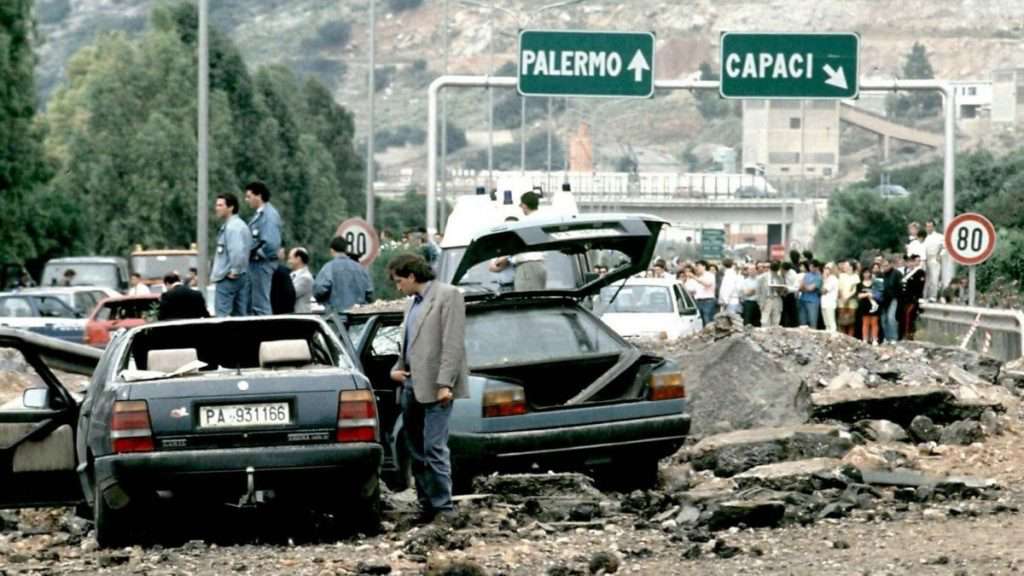
La Massacre of Capaci, named after the motorway junction closest to the site of the tragedy, represents one of the darkest moments in Italian republican history. An act of brutal violence that aimed to extinguish the hopes of a country committed to the fight against organized crime. Falcone, a tenacious and courageous anti-mafia magistrate, had dedicated his entire life to the fight against Cosa Nostra. His investigations had led to dozens of arrests and convictions of high-level mafia figures.
The attack on Falcone
The attackers, members of Cosa Nostra, they blew up a section of the A29 motorway, at 17: 57, while the escort procession of Falcone, returning from Rome with his wife and police officers, aboard three armored Fiat Cromas. The ordnance, yes 500 kg of TNT, they were hidden in a tunnel under the road. The first car, the brown Croma, was thrown into a garden, killing officers Montinaro, Schifani and Dicillo. The second car, that of the judge, crashed into the debris of the explosion, seriously injuring Falcone and his wife, who, not wearing seatbelts, were violently thrown against the windshield. The officers in the third car, however, survived and organized the rescue.
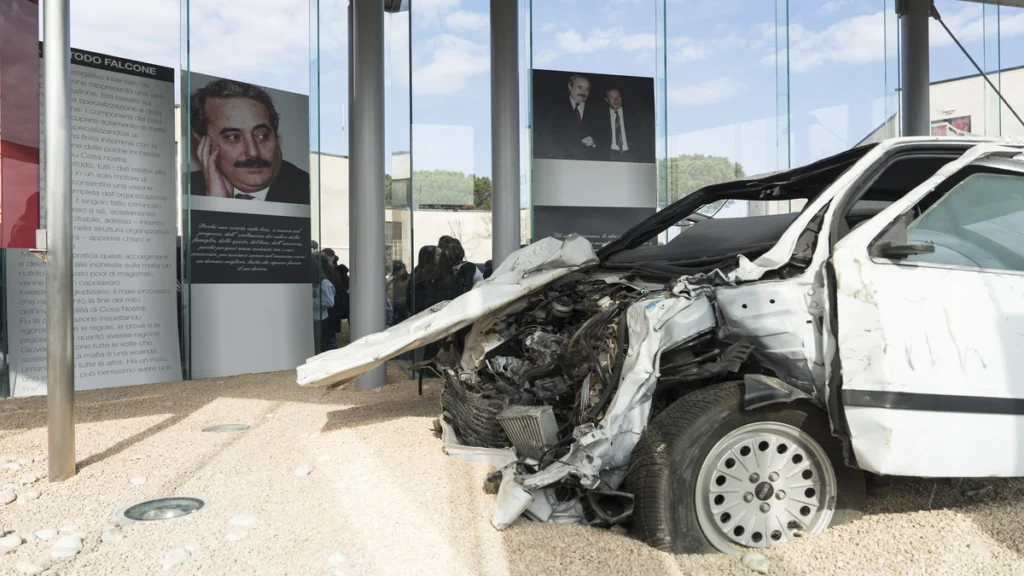
Falcone and his wife died in hospital in the evening, the first at 19.05pm in the arms of Paolo Borsellino, the second shortly after 22pm during a surgical operation.
It was a criminal action by Cosa Nostra carefully planned in every detail with a single possible objective: to eliminate Falcone in any way, together with Borsellino, their greatest enemy.
La Falcone's death was a shock for Italy, a hard blow for the State and the police forces involved in the fight against the mafia. However, this tragedy sparked a new wave of anti-mafia mobilization. Civil society reacts firmly, filling the streets to demand justice and legality. The State continued the investigation, leading to the arrest of numerous members of Cosa Nostra, including the instigators and perpetrators of the attack.
The maxi trial of Cosa Nostra
The killing of Giovanni Falcone was decided during meetings of the Regional and provincial “Commissions” of Cosa Nostra between September and December 1991, presided over by the boss Salvatore Riina, then captured on January 15, 1993. The coordinator of the attack was John Brusca, a prominent member of the mafia, convicted of over a hundred murders.
Il trial of mafia leaders it began in 1995 and in 1997 the Court of Assizes of Caltanissetta sentenced Riina and other mafia members to life imprisonment, while some were acquitted. Brusca, what activated the detonator, was arrested in 1996 and confessed to having also participated in the massacre in Via D'Amelio in which Paolo Borsellino died.
In 2000, the Court of Assizes of Appeal confirmed all the sentences against mafia members. In 2002, however, the Court of Cassation annulled some sentences with postponement. There were no discounts for Riina who remained in prison until his death on 17 November 2017.
The Falcone method
Giovanni Falcone, despite the jealousy and misunderstandings of many fellow magistrates, was not only a champion of the fight against the mafia but he left as a legacy un method of fighting crime more relevant than ever. “Follow the money"it was the paradigm of fighting the mafia that Falcone illustrated in depth in the book"Cosa Nostra things” written with the French journalist Marcelle Padovani a few months before being murdered in the Capaci massacre. That he meant “Follow the money”? He meant tracing and meticulously following all paths of the money flows in charge of mafia activities. A method already important at the beginning of the 90s but even more so today of the metamorphosis that the mafia has undergone, transforming itself from a crime mafia into economic mafia and now becoming a structural element of the national and international economy and business. A metamorphosis that requires us not to lower our guard and to make the techniques of fighting the mafia ever more incisive, safeguarding the Italian anti-mafia legislation which is appreciated and considered a model abroad too and for which we must be grateful to Giovanni Falcone who inspired.
Falcone: a symbol of the fight against the mafia
Giovanni Falcone is still remembered today as a hero, a example of courage and determination in the fight against organized crime. The His sacrifice was not in vain. His moral and professional legacy continues to inspire future generations in the fight for legality and justice.