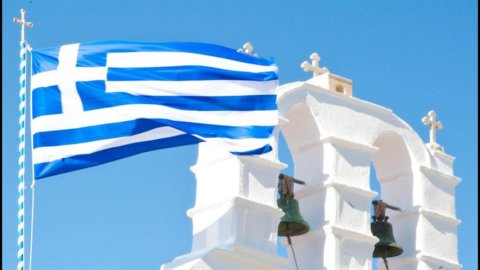
The Greek government has approved the cut of 30 public workers, implementing a preliminary agreement reached with the heads of the EU-IMF-ECB delegation. Today the new austerity measures arrive in Parliament for final approval. The further cut requested by Europe should serve to unblock the sixth tranche of aid of 8 billion euros, decisive for avoiding default. Even if, despite these sacrifices, Athens' deficit will be 6,8% of GDP against the 6,5% agreed with the representatives of the troika. But much reduced compared to the current 8,5%. The expected GDP also remains below expectations, down by 5,5%.
George Papandreou's determination gathers support on the eve of the Ecofin summit in Luxembourg. "In all likelihood, Greece will receive the next tranche of international aid it needs to avoid bankruptcy," Austrian Finance Minister Maria Fekter said in an interview with German newspaper Welt am Sonntag. "The likelihood that the 8 billion euro tranche will be paid to Greece, in my view, is much stronger than the likelihood that it won't be," Fekter said. Meanwhile, however, Alexander Dobridnt, an official in Angela Merkel's coalition, said that "for Greece to become economically stable again, it needs to leave the eurozone, at least temporarily".