Prime Minister Matteo Renzi, in one of the first effective statements, announced a 10% cut in the electricity bill. This then turned into a hypothesis of redistribution of weights for the benefit of small and medium-sized enterprises which are objectively the most disadvantaged. Beyond the formal aspects, in substance we totally share the strategic objective: reducing the cost of energy is one of the fundamental conditions for relaunching the country's competitiveness and, to a certain extent, also for limiting the processes of industrial and production relocation.
But how to do it concretely? In reality it is necessary to act on the various cost components that end up in the bill and which have had intense dynamics in recent years. It is also a question of affecting consolidated interests ready to react to maintain the status quo. Management of Utilities and Infrastructures intends to initiate a debate on these issues; contributions of ideas and suggestions are welcome (send to: [email protected]). The most interesting will be published in the magazine or disseminated in other ways.
Here are some reflections that we know well to be summary and provisional. But they should be understood as a starting point for the discussion.
Renewables targeted again
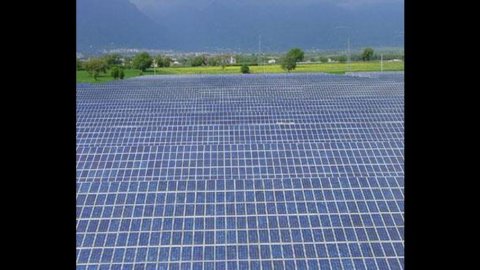
First of all, allow me some doubts about the fact that renewables and the subsidies for their benefit have once again been targeted which, objectively, have been excessive over the years; the idea is to lengthen the expiry of the benefits, reducing their current level and transferring the savings achieved to the benefit of SMEs. In this way the overall burden would not be reduced but would be spread over a longer period. This intervention would be limited to photovoltaics, indeed to a part of it.
I believe that this solution has a considerable number of disadvantages, well summarized by various representatives of the world of renewables and by the banking system. The banks, in particular, underlined the default risk of many existing loans; in the current context characterized by numerous stranded positions (non-performing loans) this would be an absolutely unacceptable burden. Furthermore, the country's image would be compromised, making future investments by international operators less likely, even in sectors totally different from renewables. Last but not least, there are the out-of-pocket and bureaucratic costs necessary to redefine all the agreements stipulated during the construction of the plants: the loan agreements, the concession agreements, the land leases and others still have to be renegotiated, always assuming that this is technically possible. Since hundreds of thousands of plants are potentially affected by the provision (even if the estimate is around 10.000), the system would find itself incurring a few billion euros in costs (legal, administrative, banking, etc.) for a provision that would not generate any benefit if not of a political nature (and this too would have to be demonstrated since the world of renewables is certainly large and of not negligible weight).
Other solutions have been proposed. In particular, with the current low interest rates, one can easily imagine that the GSE gets into debt for the necessary amount (but also the Cassa Depositi e Prestiti could perhaps play this role better), allocating the proceeds to reduce the bills of the subjects on which you want to intervene (PMI). The debt of the GSE (or CDP) would then be repaid over 20 years. It appears that various financial entities of global standing would be willing to support the initiative. The advantages of this hypothesis reside in the fact that the cost of the operation for the system would be much lower.
In any case, the world of renewables has now reached such a large specific weight that it requires the assumption of specific responsibilities. Even if it is true that in recent months unforeseen charges in the order of one and a half billion euros have been charged to these operators, it is also true that there is room for recovery of efficiency and that, in any case, this world must contribute to cost containment of the bill. The most correct thing is that it is itself to formulate the most suitable proposals. More generally, the issue of the overall redefinition of the role of renewables in the context of a reformulation of the electricity market and its ancillary markets opens up. But that would take us far and now is not the time.
Think about structural interventions
But alongside what can be done in the short term, it is essential to start a series of actions having a substantial connotation of industrial policy, i.e. aimed at structurally reducing the cost of the bill. In particular, I believe that a multi-year program of interventions should be launched - which I believe must absolutely be agreed with the operators - which accompanies the progressive cancellation of the supports that exist today. And this could be financed by European funds earmarked for energy efficiency.
Let's think, for example, of the large energy consumers. For them, the support interventions for reducing their bills cost several hundred million euros a year (interruptibility is worth about 800 million euros; the overall estimate for energy-consuming Legambiente is about 1,5 billion euros ). The progressive reduction of at least part of these benefits could be foreseen (for example, in four years) by facilitating in various ways projects aimed at reducing energy costs, recovering the energy dissipated and, more generally, at regaining the competitiveness of the productions . These interventions, substantially attributable to energy efficiency, could be financed by various funds, including European funds which, among other things, in many cases we are not even able to exploit. Today, discounts for energy-intensive people have the paradoxical effect of not prompting them to seek efficiency optimization, thus remaining structurally less competitive.
An operation of this kind, if well constructed and managed, would lead to a considerable series of benefits. For example:
-
It would allow the development/strengthening of possibly Italian technologies in energy efficiency (which then have market potential worldwide)
-
It would make it more probable to maintain production in Italy, with clear effects on employment and also on energy consumption;
-
It could even favor an increase in investments and production of the goods in question in Italy.
We are still thinking of subsidizing electricity production in the islands, the annual cost of which is around sixty million euros. Always planning the cancellation of the subsidies in an appropriate period of time, one could think of financing the development of renewable plants, perhaps adding accumulators to guarantee continuity, thus experimenting with an innovative technology and also obtaining significant environmental advantages.
A mention also to the special tariff regime for the benefit of rail transport which is worth around 400 million euros a year and which dates back to 1963 against the sale of production plants to Enel. This benefits the State Railways and, to a certain extent, also its competitors. Beyond the legitimacy of these benefits, the railways are the largest consumer of energy in the country; it is plausible that from an in-depth study and from a series of targeted investments (here too almost certainly financeable by European efficiency funds) efficiency can be increased. Also in this case it is a question of developing a medium-term technological-industrial perspective in agreement with the operators.
Contract transportation and distribution costs
Another area to affect is the transport and distribution costs of both gas and electricity, the weight of which has grown significantly in recent years (today it varies from 14% to 17% of the bill depending on the user, excluding consumption taxes) . In line with the current sharp drop in interest rates, one wonders whether the remuneration of the RAB should not be lowered, also reducing the cases where the remuneration is increased; one should then imagine the moratorium on any new infrastructural investment which increases the tariff with the exception of those which prove to be absolutely and without fail necessary for the country. On the other hand, the sharp reduction in consumption in recent years must require the utmost attention in accepting by the Ministry further extensions of the infrastructures that are not amply and certainly justified by commercial or strategic reasons.
Avoid factors that weigh down your bill
Alongside the actions to reduce the bill, it is also necessary to avoid possible increases. Two examples of problematic areas: capacity payment and the development of local networks. The capacity payment risks being a way to save companies in difficulty or on the verge of bankruptcy and, as is known, this is especially true for those that have invested in gas-fired generation with combined cycles. The capacity payment is evoked to deal with the variability of the production of renewables, guaranteeing the stability of the system. The point is obviously relevant. However, I believe that the main road is to make producers with renewable sources responsible for guaranteeing certainty of supplies, thus discharging the role of the system operator; they will be the ones who will look for the preferable and cheapest solution. Other European countries are moving in this direction. This, among other things, is part of a perspective of full involvement of renewables in a context in which they have reached a certain degree of maturity and an important role in the system.
With regard to on-site consumption, Seus and other similar solutions, some of which are certainly of interest and highly innovative, it is a question of seeking a correct balance. On the one hand, development and experimentation activities with potential repercussions also in the medium term must not be blocked; on the other hand, no additional system costs must be generated for end users. However, it is clear that the development of on-site consumption could also lighten the bills of operators and families. The only area where it seems useful to us to imagine some growth is in the increase in funding for energy efficiency, which until now has been very timid. But this is a theme to be seen as a whole.
Launch an action on several fronts with a view to sharing with the operators
In conclusion, we do not believe that there are miraculous solutions that solve the problem d'emblée. Operations with immediate effect can be useful in giving signals, in favoring the redistribution of burdens, but the problem is a structural intervention that acts on several fronts. Many other topics not covered here are also relevant. For example, once again without claiming to be complete, there is the question of the charges linked to the (incredible) nuclear experience (Sogin and the companies that offer services to it have certainly not modest costs); there is the question of the virtual “interconnector” which is worth around 330 million euros (the real interconnections are yet to be seen…); there is the tax component which in any case has a significant weight; there is the cost of energy vectors which remain high even if in decline; there is the PUN which has fallen sharply with a series of significant impacts on operators and consumers, and so on.
The Government must, I believe, develop an overall project where many subjects are called to make a contribution, to take a step back. If all the players in the system did this, in the end the cost for everyone would be bearable and the country would fully benefit.