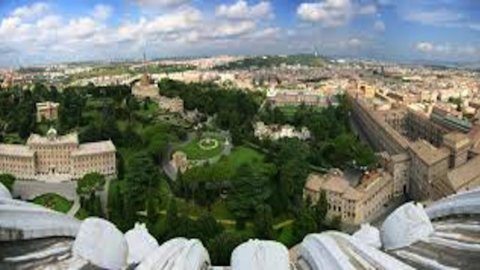
Restoring works of art, sometimes with better results, using bacteria and natural substances instead of potentially healthier chemicals. It's called "biorestoration" and it's an all-Italian technology, perfected by ENEA, which will soon also be used for the fountains and statues in the gardens of the Vatican City.
This method of bio-based cleaning involves the use of microorganisms capable of removing deposits of various kinds, with undoubted advantages in terms of selectivity of the intervention, safety for the work of art, non-toxicity for the restorers, low cost and reduced environmental impact.
The application to the restoration of biotechnologies already used for the depollution of the soil was discussed in the workshop in recent days “BIO-based technologies and products for sustainable strategies for the conservation of cultural heritage and soil rehabilitation”, organized by ENEA with the participation of representatives of the world of cultural and artistic heritage, including the head of the Scientific Research Cabinet of the Vatican Museums, Ulderico Santamaria, and Giuseppina Fazio of the Higher Institute for Conservation and Restoration.
“Scientific research has identified microorganisms as formidable allies for a new tool that can be used forfor the protection and conservation of the artistic heritage. The idea from which we started was to transform a problem into a resource, that is to exploit the metabolic capacities of the microorganisms that live in degraded areas of archaeological interest to intervene on the same artistic artefacts in need of restoration", explains Anna Rosa Sprocati, coordinator of the laboratory ENEA of "Environmental Microbiology and Microbial Biotechnology", where the researchers Chiara Alisi, Flavia Tasso, Paola Marconi, Giada Migliore collaborate on the applications of biorestoration, as well as several doctoral students and graduate students who have contributed to these research activities over the years.
Bacteria and fungi are taken to the laboratory and isolated to then be used in restoration interventions: so far the ENEA laboratory has selected as many as 500 strains, a real army of potential "micro-repairers" with which it is possible to carry out 'tailor-made' interventions, depending on the materials on which one intervenes (paintings, frescoes, paper, parchment, marble or wood) and according to the substances to be removed in the cleaning of the works of art (animal and synthetic glues, resins, hydrocarbons, oils, plasters or carbonates).
The results, to date, are very positive also because insiders see biorestoration as a promising alternative to traditional intervention methods that require the use of more aggressive products.
Some examples? ENEA research has made its entrance in Palace of the Popes in Avignon, identifying, in the laboratory, a procedure for removing vinyl glues from the frescoes. In the Renaissance Casina Farnese on the Palatine Hill, ENEA researchers have applied the "biocleaning" of part of the frescoed loggias with the legend of Hercules and Cacus, developing an intervention procedure that has led to the filing of a national and international patent (ENEA patent on biorestoration in the European database Patent Office).
Many collaborations, from the Istituto Superiore per la Conservazione e il Restauro, to the Vatican Museums, to the National Gallery of Modern Art: in the latter they were exhibited two marble sculptures on which ENEA researchers supported the restorers using bio-cleaning with microorganisms which completely removed the wax deposits from the “Testa di Donna” by Emilio Quadrelli and the smog residues from the “Lupa” by Giuseppe Graziosi, left outdoors for 40 years.
From environmental bioremediation to biotechnology for restoration and the conservation of artistic assets was a short step. The mix of microorganisms used for the bio-cleaning of the "Lupa" had already demonstrated all its effectiveness in the reclamation of land polluted by hydrocarbons. A technology, that of bioremediation, capable of transforming contaminants without damaging the functions and fertility of the soil. For the moment, perhaps, the only one.