The global logistics stand-by had foreseen this for some time and so the CEOs of Chinese multinationals had taken the necessary measures for some time. At the end CES – Consumer Electronics Show – in Las Vegas they reiterated it, numbers in hand. But it would also have been confirmed in private conversations by a very high-ranking member of the board of one of these mega companies, co-opted for years for entrepreneurial merits in the highest party bodies.
There are six fundamental points of the Chinese expansion strategy: “Enough outsourcing and entry level, less made in China, more created in China with our brands, more and more regional factories, less long transports”. Sixth point: at the pressing invitation of Xi Jinping, the relocation of large consumer electronics multinationals and household appliances in Africa, where China has had a thirty-year presence. A position of strength, also in view of a new factor development of North Africa where it will become decisive for companies operating between Africa and the Mediterranean and in particular for Italy, to have agreements and presence in the brand new port of Tangier safe from incursions, blockades and disputes.
Where the Chinese giants invest
Da Hisense a Midea, TCL a Haier, Gree, Huawei, Chinese multinationals have been investing massively in North America for some years (you have to curry favor with Uncle Sam) in Mexico, in MO, in North Africa and Africa and obviously in Asia, outside of China. The purpose? Conquer important shares of the world market by abandoning the TV production an entry level and quickly overtake the Koreans who have been global sales leaders for decades. And in particular become number 1 in the United States.
We return to the regional factories
And then, with “regional” factories, the growing impasse in ports and maritime straits is considerably anesthetized, also because, again to limit these obstacles, there will not only be assembly lines for finished products but also for the entire supply chain. While, on the contrary, the Koreans, the Japanese and the Europeans (for household appliances) who have delocalised see the arrivals of the appliances and precious components reduced, which, among other things, will cost a lot, navigating for longer and with many difficulties moreover. That's why it came back a lot the race for reshoring is strong.
Hisense, the star who runs the most
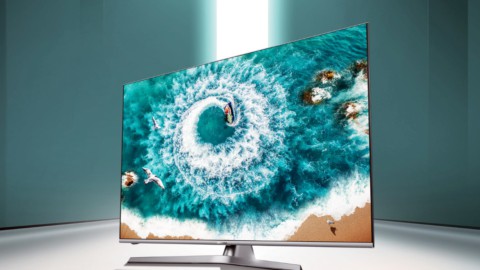
At CES, Hisense and TCL presented themselves with a display of hi tech news eliminating several technological gaps compared to the Koreans and Japanese. For example, they are catching up in organic light-emitting diodes and micro-LED panels, two fields in which South Korean brands are leaders. But It's Hisense that's beating everyone, having first presented 110" Oled and Miniled TVs, with unique requirements which will remain so, according to American audio video magazines, for a long time.
For those who still have some doubts, here are quick examples of this advance, supported by sharply increasing sales (+20/+30 percent in value) in contrast with the world market. Hisense has released a diode backlit mini TV 75-inch light emitters less than 14 millimeters thick and an ultra-thin laser TV. TCL China Star Optoelectronics Technology, a unit of TCL, will apply its new Oled products in the medical and IT fields and then in the field of application to televisions in the future. In simple words: the speed at which Chinese big names transfer innovations to the real world is impressive.
Alarm for "white" in Europe
What is happening in Europe? The Italian factories of Whirlpool and Electrolux they are going through a particularly delicate period. Electrolux, despite the growing difficulties of a market that sees it in great difficulty, maintains investments for a green transition more than any other multinational technology company. For Whirlpool Europe two very positive facts: an increase in the activities of Italian factories with returns - probably - also from overseas and a major return to Eurokitchen with collections which, according to rumours, will give a strong signal of innovation.
The uncertainties: the impasse caused byBritish antitrust body which will not give approval to the joint between Whirlpool and Arçelik before the end of March. Or that he will give it but imposing some changes. Another factor of uncertainty was the Standard & Poor's rating release Global in December – very discreet and disappeared from free communications which revised the outlook to negative, confirming a BBB rating but at the same time predicting an Ebitda of +6,5 percent.
In reality, these forecasts are affected by the heavy contraction in turnover following massive sales, the latest of which is the reduction of the share in Whirlpool of India from 75 to 51 percent to raise cash. Also Moody's has revised the outlook for 2024 to negative, in view of a year that is unlikely to revive demand for large household appliances. The group BSH, after years of expansion, is suffering heavily with losses on the German market, even - it seems - in double digits. There Haier, which is struggling to fuel the former Candy factory, at risk of closure according to rumors, is investing in a fifth factory in Turkey where washing machines will be produced.
Who wins in Europe?
Hisense is proving to be a protagonist in strong expansion (turnover from 2,8 billion euros in 2022 to 3,6 billion in 2023 and a brilliant start to 2024) also in the household appliances segment (+20 percent, taking away shares from the Koreans). The shares of all devices are increasing; in the cold freestanding he undermines the two leaders, Samsung and LG, having quickly risen to third place.
The company also achieved great success in air conditioning with a +20 percent increase. At Eurocucina it will be present with new collections of builtins, thus becoming a very inconvenient protagonist for Whirlpool, Electrolux and for Grundig (the built-in brand of the Turkish Arcelik) which, thanks to agreements concluded for years with the major furniture manufacturers, has reached a significant share of sales. The secret: “I would like to underline – explains the CEO of Hisense Italy Gianluca Di Pietro – that the group's first strategy is to grow by carefully preserving margins, investing in R&D, managing distribution channels well. We have never succumbed to the low price policy."
Hisense Europe it can count on two factories in the heart of Europe (Slovenia and Croatia), which produce medium-high and high-end devices, including TVs, with costs lower than the European average and has European R&D. Furthermore, the corporation's board did not make the mistake made by other Chinese multinationals, of sending Chinese managers to Europe who were unaware of the complexities of the different markets. He named CEO of Hisense Italia Gianluca Di Pietro, which has long experience in the sector, and which in the space of a few years has brought the Italian branch to 260 million euros,
Hisense ready to go shopping?
Hisense was far-sighted by closing its production sites in Poland in time, a country too close to the Russia-Ukraine conflict and logistically not favored. “With the aim – comments Di Pietro – of concentrate the production centers as much as possible, including the TV segment that is operational in Slovenia". The group is determined to grow above all with investments in research and expansion of market shares of each type. There have been rumors for some time that Hisense is interested in acquire the Zanussi brand put up for sale, with others, by Electrolux. Could there also be any acquisitions? “The company only moves if it is sure of maintaining its growth rate and margins. And it would still look to Europe, for possible joints or acquisitions, because the European market is the most interesting and qualified to grow well".