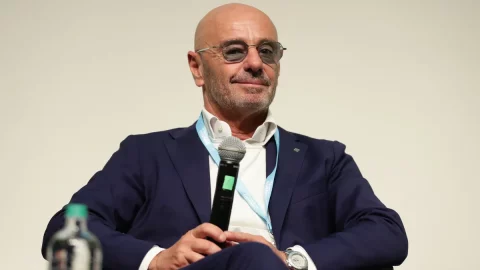
The founder and CEO of has died ConstructionAcrobatics Riccardo Iovino, who died at the age of 58 following a sudden illness while kitesurfing in Sardinia. This was communicated by the company specializing in construction work in double safety rope. The entrepreneur, through the family holding company, Arim Holding, held a stake equal to approximately 76,24% of the share capital. “He was an extraordinary and far-sighted entrepreneur, capable almost 30 years ago of realizing the potential of a technique which, borrowed from the world of sailing and mountaineering, could be effectively applied to the world of construction: the double safety rope”, the company writes in the note. The news of his passing caused a strong human and economic impact: the title it opened the session down by around 15% and then fell suspended in volatility. The Board of Directors has announced that it will meet shortly to define the next steps. The intention is to "continue on the path that Riccardo Iovino had opened, also indicating the next objectives that we are certain of achieving, exactly as he wanted".
Iovino's legacy
Originally from Genoa, after having worked abroad as export manager of a company in the fishing sector - we read on the company website - Iovino returned to Italy to create and found EdiliziAcrobatica, founded in 1994. The company, which started from garage where the manager left every morning armed with ropes and equipment to lower himself from the roofs of Genoa, arrived on the top of the Burji Kahlifa (the tallest skyscraper in the world). The business was born from his idea of not using scaffolding, speeding up renovation and maintenance work on buildings and making them cheaper.
“My goal – he said – has always been to revolutionize the way construction is done in the world”. And in the end he succeeded. Since it began, Iovino has led the company to a double listing on the financial markets, and to being spread not only in Italy, but also in France, Spain, the Principality of Monaco, the United Arab Emirates, Saudi Arabia, Kuwait and Nepal, permanently employing over 2200 people .