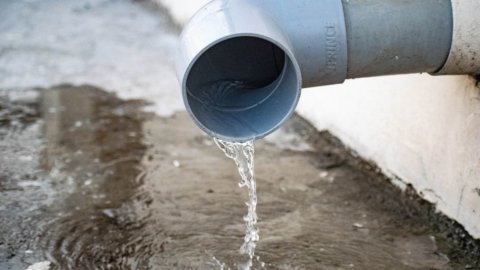
To better track the spread of the virus COVID-2, it is necessary to analyze urban wastewater. Waste water deriving from domestic, agricultural and industrial activities is in fact a precious source of information, which could make us anticipate the trend of the epidemic curve by as much as 7-14 days, i.e. beat the current systems on time - and by a lot of monitoring, with all the positive consequences of the case on the identification of outbreaks and in general on the containment of the pandemic. This is revealed by a study conducted byMario Negri Institute of Pharmacological Research, IRCCS Department of Environment and Health, elState University of Milan, Department of Biomedical Sciences for Health, with the participation of Lombardy region, thanks to an innovative approach called “wastewater epidemiology”.
The study was published in medRxiv and it was conducted in the first phase of the epidemic, between March and June 2020 in 8 Lombard cities, with a very high sample of data analyzed: Bergamo, Brembate, Ranica, Brescia, Cremona, Crema, Lodi and Milan. Among them, as we know, there are some of the cities most affected by the spread of Covid. Indeed the wastewater confirmed it: the viral RNA was found in 61% of the samples analysed, a very high figure compared to the average of European countries that have carried out similar research, and with peaks of around 80% in both Bergamo and Brescia. The methodology developed can now also be useful for monitoring the progress of the virus, and for the future it represents a ready-to-use tool for monitoring any other viruses with epidemic/pandemic potential that may arise.
“As demonstrated by this study – he commented Sarah Castiglioni of the Mario Negri Institute - the virological surveillance of urban wastewater has great potential for use as it allows to obtain a profile of the infections by simultaneously including the symptomatic and asymptomatic infections of an entire population". “The Mario Negri Institute – he added Ettore Zuccato, Head of Environment and Health Department Laboratory of the Mario Negri Institute – developed the innovative approach called “wastewater epidemiology” in 2005 to estimate the consumption of substances such as drugs of abuse, alcohol and medicines in the population by analysis of urinary metabolites in untreated urban wastewater. Last year we immediately worked to develop a new application linked to the analysis of viruses in urban wastewater”.
“The State University of Milan – they add Sandro Binda ed Elena Pariani, professors of the University, both involved in the integrated COVID-19 surveillance network in Lombardy - have been involved in environmental virological surveillance for over a decade, i.e. the analysis of urban wastewater collected at the entrance to a purifier to identify the introduction and the distribution of viruses cleared from the fecal tract, including Enteroviruses”.