Thomas Friedman does not need many introductions even for the Italian public. Columnist of excellence for the New York Times, he has written many books on current events (translated into Italian by Mondadori). He has won three Pulitzer Prizes for his reporting from Lebanon. His 2014 book, The world is flat it has not gone unnoticed, arousing many discussions and many criticisms. Nobel laureate Joseph Stiglitz, while appreciating Friedman's work, strongly disagrees with Friedman's analysis “the world is not flat. Not only is the world not flat in many ways, but it is becoming less and less flat." Clear reference to the inequalities that globalization driven by Friedman's theses was producing.
Friedman's views were highly valued by Steve Jobs, who while he abhorred journalists, often telephoned Friedman for advice.
Chinese leader Xi Jinping himself is said to read Friedman's articles avidly and draw inspiration from Friedman's creative prose to coin slogans and buzzwords. The current motto of the Communist Party of China (Chinese Dream –中國夢) seems to have flashed into Xi's mind after reading a piece by Friedman entitled China Needs Its Own Dream, which appeared on New York Times on October 2, 2012. The New York Times also offers Friedman's articles in Chinese.
We offer you the Italian translation of the editorial that appeared in the New York newspaper on March 17, 2020.
It's a nice contribution. It's worth spending a few minutes on it.
The world is much more than flat
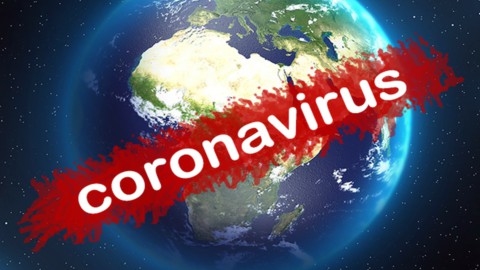
Before the coronavirus crisis, I was contemplating writing a book on XNUMXst century political parties. In light of this global epidemic it is obvious that this no longer makes sense. There is a BC world – before Corona – and an AD world – after Corona. And we haven't even begun to imagine what this AD world will be like! But here are some trends I'm seeing.
In 2004 I wrote a book, The world is flat on the growing global interconnectedness. Since then the world has become much flatter and much more interconnected. Heck, when I started writing that book, Facebook had just launched; Twitter was just a chirp; the Cloud was still in the sky; 4G was a parking lot; LinkedIn was a prison; for most people, the applications were cures for pain; Skype was a typo and Big Data a rap star. And the iPhone was still Steve Jobs' secret project.
All of these connectivity tools, not to mention global trade and tourism, exploded after 2004 and truly wired the entire world. That is why our planet today is not only interconnected, but it is interdependent – and in many ways even fused into one mold.
All this has led to great economic growth. But it has also meant that when things go wrong in one place, that going wrong is immediately transferred to other places faster, more profoundly and cheaper than ever before. So if a virus-ridden bat bites a pangolin in China, that critter is sold at the Wuhan Game Market, its tainted meat infects a diner at a Chinese diner with a new coronavirus, and within weeks all schools in the world shut down and it happens that we have to stay one and a half meters from each other and we can no longer go to work.
But it is because of this interdependence that the virus crisis has only just begun. Bill Joy, the technologist who cofounded Sun Microsystems and Netscape, told me: “The way the pandemic has spread these past few weeks was pretty predictable. But now we've reached an unpredictable point where all of our connection systems, each with their own feedback loops, are shutting down. This will inevitably lead to some accidental and chaotic consequences – such as the fact that no one will anymore look after the children of health workers engaged in fighting the virus”.
The power of'exponential
One of the hardest things for the human mind to grasp is the reproductive power of an exponential – something that continues to grow in power unabated, like a pandemic. The brain fails to fathom how quickly America's 5000 confirmed cases of coronavirus infection could explode into a million cases if we don't stop it now.
Here's a simple way to explain the exponential threat we face — one that an oft-failed real estate developer like Donald Trump might understand. Bill Joy again explains it well: “The virus is like a loan shark who charges 25 percent interest a day. We borrowed $1. Then we tracked for 40 days. We are now $7500 in debt. If we wait another three weeks to pay, we'll be nearly $1 million in debt."
That's why working every day to slow down the rate of infection and test all possible infected is everything. Losing this battle means losing the war.
Here's why the only number I care about right now is not the Federal Reserve interest rate, but the number of coronavirus patients in the ICU versus the number of hospital and ICU beds needed for treatment. . If the second number can contain the first when the virus hits its peak, then we're good to go.
The positive side of'exponential
There is, however, another exponential that could end up saving us. It is that of Moore's law, developed in 1965 by the co-founder of Intel, Gordon Moore. The law says that the speed and processing power of computers doubles every two years, as more and more components can be crammed onto the same surface area of a microchip.
Intel, to explain the power of Moore's Law in making all sorts of things better, smarter, and faster, asked its technologists to estimate what a 1971 Volkswagen Beetle would be like today if it had the same exponential rate of growth as microchips. since 1971. Intel technologists ruled that today's Volkswagen Beetle would reach 500 thousand kilometers per hour, travel 6 million miles per liter and cost 4 cents.
That's the positive potential of an engineering exponential — and it could be just the kind of exponential that can quickly lead to a cure and a vaccine against the coronavirus.
As Nitin Pai, director of the Takshashila Institution, an independent research center in Bangalore, India, wrote on livemint.com on Sunday: “Advances in computer science and synthetic biology have revolutionized the detection and diagnosis of pathogens, such as as well as the processes of vaccine design and development, subjecting them to cycles similar to Moore's law. Recent epidemics, starting with SARS and including H1N1, Ebola, Zika and now Covid-19, will direct more talent and inventiveness to the biological and epidemiological sciences.”
Will it happen fast enough? Even in the age of supercomputers, noted Gautam Mukunda, a researcher at the Harvard Kennedy School's Center for Public Leadership, “we still don't have a vaccine for HIV or malaria — two serious and still widespread diseases we've been battling for years. It is surely true that science will reach the point where we can develop new vaccines on the fly; the problem is that it is still very, very difficult”.
Will the pandemic change the American political landscape?
I know for a fact that there's one joke Republicans won't be telling on the campaign trail this year. It's the one where they challenge the Deep State, the government bureaucrats, and arouse hilarity in the public by saying: "Hi, I'm from the government and I'm here to help out".
We will overcome this crisis thanks to the depth, expertise and selfless commitment of our deep state and our "big government". It will be the mobilization of scientists, medical professionals, disaster professionals, environmental experts – all people whose legs Trump has tried to cut off. Right now I'm rooting for both Big Government and Big Pharma. They can really save us.
Our political culture is also about to change before this is all over. My friend Prof. Michele Gelfand of the University of Maryland is the author of Rule Makers, Rule breakers:How Tight and Loose Cultures Wire the world.
Speaking in the Boston Globe last week, Gelfand recalled an article she published in Science several years ago. In that article, she and her colleagues ranked countries in terms of the priority given to freedom into "strict" and "loose" societies. She writes: “Restricted societies, such as China, Singapore and Austria, have many rules and punishments governing social behavior. Citizens of those places are accustomed to a high degree of monitoring aimed at reinforcing good behavior. Loose cultures in countries like the United States, Italy and Brazil have more relaxed rules and are much more permissive”.
These differences in how individual freedom is understood are not accidental: “The countries with the strictest laws and the harshest punishments are those with histories of famines, wars, natural disasters and, yes, pathogen epidemics. These disaster-prone nations have learned over the centuries the hard way to go: strict rules and order save lives. Meanwhile, cultures that have faced few threats – such as the United States – can afford the luxury of remaining “loose”.
It's fairly obvious, Gelfand noted, that "notoriously tight societies," such as Singapore and Hong Kong, have put in place a more effective response to Covid-19.
At the same time, deficiencies in White House coordination and ill-advised public figures – such as Larry Kudlow, Sean Hannity, Laura Ingraham, Rush Limbaugh, Kellyanne Conway, Devin Nunes and Trump himself – who initially downplayed the potential impact of the virus or they have imputed political motives to those who demand action, they have contributed to exacerbate the risks for all of us.
Gelfand concluded her article thus: “In all this uncertainty we must remember that the trajectory of the virus has as much to do with the nature of the coronavirus as it does with culture. Our free cultural programming must make a big change in the days to come."
The Greatest Generation did it in the Great Depression and World War II. Can we do it now?
Only generosity will save us
There are millions of entrepreneurs and employers out there who have invested in long-term assets that were supposed to go up in value – a stock, a company, a house, a restaurant, a store – with borrowed money. This is money that they can no longer return.
So, we don't just need the Fed to help their banks avoid a total meltdown, we don't just need the banks to restructure their debts, we need to get some fresh money into the pockets of all workers so they can eat after their last salary has been spent. It's encouraging to see the administration and Congress moving quickly to do just that.
The more we tighten our culture and the more we open our wallets, the stronger and kinder society will become in the AD, post-corona era.