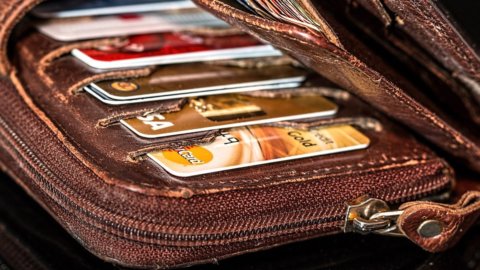
How should I pay abroad? Is it better to rely on a credit card or do you pay less commission with a debit card? Is cash preferable? These are the questions that many travelers often ask themselves before travelling. August is traditionally the month in which most Italians decide to brave the heat and go on vacation. However, those who do not inform themselves in advance, especially for trips to countries where the euro is not used, risk upon arrival find bitter surprises, including very high commissions or – in extreme cases – even the impossibility of making digital payments.
CREDIT CARD OR BANCOMAT ABROAD
Digital payments have certainly made life easier for those who travel. In fact, it is now possible (almost) anywhere in the world to withdraw money or pay for a service by debit, credit, prepaid or rechargeable card. A few simple moves and the game is done. Often, however, the risk is that of discovering afterwards, by checking one's bank statement for example, that the choices made were not the most convenient for one's wallet. It therefore seems appropriate, when you set out on a journey follow a few simple rules.
RULE N.1: ALWAYS CHECK THE CIRCUIT
Before traveling, you need to be sure that your credit or debit cards are associated with an international circuit. With Visa and MasterCard – as well as with American Express and Maestro – we will be sure of being able to use both without distinction anywhere in the world, as well as being able to count on higher availability. If, on the other hand, our cards belong to "smaller" circuits, we could run into problems with withdrawals and not be able to make payments.
RULE N.2: CALCULATE HOW MUCH MONEY WE ARE GOING TO SPEND
In the event that very large amounts of money have to be spent, the credit card could be the safest choice for our trips abroad because it guarantees greater flexibility since the credit disbursed is not charged immediately. Not only that, with the credit card the customer has the possibility to raise the fixed monthly expense, so he will be able to manage his account more easily. If you intend to rent a car or book a hotel in addition, the credit card could become our only choice. In fact, the ATM (but also the prepaid or rechargeable card) does not offer the guarantees that those who provide these services often require.
In the event that the expenses to be made are lower, or in any case not very high, the other solutions will also be fine.
RULE #3: ALWAYS CHECK THE FEES
Commissions vary according to the bank, the destination, but also the type of operation. In general, if we are going on vacation to a SEPA country, i.e. in a country that belongs to the European economic area, no commission will be applied to payments made by debit card, prepaid, rechargeable or credit card, while commissions on withdrawals will be in line with those applied in Italy.
in this Non-SEPA countries, on the other hand, commissions are paid on both withdrawals and payments and therefore it is necessary to check the conditions established by the individual banks.
In general, however, for withdrawals the rule to follow is always the same: it is better to withdraw larger amounts only once than to carry out multiple operations involving small sums. The risk, in the latter case, is that of being overwhelmed by useless commissions.
WHAT ABOUT THE CASH?
It is the habit of many travelers to change money before leaving or as soon as they arrive if the holiday destination is a country that does not use the single currency. Well, the advice is to avoid it: in both cases the commissions are very high and the exchange rate is almost always disadvantageous. While you can, it's always cheaper to use the card.