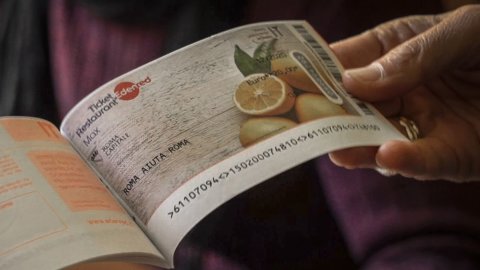
From 1 September 2025 ° enters into force on commission cap applicable by commercial establishments (bars, restaurants, supermarkets) for the acceptance of good grass: they will not be able to exceed the 5% of the nominal value The threshold was already in place for public employees and is now extended to the private sector, affecting approximately 2,8 million workers and over 170 participating businesses.
The measure has sparked widespread debate: retailers are pleased because they will pay lower commissions, while meal voucher companies fear a reduction in revenue and a possible increase in costs for the businesses that distribute them to their employees.
Meal vouchers: how the commission cap works
The reform, introduced by the Meloni government in the competition law, aims to limit costs for traders, which until now had average commissions of 11%, in some cases as high as 20%. For example, on a €10 voucher, up to €2 was retained by the issuing companies. With the new 5% cap, companies will receive a more equitable share of the ticket's face value.
La regulations it has been applied gradually:
- All new contracts since the law came into force have immediately respected the 5% cap.
- Vouchers already issued with higher commissions by August 31, 2025, will remain valid until December 31, 2025.
- Starting January 1, 2026, all meal vouchers will have to carry a maximum commission of 5%, with no exceptions.
Meal vouchers: what's changing for shopkeepers and workers?
For the workers il change is invisibleThe cap does not affect vouchers already in workers' pockets, which are increasingly available in digital format, and does not change their face value, which remains at up to €4 for paper vouchers and up to €8 for electronic ones. Essentially, it is a provision that regulates the relationship between the issuing company and the business, setting a limit on the cost the business must pay to join the ticket network.
Who makes money? Shopkeepers will pay lower commissions, increasing the convenience of accepting meal vouchers. Luciano Sbraga, head of the research office of Fipe Confcommercio, the change will not reduce corporate welfare, because the vouchers remain fully deductible from business income and workers do not pay Irpef on the vouchers.
Who risks losing us? are the issuing companies, represented by AnsebThe 5% cap on commissions could increase costs for companies purchasing meal vouchers by up to approximately €180 million annually. This could lead to changes in corporate welfare in two out of three companies and, in some cases, a reduction in the average value of the vouchers, currently €6,75. However, these hypotheses depend on the decisions of individual companies.
Overall benefits and prospects
Secondo Fiepet ConfesercentiThe reduction in commissions represents a significant saving for bars, restaurants, and public establishments, estimated at approximately €400 million per year. Lower costs encourage ticket acceptance, generating a virtuous cycle in the supply chain and also benefiting consumers.
Furthermore, Fiepet proposes considering raising the tax exemption ceiling to €10 in the next budget law, making meal vouchers even more useful and convenient for workers and businesses.