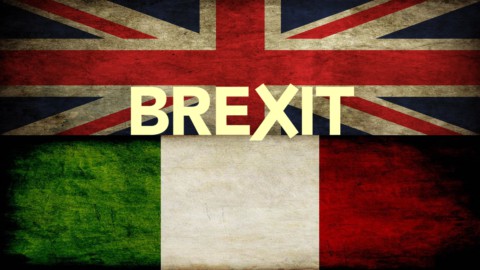
With the activation of Article 50 of the Lisbon TreatyPrime Minister Theresa May has launched procedures for Great Britain's exit from the European Union. After a series of other institutional and bureaucratic fulfilments, the real negotiations on the terms of Brexit should begin between the end of May and the beginning of June. In theory it will last two years, but extensions or bridging agreements cannot be ruled out, because there are so many subjects on which to find a (difficult) agreement.
What will be the consequences of Brexit on Europe and Italy? Here are the main themes.
1) HOW MUCH MONEY WILL EUROPE LOSE? IT'S ITALY?
The EU wants Britain to honor the commitments it has made with the European institutions until 2020. The total bill stands at 50 billion pounds, equal to about 58 billion euros. Great Britain, of course, refuses, and Downing Street has already made it known that it considers the request "absurd". But on this point the number one of the European Commission, Jean Claude Juncker, has managed to unite the EU front.
In any case, sooner or later the British contribution will disappear from the EU budget. To date, the UK pays 16 billion a year into Brussels' coffers and receives back six. There are two hypotheses for the future: either the rich countries will pay more money, or the allocations will be reduced for the benefit of the countries receiving aid. In the first case, Italy could be called upon to increase its share of the contribution by one billion and 307 million, which would go from 17,693 to 19 billion.
In general, according to the update note to the Def published last September by the Italian government, "the consequences of Brexit can be quantified overall in a fork between 0,5 and 1,0 percentage points of GDP total in the two-year period 2016-2017".
Standard & Poor's has written that Italy, together with Austria, will be one of the countries least affected by Brexit, also because our trade in goods and services with the United Kingdom is around 3% of GDP. However, the final bill can only be quantified in the coming months, based on London's choices on the future of its relations with Europe.
2) WHAT WILL CHANGE FOR THOSE WHO WORK IN THE UK?
Brexit has raised concern about the status of the 3,2 million European foreigners who now live in the United Kingdom, including around 600 Italians, half of whom are residents. For them, in reality, it should change little.
The most serious problems will concern Europeans who want to move to Great Britain in the future. London intends to put immigration under control and perhaps will introduce quotas beyond which foreigners will no longer be admitted.
Furthermore, permission to move could only be granted to those who have already found a job in the UK, and not to those who want to move to look for one. Finally, it is highly probable that non-Brits will lose their entitlement to welfare services.
3) AND FOR STUDENTS?
Today, European university students pay just over 10 euros a year in tuition fees (9.000 pounds, the same amount expected for the British). With Brexit, the bill should rise to the much higher levels expected for non-EU citizens: from 14 to 19 thousand pounds, between 16 and 22 thousand euros a year. A real blow, also because European students will no longer be able to use scholarships and loans to pay for academic courses under the British system.
On the other hand, at the moment all these innovations are only the most probable hypotheses. Nothing is official yet, so anyone intending to move to Great Britain for work or study reasons should hurry.
4) WHAT ARE THE RISKS FOR ITALIAN EXPORTS?
On the commercial side, the weakening of the pound is already weighing on European exports to Great Britain (before the referendum, 1,31 euros were needed to buy a pound, today 1,16 is enough).
According to data from Sace, the trade balance between Italy and the United Kingdom is in any case largely in favor of our country and the most popular Italian products are means of transport, machinery, clothing, food and beverages. From July to December last year, Italian exports contracted by 0,5%, but the overall figure for 2016 remained positive by 0,5%.
However, the estimates for 2017 are much gloomier: last July, Sace forecast a drop of between 3 and 7%, for a loss of between 600 million and 1,7 billion euros. Coldiretti instead let it be known that, since the day of the Brexit referendum, our country's agri-food exports to the UK have dropped by 9%. The heaviest collapse is the one that hit olive oil (-13%).