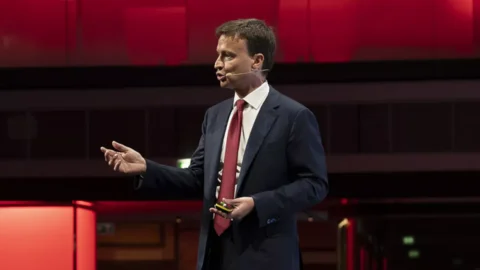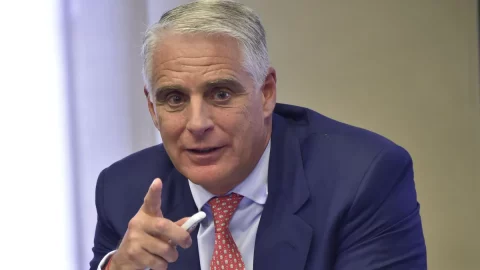
After two years of internal warfare, the long-awaited meeting has arrived, defined by both sides as "constructive", between the German Finance Minister, Lars Klingbeil, and the number one of Unicredit, Andrew Orcel. A meeting that represents Berlin's surrender to the new status quo: despite strong opposition from the Chancellery and Commerzbank's top brass, Piazza Gae Aulenti holds de facto control of the Frankfurt group, with a 49,65% stake. It's pointless to try to oppose it now. It's much better to try to obtain significant guarantees to present to the electorate after the vote. defeat suffered in Saxony-Anhalt.
Unicredit-Commerzbank: The German Government's Conditions
And this is precisely the objective that Klingbeil seems to have pursued during yesterday's meeting in Berlin with Orcel. Surrender yes, but conditional. And some of these conditions are not easy for Unicredit to swallow. The minister first asked that the bank remain quoted at the stock exchange and that the headquarters remain in Frankfurt. Also ask credit and employment guaranteesCommerz will have to continue financing German small and medium-sized businesses, and its 40 employees will have to be adequately considered. Simply put, the government wants "even the foreign network" of Commerz branches to remain untouched, a somewhat overly ambitious request that risks creating overlaps. However, redundancies could be resolved more easily.
Last point, perhaps the most delicate: as the second largest shareholder of Commerzbank with a 12,7% stake, the government is asking to maintain two seats on the supervisory board. This presence, however, could pose an obstacle to Orcel's plans, as it would prevent him from stripping Commerz's board of directors and appointing directors more inclined to approve his Commerzbank Unlocked plan. On the other hand, an agreement with Berlin, expected in two years, would allow Piazza Gae Aulenti to move more quickly toward integration, paving the way for board control as early as the shareholders' meeting scheduled for April 2027. Negotiations will therefore be necessary to find a balance.
Orcel and Klingbeil's comments
“I am grateful to Minister Klingbeil for the opportunity he gave me to explain our priorities and to learn about his for the first time. We had a first fruitful and constructive interview, which will soon be followed by others". This is the interim comment from the CEO of Unicredit, Andrew Orcel, after the meeting with German Finance Minister Lars Klingbeil on Commerzbank. "It is now up to both sides to reflect on this first meeting, so that a way can be found proceed in the interests of all parties stakeholders and shareholders,” added Orcel, who is waiting for the ECB's approval by the end of October to officially increase his stake in the Frankfurt institution beyond 30%.
“In a constructive conversation with Orcel I made it clear that future negotiations must be conducted responsibly. It is crucial for the Federal Government that Commerzbank can continue to play its important role in financing the German economy and German small and medium-sized enterprises,” he said. Lars Klingbeil"We are mindful of the interests of Commerzbank's more than 40.000 employees and stand by them in this time of uncertainty. The federal government, as Commerzbank's shareholder, must continue to have two representatives on the supervisory board. Specifically, the federal government expects Commerzbank to remain a listed public company headquartered in Frankfurt and to continue its strong work supporting small and medium-sized enterprises, including through its international network."
The solution: reverse fusion with HVB
There would be a solution that would allow Orcel to meet Berlin's demands and, in parallel, carry forward his "German plans", that is the reverse fusion with HVB, UniCredit subsidiary. Bank of America also suggests this. After raising its target price on UniCredit to 113 euros per share (from 100 euros previously), confirming its "Buy" recommendation, it maintains that a possible path to reach an agreement with Berlin would be a reverse bid, in which Commerzbank acquires HVB at a fair value. This move would lead to UniCredit to hold approximately 70% of the combined entity without cash outlays and would dilute the German state's stake to around 8%.