Trump will celebrate today the Independence Day USA signing his tax package which yesterday obtained the approval of the House, but also by sending letters to business partners, establishing unilateral tariffs, which countries will have to start paying on August 1. This did not please Asian stock markets, which could not even be influenced by the new highs on Wall Street yesterday, and European stock markets are also likely to open lower.
Dear business partners, I am writing to you
US President Donald Trump announced last night that today his administration itself will begin to send letters to business partners, setting unilateral tariffs that countries will have to start paying on August 1. Trump told reporters he would start by sending out “about 10 or 12” letters, with more letters arriving “over the next few days.” “I think by the 9th they will be completely covered,” Trump added, referring to the July 9 deadline he initially set for countries to reach agreements with the United States to avoid higher tariffs he had threatened. “The tariffs will range from 60 or 70 percent to 10 and 20 percent,” he added.
The top end of that range, if formalized, would be higher than any tariffs the president initially outlined during his “Liberation Day” launch in early April. They ranged from a baseline of 10% on most economies to a maximum of 50%. Trump did not specify which countries would benefit from the tariffs or whether it would mean a higher tax rate for some goods than others.
Trump initially announced his higher, so-called “reciprocal” tariffs on April 2, but suspended them for 90 days to give countries time to negotiate, setting a 10% rate during that time. So far, the Trump administration has announced deals with the UK and Vietnam and agreed a truce with the China. Asked by reporters yesterday whether more deals were on the way, Trump said: “We have a couple of other deals, but you know, my inclination is to send a letter and say what tariffs they’re going to pay.” “It’s a lot easier,” he said.
Trump announced the deal with Vietnam on Wednesday, saying the U.S. would impose a 20 percent tariff on Vietnamese exports to the U.S. and a 40 percent rate on goods considered transshipment through the country, a reference to the practice of routing components from China and potentially other nations through third-party countries to the U.S. While the rates are lower than the 46 percent tariff Trump initially imposed on Vietnam, they are higher than the universal 10 percent level.
Many important trading partners, however, such as Japan, South Korea and the European Union, are still working to finalize the agreements. The president expressed optimism that an agreement could be reached with theIndia, But he has been harsh on the prospects of a deal with Japan, calling Tokyo a difficult negotiating partner. He stepped up his criticism this week, saying Japan should be forced to “pay 30 percent, 35 percent or whatever we decide.”
Fiscal Package Passes. Trump: The US Is the Most Fantastic Country in the World
After the markets close, It passed yesterday, with the second rereading by the US House, tax package $3,4 trillion, the “Big Beatuful” Act that brings a radical change in US domestic policy: it cuts taxes, limits spending on social security programs and undermines much of Joe Biden’s efforts to move the country toward a clean energy economy.
Trump has used his influence in the Republican Party to overcome resistance from hardline conservatives and moderate Republicans in swing states. Democrats have opposed the bill, arguing that it would eliminate health care for millions of people who rely on Medicaid to fund tax cuts for the wealthy, while Republicans argue that it would boost economic growth with $4,5 trillion in tax cuts.
The package also includes a $5 trillion increase in debt limit U.S. government, eliminating the risk of a market-shaking default on payments, which will be carried out by the Treasury as early as mid-August without congressional intervention. The president said he plans to sign the bill today, during a ceremony at the White House.
“This is one of the most consequential laws in history,” Trump thundered, “the USA is the most amazing country in the world, by far!”. Other Republican leaders were no exception: “We are on the threshold of a new golden age for America,” said House Leader Steve Scalise. Speaker Mike Johnson, immediately after the final vote, spoke of a “safer and more prosperous” nation.
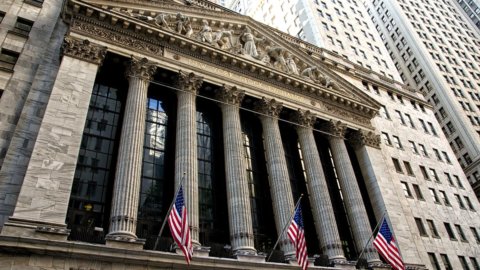
Wall Street celebrated solid employment data with new records yesterday
There was euphoria yesterday in US trading on the back of a key labor market data that showed more strength than expected, allaying fears of a slowdown economy US and dampening speculation about the need for a cut in rates of interest from the Federal Reserve in the near future. The data showed that theoccupation Nonfarm payrolls rose by 147.000 last month, 33 percent above the 110.000 jobs economists surveyed had expected. ReutersUnemployment fell to 4,1% last month, better than the 4,3% forecast.
In a short session on the eve of Independence Day and with little trading volume, stocks hit new all-time highs, bonds fell and the dollar rose.
S & P 500 closed up 0,83% and the Nasdaq of 1,02%, both at historical highs, recording its third week of gains. The Dow Jones gained 0,77%, just 0,41% from its record high. Nvidia rose 1,3%, bringing its market capitalization to $3,89 trillion, poised to surpass Apple. TripAdvisor rose 16,7% after The Wall Street Journal reported that activist investor Starboard Value had acquired a stake of more than 9% in the online travel company.
Over the week, the S&P 500 gained 1,72%, the Nasdaq rose 1,62%, and the Dow Jones rose 2,3%. The Russell 2000 Small Cap Index rose 3,41%.
Two-year Treasury yields rose 10 basis points to 3,88%. Swap traders saw almost no chance of a Fed cut in July, down from about 25% before the data. The probability of a September move has fallen to about 70%. The S&P 500 rose 0,8%.
Asia frozen awaiting tariff developments
Asian stocks were little changed after recovering much of their earlier losses, with Trump's tariff actions in focus. The MSCI Asia Pacific index was largely unchanged, as was Japan's Topix. Mainland Chinese stocks are on track to close at their highest since December after the country said it would implement a trade framework with the United States by reviewing export license applications. The index Shanghai Composite rose 0,8%
Index Tokyo Nikkei on parity and the week is about to close with a 1% drop. yen weakened against the dollar, mainly due to the movement of the latter, to 144,5, from 143,8 the day before.
The yield of 10-year government bonds rose to 1,44% from 1,41%, after the delicate 30-year bond auction: the minimum bid price was lower than expected, a sign that some market operators are still maintaining a cautious attitude. Yields increased along the entire curve, particularly on the 30-year maturity: +7 basis points to 2,955%. The rose by 0,4%, while the dollar fell by 0,2%. household consumption in Japan rose 4,7% year-on-year in May, reversing a 0,1% decline in April and far exceeding market forecasts for a more modest increase, data from the Ministry of Internal Affairs and Communications showed. It was the strongest growth since August 2022.
European stocks seen falling at the start. Eyes on the banking risk
European stocks are expected to open lower based on indications from the Euro Stoxx 50 Future at -0,4%.
Germany. German industrial orders fell much more than expected in May due to a one-off effect, official data showed today. Orders fell 1,4% from the previous month on a seasonally and calendar-adjusted basis. A survey Reuters among analysts had predicted a decline of 0,1%. The decline was mainly due to a substantial 17,7% month-on-month decline in orders in the computer, electronic and optical products sector, where several large-scale orders had been recorded in April.
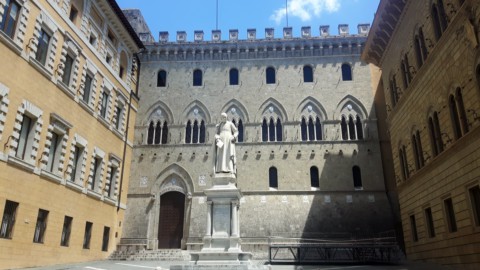
MPS Bank, Mediobanca. Monte dei Paschi aims to reach 66,7% of Mediobanca, but the minimum target, considered sufficient, is set at 35%, as written The Corriere della Sera. The OPS will last the 40 days required by law, with a possible extension. According to MPS, there will be time to obtain a much higher stake. The 35%, indicated in the prospectus approved by Consob after the unconditional approval by the ECB, is seen by CEO Lovaglio as a starting point, the newspaper continues. MPS will be able to count on the support of shareholders in favor of the offer such as Delfin, Caltagirone, and probably the social security institutions. Edizione's position is uncertain. Monte will also be able to gradually increase its share by purchasing up to 5% per year. A stake between 35% and 50% would allow MPS to exercise de facto control over Mediobanca, he adds. The Courier. If the value of the offer remains lower than the capitalization of Piazzetta Cuccia – with a 3,5% discount recorded yesterday -, a cash component could be added, as BPER already did in its OPS on Sondrio. Even without immediately exceeding 51%, the strategic objectives remain achievable, although with longer times to fully exploit the tax benefits, which would extend until 2036, with an average annual use of 300 million instead of 500 expected above 50%.
Bper Bank, Sondrio People's Bank. The Board of Directors of Bper has resolved to increase the consideration for the public exchange offer on Banca Popolare di Sondrio by adding a cash component of 1 euro. The new consideration now provides, for each share of Popolare di Sondrio tendered in the offer, 1,450 newly issued Bper shares, as originally offered, plus a cash component equal to 1 euro per share. “The increased unit consideration expresses a value equal to 10,527 for each Popolare Sondrio share and therefore incorporates a premium of 17,8% compared to the price of the Popolare Sondrio share recorded on the reference date (8,934 euros)”, reads a note released by the bank yesterday evening.
Bper's takeover bid for Popolare Sondrio is underway, with subscriptions reaching 20% of the offer
Stellantis. It is recalling thousands of diesel cars in Europe built between October 2017 and January 2023, due to potential problems with the camshaft chain. In France alone, 636.000 vehicles are affected, the company said, without providing a figure for all of Europe.
Tim. Barclays raises target price. As reported by Reuters, TIM is finalizing a €750 million loan, 70% guaranteed by SACE under the Archimede program. The five-year financing, granted by a pool of banks, is intended to support investments in infrastructure, innovation and sustainable transition. The transaction could be completed by July. No comment from TIM or SACE.
Salvatore Ferragamo. Intesa Sanpaolo cuts rating to Underperform.