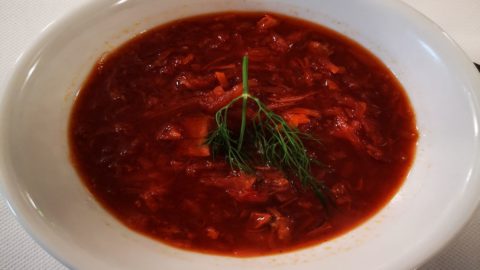
Winter is coming, the rain beats insistently on the window panes, anxiety about the pandemic doesn't help overcome an unpleasant feeling of cold. And what's better than a hot and appetizing dish?! To help the stove comes the queen of soups, Borsch, a symbol of Russian cuisine with its ancient history and its thousand variations that satisfy the palates of half of Europe.
They taste it in Ukraine where it was invented over five hundred years ago. In Poland, where it is a typical Christmas dish, and never missing in the long winters of Romania. Obviously, in a historical overview of the famous soup there is no lack of important characters to certify its gastronomic value, starting with the Tsars:
Alexander and Catherine the Great, for example, were great admirers. The borsch that is made in Moscow – observes Giulia Nekorkina, Muscovite by birth and Roman by adoption, chef, blogger and cookery writer – “sometimes contains frankfurters and smoked pork breast tips, while in Kiev it is made with beef, sheep and beans".
In short, not exactly a light dish, but certainly appetizing! Of course, we also think that in Bulgaria they cook this soup with peppers while in Poland they prepare it with beef tongue or ham. There are even those who put herring in it, widely used in Russian cuisine, with very well-known and extravagant culinary elaborations in the name, such as the famous "herring in fur".
Then there are of course frugal versions of borsch, made of vegetables, especially beetroot which is the main ingredient, used in the gray Soviet winter landscapes, passionately described by Anya von Bremzen in an unforgettable book “The art of Soviet cooking. A story of food and nostalgia” (Einaudi, 2014).
But we need to come up with a recipe for our Italian dinner, after curiosities and anecdotes! And Nekorkina comes to our aid with a tribute to the dish so loved by Anna Pavlova, the Russian ballerina to whose name, among other things, the famous dessert is dedicated. In her "From Russia with flavor" (Amazon 2020), the Russian blogger writes, to make Borsch soup in the Ukrainian version, the oldest and most original, you need:
Borsch recipe the Ukrainian way
1m5 l of meat broth
300 g of boiled meat
2 beets
½ cabbage
5-6 potatoes
1 carrot
1 onion
3-4 cloves of garlic
4-5 ripe tomatoes
3-4 tablespoons of lard (or extra virgin olive oil)
1 tablespoon of sugar
50g lard
100 g smetana (sour cream)
½ lemon
parsley
bay leaf, dill
salt and pepper
Method
Grate the beets, place in a saucepan with 300 ml of hot stock and add sugar and lemon juice. Bring to a boil and leave to infuse. Finely slice the cabbage and put it in the boiling broth.
Meanwhile, cut the potatoes into cubes, slice the onions, half the garlic and the carrots. Cut the tomatoes into wedges; After 10 minutes from the start of cooking the cabbage, add the potatoes.
Prepare the sautéed garlic, onions and carrots, adding the tomatoes at the end. Pour the fried mixture into the pan with the vegetables, adding the beets with the broth, bay leaves and cook everything over low heat for another 10-15 minutes. Remove from the heat, pound the lard with the remaining garlic, the aromatic herbs and pour everything into the Borsch, mix, add salt and pepper if necessary, put the meat back in and leave covered for another 15 minutes.
Introduction
Serve hot with the herb trio and a generous spoonful of sour cream. Now let's get to the table! invites our Russian chef.